Stage I Esophageal Squamous Cell Carcinoma
Stage I Esophageal Squamous Cell Carcinoma is an early form of esophageal cancer, characterized by its confinement to the superficial layers of the esophagus. Understanding this initial stage is crucial for timely diagnosis and effective intervention.
Key Takeaways
- Stage I Esophageal Squamous Cell Carcinoma is an early-stage cancer confined to the innermost lining of the esophagus.
- Symptoms are often subtle or absent, making early detection challenging but vital.
- Diagnosis typically involves endoscopy with biopsy and imaging tests to confirm the stage.
- Treatment options primarily include endoscopic removal or surgical resection, aiming for a cure.
- The prognosis for Stage I Esophageal Squamous Cell Carcinoma is generally favorable with appropriate treatment.
What is Stage I Esophageal Squamous Cell Carcinoma?
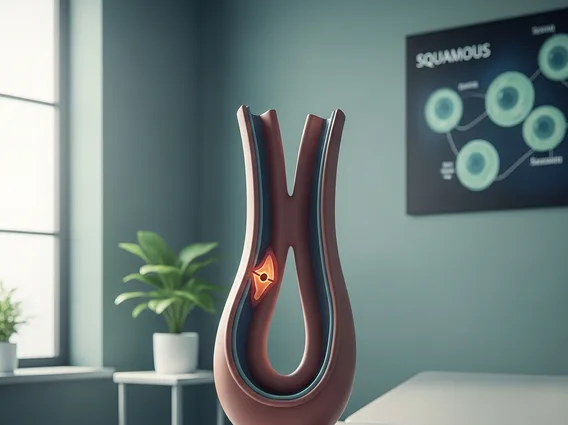
Stage I Esophageal Squamous Cell Carcinoma refers to a type of cancer that originates in the squamous cells lining the esophagus and has not spread beyond the superficial layers. In this early stage, the cancer is confined to the mucosa (innermost layer) or submucosa (layer beneath the mucosa) and has not invaded deeper muscle layers or spread to lymph nodes or distant sites. Esophageal squamous cell carcinoma is one of the two main types of esophageal cancer, with risk factors often including smoking, heavy alcohol consumption, and certain dietary habits. Early detection at Stage I is critical because the cancer is localized, offering a higher chance of successful treatment and cure.
According to the American Cancer Society, esophageal cancer is less common than many other cancers but has a significant impact, with squamous cell carcinoma being more prevalent globally, especially in certain regions. Identifying the cancer at Stage I means it is still small and has not spread, which simplifies treatment approaches and improves patient outcomes significantly compared to later stages.
Symptoms and Diagnosis of Stage I Esophageal Squamous Cell Carcinoma
The stage 1 esophageal squamous cell carcinoma symptoms are often subtle or may not be present at all, which can make early diagnosis challenging. When symptoms do occur, they might include mild difficulty swallowing (dysphagia), a sensation of food getting stuck, unexplained weight loss, or chronic heartburn. These symptoms are non-specific and can be mistaken for other, less serious conditions, highlighting the importance of thorough medical evaluation, especially for individuals with risk factors.
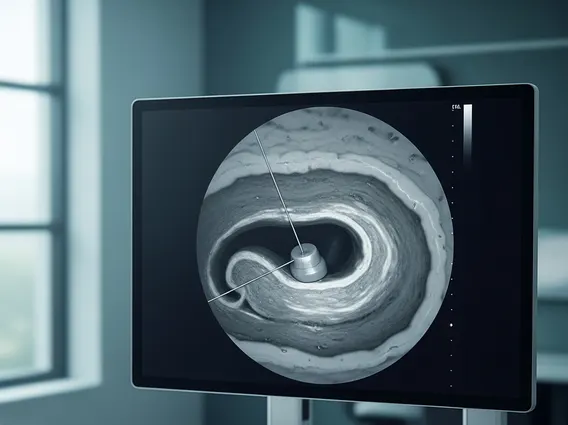
Diagnosis typically involves a combination of procedures. An upper endoscopy is often the primary diagnostic tool, where a thin, flexible tube with a camera is inserted down the throat to visualize the esophageal lining. During endoscopy, suspicious areas can be biopsied (tissue samples taken) for pathological examination to confirm the presence of cancer and determine its type. Further imaging tests, such as endoscopic ultrasound (EUS), CT scans, and PET scans, are then used to precisely stage the cancer, determining its depth of invasion and whether it has spread to nearby lymph nodes or distant organs. For Stage I, these tests confirm the cancer’s superficial nature and lack of spread.
Treatment and Prognosis for Stage I Esophageal Squamous Cell Carcinoma
The stage 1 esophageal squamous cell carcinoma treatment focuses on removing the localized tumor while preserving esophageal function. Given the early stage, less invasive options are often viable. Endoscopic procedures, such as endoscopic mucosal resection (EMR) or endoscopic submucosal dissection (ESD), are frequently used to remove the cancerous tissue if it is confined to the superficial layers of the mucosa. These procedures are performed through an endoscope, avoiding major surgery and allowing for quicker recovery. For slightly deeper invasion within Stage I, surgical resection (esophagectomy) may be recommended, which involves removing part of the esophagus and reconstructing it.
The prognosis stage 1 esophageal squamous cell carcinoma is generally very favorable, especially when detected and treated early. Survival rates are significantly higher for Stage I compared to more advanced stages. For instance, data from the National Cancer Institute’s SEER database indicates that the 5-year relative survival rate for localized esophageal cancer (which includes Stage I) can be as high as 47%, though specific rates for Stage I alone are even better, often exceeding 80-90% depending on the exact depth of invasion and treatment modality. Regular follow-up after treatment is essential to monitor for any recurrence and manage potential long-term side effects.