Stage 0 Esophageal Carcinoma In Situ
Stage 0 Esophageal Carcinoma In Situ represents the earliest possible detection of esophageal cancer, offering the best prognosis for successful treatment. This article explores the nature of this condition, its subtle indicators, and the advanced diagnostic and therapeutic strategies employed.
Key Takeaways
- Stage 0 Esophageal Carcinoma In Situ refers to abnormal cells confined to the innermost lining of the esophagus, without invasion.
- Symptoms are typically absent or very subtle, making early detection challenging without specific screening or surveillance.
- Diagnosis primarily relies on advanced endoscopic techniques and biopsy, especially in individuals with risk factors like Barrett’s esophagus.
- Treatment for Stage 0 is highly effective, often involving minimally invasive endoscopic procedures to remove the affected tissue.
- Early detection and intervention are crucial for preventing progression to more advanced, invasive forms of esophageal cancer.
What is Stage 0 Esophageal Carcinoma In Situ?
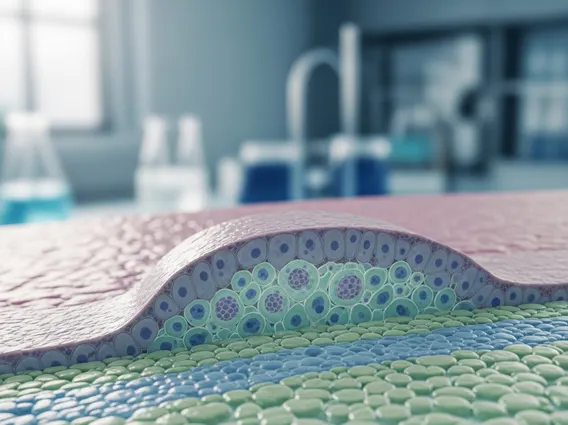
Stage 0 Esophageal Carcinoma In Situ is a medical term describing the presence of highly abnormal cells (dysplasia) that are confined strictly to the innermost layer of the esophageal lining, known as the epithelium. At this stage, the abnormal cells have not penetrated the deeper layers of the esophageal wall or spread to other parts of the body. The term “in situ” literally means “in its original place,” indicating that the cancer is non-invasive and localized.
This condition is considered the earliest form of esophageal cancer. While esophageal cancer is a significant global health concern, with an estimated 604,000 new cases and 544,000 deaths worldwide in 2020 (Source: WHO/IARC GLOBOCAN 2020), Stage 0 represents a critical window for intervention. Identifying and treating the condition at this stage is paramount, as it offers the highest chance of cure and prevents progression to invasive cancer, which carries a much poorer prognosis.
Recognizing Early Signs and Diagnosis of Esophageal Carcinoma In Situ
Recognizing esophageal carcinoma in situ symptoms is particularly challenging because, at Stage 0, patients typically experience no noticeable symptoms. The abnormal cells are superficial and do not cause obstruction, pain, or significant discomfort. When symptoms do occur, they are often non-specific and mild, such as occasional heartburn or mild difficulty swallowing (dysphagia), which can easily be attributed to other common gastrointestinal issues.
Therefore, early stage esophageal cancer diagnosis often relies on surveillance programs for individuals at high risk, rather than symptomatic presentation. The most common risk factor for esophageal adenocarcinoma (a type of esophageal cancer) is Barrett’s esophagus, a condition where the normal lining of the esophagus is replaced by tissue similar to the lining of the intestine, usually due to chronic acid reflux. Diagnostic procedures include:
- Upper Endoscopy (Esophagogastroduodenoscopy – EGD): A thin, flexible tube with a camera is inserted down the throat to visualize the esophageal lining.
- Biopsy: Small tissue samples are taken from any suspicious areas identified during endoscopy for microscopic examination by a pathologist.
- Advanced Endoscopic Imaging: Techniques like narrow-band imaging (NBI) or chromoendoscopy can highlight subtle changes in the mucosal pattern or vascularity, helping to identify areas of dysplasia or carcinoma in situ more effectively.
- Pathological Examination: A definitive diagnosis of carcinoma in situ is made when the biopsy samples show high-grade dysplasia confined to the epithelium.
Regular screening and vigilant monitoring for individuals with Barrett’s esophagus are crucial for detecting Stage 0 lesions before they become invasive.
Treatment Approaches for Stage 0 Esophageal Cancer
The primary goal of stage 0 esophageal cancer treatment is to completely remove the abnormal cells and prevent their progression to invasive cancer. Because the disease is confined to the superficial layer, highly effective and minimally invasive endoscopic techniques are often employed, avoiding the need for major surgery.
Common treatment approaches include:
- Endoscopic Mucosal Resection (EMR): This procedure involves lifting the abnormal tissue from the underlying layers and then resecting it using an endoscope. It is effective for removing visible lesions.
- Endoscopic Submucosal Dissection (ESD): Similar to EMR but allows for the removal of larger areas of abnormal tissue in one piece, providing a more comprehensive pathological assessment.
- Radiofrequency Ablation (RFA): This technique uses heat energy delivered through an endoscope to destroy the abnormal cells. RFA is particularly effective for widespread areas of Barrett’s esophagus with high-grade dysplasia or carcinoma in situ that are not amenable to resection.
- Cryotherapy: This method uses extreme cold to destroy abnormal cells.
Following successful treatment, patients typically undergo regular endoscopic surveillance to monitor for any recurrence or new areas of dysplasia. The prognosis for Stage 0 Esophageal Carcinoma In Situ is excellent, with very high cure rates, underscoring the importance of early detection and prompt intervention.