Spindle Cell Tumor
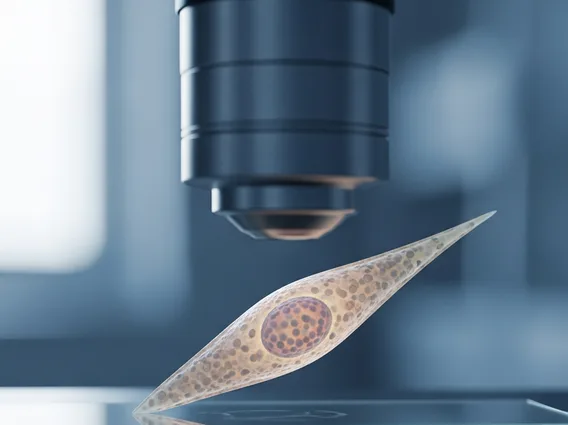
A Spindle Cell Tumor is a broad classification for neoplasms characterized by elongated, spindle-shaped cells when viewed under a microscope. These tumors can originate from various tissues throughout the body and may be either benign (non-cancerous) or malignant (cancerous).
Key Takeaways
- Spindle Cell Tumor refers to a diverse group of growths identified by their distinctive elongated cell shape.
- These tumors can be benign or malignant and arise from various mesenchymal tissues like muscle, nerve, or fibrous tissue.
- Symptoms vary widely depending on the tumor’s location and size, often presenting as a palpable mass or pain.
- Diagnosis relies heavily on biopsy and microscopic examination, supplemented by imaging studies.
- Treatment typically involves surgery, with radiation and chemotherapy used for malignant forms, tailored to the specific tumor type and stage.
What is a Spindle Cell Tumor?
A Spindle Cell Tumor refers to a heterogeneous group of growths characterized by cells that appear elongated and fusiform, or “spindle-shaped,” under microscopic examination. These cells are typically of mesenchymal origin, meaning they derive from tissues like bone, cartilage, fat, muscle, blood vessels, or connective tissue. The classification as a spindle cell tumor is primarily based on its histological appearance rather than a specific diagnosis, encompassing a wide range of conditions from benign lesions to aggressive sarcomas. The diversity in their origin and behavior necessitates careful pathological evaluation to determine the exact type and potential for malignancy.
Types, Symptoms, and Causes of Spindle Cell Tumors
The classification of spindle cell tumors is extensive, reflecting their varied origins and behaviors. While the term “Types of spindle cell tumors explained” highlights their diversity, common examples include leiomyosarcomas (arising from smooth muscle), fibrosarcomas (from fibrous connective tissue), gastrointestinal stromal tumors (GISTs), and schwannomas (from nerve sheath cells). Each type possesses unique characteristics and prognoses. For instance, GISTs are often found in the digestive tract, while leiomyosarcomas can occur in various locations, including the uterus or soft tissues.
Regarding Spindle cell tumor symptoms and causes, the manifestations are highly dependent on the tumor’s location, size, and whether it is benign or malignant. Common symptoms include:
- A palpable mass or lump, which may or may not be painful.
- Swelling or tenderness in the affected area.
- Pain, especially if the tumor presses on nerves or surrounding structures.
- Functional impairment if the tumor affects an organ or joint.
- Systemic symptoms like weight loss or fatigue, particularly with malignant tumors.
The exact causes of most spindle cell tumors remain largely unknown. However, some factors are associated with an increased risk, including certain genetic syndromes, previous radiation exposure, and specific chemical exposures. For example, some GISTs are linked to mutations in the KIT or PDGFRA genes. Despite these associations, many cases are sporadic, meaning they occur without a clear identifiable cause.
Diagnosing and Treating Spindle Cell Tumors
The process for Diagnosis and treatment of spindle cell tumors is critical for effective management. Diagnosis typically begins with a thorough physical examination and imaging studies such as MRI, CT scans, or PET scans, which help determine the tumor’s size, location, and extent. However, the definitive diagnosis relies on a biopsy, where a tissue sample is extracted and examined under a microscope by a pathologist. This pathological examination, often supplemented by immunohistochemistry and molecular testing, is crucial for identifying the specific type of spindle cell tumor and whether it is benign or malignant. According to the World Health Organization (WHO), accurate histological classification is paramount for guiding treatment decisions.
Treatment strategies are highly individualized, depending on the tumor’s type, grade (aggressiveness), size, location, and whether it has spread (stage), as well as the patient’s overall health. Surgery is often the primary treatment for localized tumors, aiming for complete removal with clear margins. For malignant spindle cell tumors, surgery may be combined with other therapies:
| Treatment Modality | Description | Primary Use |
|---|---|---|
| Surgery | Surgical excision to remove the tumor and surrounding healthy tissue. | Localized tumors, primary treatment. |
| Radiation Therapy | High-energy rays to kill cancer cells or shrink tumors. | Before or after surgery, for unresectable tumors. |
| Chemotherapy | Drugs administered systemically to kill cancer cells. | Metastatic disease, certain aggressive sarcomas. |
| Targeted Therapy | Drugs that specifically target molecular pathways involved in cancer growth. | Specific tumor types (e.g., imatinib for GISTs). |
A multidisciplinary team, including oncologists, surgeons, radiation oncologists, and pathologists, collaborates to develop the most appropriate treatment plan. Regular follow-up is essential to monitor for recurrence or new developments.