Single Photon Emission Computed Tomography
Single Photon Emission Computed Tomography (SPECT) is an advanced nuclear medicine imaging technique that provides detailed, three-dimensional information about organ function and blood flow within the body. Unlike traditional imaging methods that focus on anatomy, SPECT offers insights into physiological processes, making it invaluable for diagnosing and monitoring a wide range of medical conditions.
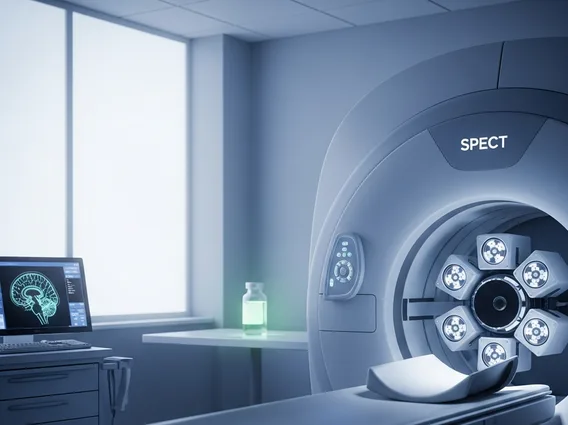
Key Takeaways
- Single Photon Emission Computed Tomography (SPECT) is a nuclear imaging technique that creates 3D images of organ function using injected radiotracers.
- It helps visualize blood flow and cellular activity, providing functional insights beyond anatomical structure.
- The SPECT scan procedure involves injecting a radiotracer, allowing it to accumulate, and then using a gamma camera to detect emitted photons.
- Key uses of SPECT scan in medicine include diagnosing heart disease, neurological disorders, and certain cancers.
- The primary benefits are its ability to detect diseases early and guide treatment strategies by showing how organs are working.
What is Single Photon Emission Computed Tomography (SPECT)?
Single Photon Emission Computed Tomography (SPECT) is a specialized nuclear imaging scan that uses radioactive tracers and a special camera to create 3D images. This diagnostic tool differs from imaging techniques like X-rays, CT scans, or MRI, which primarily show structural details. Instead, SPECT focuses on visualizing the function of organs and tissues by detecting gamma rays emitted from a radiotracer introduced into the body. The radiotracer is designed to accumulate in specific areas, allowing physicians to observe blood flow, metabolic activity, and receptor distribution, which can indicate disease processes at a cellular level.
The core principle behind SPECT involves injecting a small, safe amount of a radioactive substance, known as a radiotracer, into the patient’s bloodstream. This tracer travels through the body and is absorbed by the organs or tissues being studied. As the radiotracer decays, it emits gamma rays. These gamma rays are then detected by a rotating gamma camera, which captures images from multiple angles around the patient. A computer then processes these images to construct detailed, cross-sectional 3D views, revealing how well an organ is functioning.
How SPECT Imaging Works and What to Expect During the Procedure
The process of a SPECT scan begins with the administration of a radiotracer, typically injected intravenously. The choice of radiotracer depends on the specific organ or function being investigated. For instance, different tracers are used to assess heart blood flow versus brain activity. After the injection, there is a waiting period, usually ranging from 20 minutes to several hours, to allow the radiotracer to travel through the bloodstream and accumulate in the target tissues. This uptake period is crucial for ensuring the tracer is adequately concentrated for imaging.
During the imaging phase of the SPECT scan procedure and benefits, the patient lies still on a table while a gamma camera rotates around their body. This camera detects the gamma rays emitted by the radiotracer within the body. The rotation allows the camera to collect data from various angles, which is then used by a computer to reconstruct detailed 3D images. The procedure itself is generally painless and non-invasive, apart from the initial injection. Patients are typically advised to remain as still as possible during the scan to ensure clear images. The entire imaging process can take anywhere from 15 minutes to an hour, depending on the area being scanned and the specific protocol.
Clinical Applications and Benefits of SPECT Scans
The uses of SPECT scan in medicine are diverse and play a crucial role in diagnosing and managing various conditions, particularly those affecting the heart, brain, and bones. Its ability to provide functional information makes it a powerful diagnostic tool. For example, in cardiology, SPECT is widely used for myocardial perfusion imaging to assess blood flow to the heart muscle, helping to detect coronary artery disease, evaluate the extent of heart damage after a heart attack, or determine the effectiveness of bypass surgery or angioplasty. According to the American Heart Association, nuclear stress tests, which often incorporate SPECT, are a key method for assessing heart health.
In neurology, SPECT scans are instrumental in evaluating brain blood flow, which can be altered in conditions such as stroke, epilepsy, dementia (including Alzheimer’s disease), and Parkinson’s disease. It can help localize seizure foci in epilepsy patients or differentiate between types of dementia. For oncology, SPECT is frequently used in bone scans to detect the spread of cancer (metastasis) to the bones or to identify bone infections. Other applications include localizing infections or inflammation, evaluating thyroid function, and assessing kidney blood flow. The primary benefits of SPECT scans include their ability to detect diseases at an early stage, often before structural changes are visible on other imaging tests, and to guide treatment decisions by providing insights into organ function.