Simulation
Simulation plays a crucial role in various medical and clinical fields, offering a safe and controlled environment for learning, planning, and testing. This approach is fundamental for advancing medical practices and ensuring patient safety across diverse healthcare disciplines.
Key Takeaways
- Simulation in medicine involves creating realistic models or scenarios to mimic real-world clinical situations.
- It allows healthcare professionals to practice procedures, test hypotheses, and develop skills without risk to patients.
- Various models exist, including physical manikins, virtual reality, and computer-based simulations, each serving specific training or research needs.
- Benefits include enhanced patient safety, improved clinical outcomes, and efficient training for complex medical scenarios.
- Applications span from surgical training and diagnostic practice to drug development and public health planning.
What is Simulation and How Does it Work?
Simulation refers to the imitation of a real-world process or system over time. In a medical context, it involves creating a controlled, artificial environment that closely mirrors clinical scenarios. This allows individuals or systems to interact with a representation of reality, enabling practice, experimentation, and evaluation without the risks associated with actual patient care. The core principle behind understanding the concept of simulation is to provide a safe space for learning and problem-solving.
The process typically begins with defining the objectives and scope of the simulation, identifying the specific skills to be learned or procedures to be practiced. Next, a model is developed, which can range from high-fidelity manikins that physiologically respond to interventions, to complex computer algorithms that replicate disease progression. Participants then engage with this model, performing tasks or making decisions as they would in a real clinical setting. Following the simulated experience, a debriefing session is crucial, where participants reflect on their performance, discuss outcomes, and receive feedback, which is essential for learning and skill refinement.
Types of Simulation Models
Various types of simulation models are employed in healthcare, each designed to address specific training or research needs. These models can be broadly categorized based on their fidelity and the technology they utilize. Types of simulation models explained often include physical, virtual, and hybrid approaches.
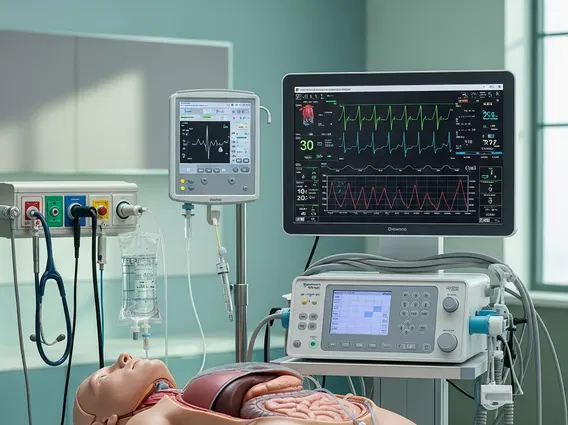
- Physical Models: These encompass manikins, task trainers, and anatomical models. Manikins range from low-fidelity (basic CPR dummies) to high-fidelity (advanced patient simulators that can breathe, have pulses, and respond to medications). Task trainers focus on specific procedures like suturing or intravenous line insertion.
- Virtual Reality (VR) and Augmented Reality (AR) Simulations: VR simulations immerse users in a fully digital environment, often using headsets, to practice complex procedures like surgery or diagnostic imaging interpretation. AR overlays digital information onto the real world, enhancing training with interactive 3D models or real-time guidance.
- Computer-Based Simulations: These are software programs that model physiological processes, disease progression, or healthcare systems. They are often used for decision-making training, understanding complex medical algorithms, or simulating population-level health interventions.
- Standardized Patients (SPs): These are individuals trained to portray patients with specific conditions, allowing learners to practice communication, history-taking, and physical examination skills in a realistic interpersonal context.
Each model offers unique advantages, with the choice depending on the learning objectives, available resources, and the specific clinical scenario being replicated.
Benefits and Applications of Simulation
The widespread adoption of simulation in healthcare is driven by its numerous advantages. Benefits and applications of simulation are far-reaching, impacting patient safety, educational efficacy, and operational efficiency. One of the primary benefits is the ability to practice high-stakes procedures in a risk-free environment, which significantly reduces the potential for errors when healthcare professionals transition to real patient care. For instance, surgical residents can repeatedly practice complex operations on simulators until proficiency is achieved, rather than learning solely on live patients.
Key benefits include:
- Enhanced Patient Safety: By allowing practice and error-making in a safe setting, simulation reduces adverse events in real clinical practice.
- Improved Clinical Outcomes: Better-trained professionals lead to more accurate diagnoses, effective treatments, and fewer complications.
- Standardized Training: Simulation ensures consistent exposure to critical scenarios and procedures, regardless of the availability of real patient cases.
- Team Training: It facilitates the practice of teamwork, communication, and leadership skills in multidisciplinary healthcare teams, crucial for managing emergencies.
- Assessment of Competence: Simulation provides an objective method to assess a learner’s skills and decision-making abilities.
The applications of simulation span nearly every medical discipline. In oncology, for example, simulation can be used to train radiation oncologists in precise treatment planning or to educate patients about their treatment journey. It is also vital in emergency medicine for practicing resuscitation protocols and managing mass casualty incidents. Furthermore, simulation extends beyond individual training to system-level improvements, such as testing new hospital layouts or evaluating the impact of policy changes on patient flow. According to reports from the Society for Simulation in Healthcare, simulation training has been shown to improve patient outcomes and reduce medical errors across various specialties.