Simian Virus 40
Simian Virus 40 (SV40) is a polyomavirus that was originally discovered in rhesus monkey kidney cells. Its presence has been a subject of extensive scientific investigation due to its historical association with early polio vaccines and ongoing research into its potential implications for human health.
Key Takeaways
- Simian Virus 40 is a DNA virus first identified in rhesus monkeys.
- It was inadvertently introduced into millions of people through contaminated polio vaccines in the mid-20th century.
- Extensive research has explored its potential link to various human cancers, though definitive evidence remains a subject of scientific debate.
- Current findings suggest no causal link between SV40 and human cancers, but research continues to monitor its long-term effects.
What is Simian Virus 40?
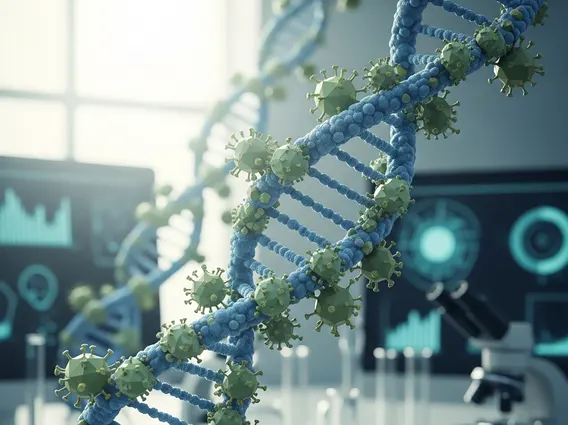
Simian Virus 40 (SV40) is a small, non-enveloped DNA virus belonging to the polyomavirus family. Its name derives from its original isolation from rhesus monkeys, where it typically causes asymptomatic infections. In these monkeys, SV40 can establish persistent infections without causing overt disease. The virus is known for its ability to replicate in certain primate cells and can transform cells in culture, meaning it can induce changes that lead to uncontrolled cell growth, a characteristic often associated with cancer development.
Structurally, SV40 contains a circular double-stranded DNA genome encased in a protein capsid. It encodes several proteins, including large T-antigen and small t-antigen, which are crucial for its replication cycle and its ability to interact with host cell regulatory pathways. These viral proteins are key to understanding the mechanisms by which SV40 can potentially influence cellular processes, including cell proliferation and tumor suppression.
History and Discovery of Simian Virus 40
The **simian virus 40 history and discovery** is closely intertwined with the development of early polio vaccines. SV40 was first identified in 1960 by Ben Sweet and Maurice Hilleman, who discovered it as a contaminant in cultures of rhesus monkey kidney cells used to produce both inactivated (Salk) and live-attenuated (Sabin) polio vaccines. These monkey kidney cells were a common substrate for growing the poliovirus, and SV40 was a naturally occurring virus in the rhesus monkey populations from which the cells were derived.
It is estimated that between 1955 and 1963, millions of people worldwide received polio vaccines contaminated with SV40. Once the contamination was discovered, immediate steps were taken to eliminate SV40 from vaccine production. New screening methods and alternative cell substrates were introduced to ensure the safety of subsequent vaccine batches. This historical event spurred significant scientific interest in SV40, leading to decades of research into its biological properties and potential health implications for humans.
Simian Virus 40: Research and Human Health Implications
The discovery of SV40 in early polio vaccines prompted extensive **simian virus 40 research and findings** to understand its potential impact on human health, particularly its possible association with cancer. Early studies demonstrated that SV40 could induce tumors in rodents and transform human cells in vitro, raising concerns about its oncogenic potential in humans. This led to numerous epidemiological and molecular studies investigating a possible link between SV40 exposure and various human cancers.
Research into **simian virus 40 effects on humans** has focused on several types of cancer, including mesothelioma, osteosarcoma, brain tumors, and non-Hodgkin lymphoma. Scientists have employed various techniques, such as PCR to detect SV40 DNA in human tumor tissues, and serological assays to look for antibodies against SV40 proteins. The findings from these studies have been inconsistent, with some reporting the presence of SV40 DNA in certain tumors, while others have failed to replicate these findings or found no statistically significant association.
Key aspects of the ongoing research include:
- Epidemiological Studies: Large-scale population studies comparing cancer rates in individuals exposed to SV40-contaminated vaccines versus unexposed individuals.
- Molecular Detection: Efforts to reliably detect SV40 DNA and viral proteins in human tumor samples, often complicated by potential contamination and low viral loads.
- Mechanistic Studies: Investigations into how SV40’s viral proteins, particularly the large T-antigen, interact with human cellular pathways involved in cell growth and tumor suppression.
- Animal Models: Continued use of animal models to study SV40’s oncogenic potential and mechanisms of action.
Despite decades of research, a definitive causal link between SV40 and human cancers has not been established. Major health organizations, such as the Centers for Disease Control and Prevention (CDC) and the National Cancer Institute (NCI), have concluded that the evidence does not support a causal relationship between SV40 and human cancers. However, research continues to monitor and investigate any potential long-term effects, ensuring ongoing vigilance regarding viral agents and public health.