
Sella Turcica
The sella turcica is a crucial anatomical structure located at the base of the skull, playing a vital role in protecting the pituitary gland. Understanding its anatomy, function, and associated conditions is essential in medical diagnostics and treatment.
Key Takeaways
- The Sella Turcica is a saddle-shaped depression in the sphenoid bone, centrally located at the base of the skull.
- Its primary function is to house and protect the pituitary gland, a master endocrine gland.
- The sella turcica anatomy and function are critical for the proper operation of the endocrine system.
- The sella turcica location and importance make it a key area for neurosurgical considerations and imaging.
- Various conditions affecting sella turcica, such as tumors or cysts, can impact pituitary function and overall health.
What is Sella Turcica: Anatomy, Location, and Function
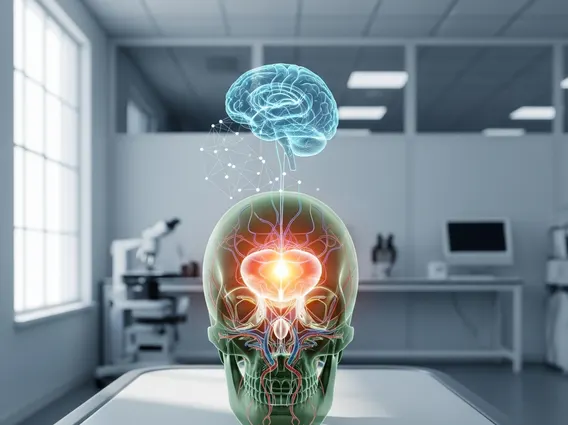
The Sella Turcica, Latin for “Turkish saddle,” is a distinctive saddle-shaped depression found in the sphenoid bone, which forms part of the base of the skull. This unique anatomical feature is centrally located, positioned behind the optic chiasm and below the hypothalamus. Its strategic placement makes it a critical landmark in neuroanatomy and neurosurgery, as it directly encases and protects the pituitary gland, a small but immensely powerful endocrine gland responsible for regulating numerous bodily functions.
The sella turcica anatomy and function are intricately linked. Structurally, it consists of several key parts: the tuberculum sellae anteriorly, the dorsum sellae posteriorly, and the hypophyseal fossa in the center, which is the deepest part where the pituitary gland rests. The anterior and posterior clinoid processes, extensions of the sphenoid bone, further contribute to its protective enclosure. The primary function of the sella turcica is to provide a secure bony enclosure for the delicate pituitary gland, shielding it from trauma and supporting its position within the cranial cavity. This protection is vital because the pituitary gland secretes hormones that control growth, metabolism, reproduction, and stress responses, making its integrity paramount for overall physiological balance.
The sella turcica location and importance extend beyond mere protection. Its proximity to critical structures like the optic chiasm (where optic nerves cross) means that any expansion or lesion within the sella turcica can exert pressure on these adjacent areas, leading to visual disturbances or other neurological symptoms. Clinically, the sella turcica serves as a crucial reference point for imaging studies, such as MRI and CT scans, used to diagnose pituitary disorders and other intracranial pathologies. Its precise dimensions and morphology are often evaluated to detect abnormalities that might indicate underlying medical conditions.
Conditions Affecting the Sella Turcica
A variety of conditions affecting sella turcica can arise, often impacting the pituitary gland housed within it, leading to a range of endocrine and neurological symptoms. The most common condition is a pituitary adenoma, a benign tumor originating from the pituitary gland itself. These tumors can be either functional (secreting excess hormones) or non-functional (not secreting hormones but causing symptoms through mass effect). For instance, an adenoma might lead to acromegaly (excess growth hormone), Cushing’s disease (excess cortisol), or hyperprolactinemia (excess prolactin).
Other conditions include Rathke’s cleft cysts, which are benign, fluid-filled cysts that can develop within the sella turcica, potentially compressing the pituitary gland or optic chiasm. Empty sella syndrome is another notable condition where the sella turcica appears “empty” on imaging, meaning it is partially or completely filled with cerebrospinal fluid, and the pituitary gland is flattened against the walls of the sella. This can be primary (no identifiable cause) or secondary (due to surgery, radiation, or injury). While often asymptomatic, it can sometimes be associated with headaches, visual disturbances, or pituitary dysfunction.
Less common but significant conditions include craniopharyngiomas, which are tumors that typically arise near the pituitary stalk, and inflammatory conditions like hypophysitis. The symptoms associated with these conditions vary widely depending on the size and type of the lesion, as well as whether it affects hormone production or causes compression of surrounding structures. According to the National Institute of Neurological Disorders and Stroke (NINDS), pituitary tumors are relatively common, with studies suggesting that small, asymptomatic pituitary adenomas may be present in up to 10-25% of the general population, often discovered incidentally during imaging for other reasons.
Diagnosis typically involves advanced imaging techniques like MRI, along with comprehensive endocrine evaluations to assess pituitary hormone levels. Treatment strategies depend on the specific condition and may include watchful waiting, medication to manage hormone levels, radiation therapy, or surgical intervention, often performed through a transsphenoidal approach that accesses the sella turcica through the nasal cavity.



















