Sclerosol Intrapleural Aerosol
Sclerosol Intrapleural Aerosol is a medical intervention used in specific clinical settings to manage conditions affecting the pleural space. This article explores its nature, mechanism of action, and primary applications in treatment.
Key Takeaways
- Sclerosol Intrapleural Aerosol is a medical agent administered into the pleural cavity to induce pleurodesis.
- Its primary function is to prevent the reaccumulation of fluid (effusion) or air (pneumothorax) in the pleural space.
- The mechanism involves creating inflammation and subsequent adhesion between the two layers of the pleura.
- It is typically used in patients with recurrent malignant pleural effusions or persistent pneumothorax.
- Administration is via an aerosol delivery system, often during a thoracoscopic procedure.
What is Sclerosol Intrapleural Aerosol?
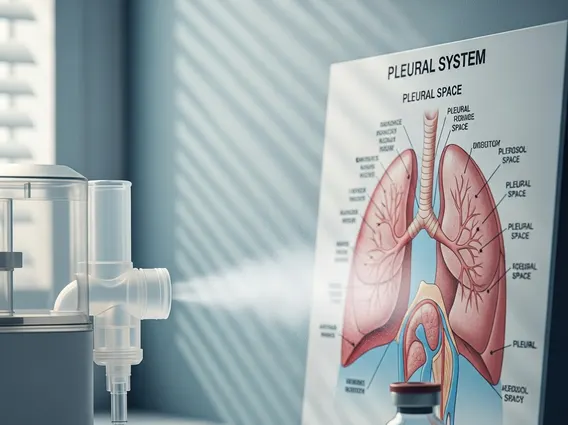
Sclerosol Intrapleural Aerosol refers to a specialized medical agent designed for administration directly into the pleural cavity, the space between the lungs and the chest wall. This formulation is primarily used to induce pleurodesis, a procedure that aims to obliterate the pleural space by causing the two layers of the pleura (visceral and parietal) to stick together. By eliminating this potential space, it prevents the reaccumulation of fluid, such as in malignant pleural effusions, or air, as seen in recurrent pneumothorax. The aerosol delivery method ensures an even distribution of the sclerosing agent across the pleural surfaces, which is crucial for effective pleurodesis.
The active component of Sclerosol Intrapleural Aerosol is typically talc, a mineral known for its sclerosing properties. When introduced into the pleural space, talc induces a sterile inflammatory reaction, which is the cornerstone of its therapeutic effect. This inflammatory response leads to fibrosis and adhesion formation, effectively sealing the pleural space. Its application is a critical aspect of palliative care for patients suffering from chronic and recurrent pleural conditions, significantly improving their quality of life by reducing symptoms like dyspnea (shortness of breath).
How Sclerosol Intrapleural Aerosol Works
The mechanism by which Sclerosol Intrapleural Aerosol works centers on its ability to induce a controlled inflammatory response within the pleural cavity. Upon administration, the fine particles of the sclerosing agent, often purified talc, come into contact with the mesothelial cells lining the pleura. This contact triggers an acute inflammatory reaction, characterized by the influx of inflammatory cells like macrophages and neutrophils, and the release of various cytokines and growth factors.
This inflammatory cascade leads to the deposition of fibrin and the subsequent proliferation of fibroblasts. Over time, this process results in the formation of fibrous tissue, causing the visceral pleura (covering the lung) and the parietal pleura (lining the chest wall) to adhere firmly to each other. This adhesion effectively obliterates the pleural space, preventing the accumulation of fluid or air. The aerosolized delivery system is designed to maximize the contact of the sclerosing agent with the pleural surfaces, ensuring a widespread and uniform inflammatory response, which is essential for successful pleurodesis and long-term efficacy in managing recurrent pleural effusions or pneumothorax.
Uses and Treatment with Sclerosol Intrapleural Aerosol
The primary **Sclerosol Intrapleural Aerosol uses** are in the management of recurrent malignant pleural effusions and persistent or recurrent pneumothorax. Malignant pleural effusion, a common complication of various cancers, involves the pathological accumulation of fluid in the pleural space, leading to significant respiratory distress. Sclerosol Intrapleural Aerosol is a highly effective palliative treatment in these cases, aiming to prevent fluid reaccumulation and alleviate symptoms.
For patients undergoing **Sclerosol Intrapleural Aerosol treatment**, the procedure typically involves a thoracoscopy, a minimally invasive surgical procedure where a small incision is made in the chest wall to insert a camera and instruments. During thoracoscopy, any existing fluid is drained, and the Sclerosol Intrapleural Aerosol is then sprayed evenly across the pleural surfaces. This direct visualization ensures optimal distribution of the agent. Post-procedure, a chest tube may be left in place for a short period to ensure complete drainage and facilitate pleural adhesion. The goal is to achieve successful pleurodesis, providing long-term relief from symptoms and improving the patient’s quality of life.
Conditions for which Sclerosol Intrapleural Aerosol may be considered include:
- Recurrent malignant pleural effusions, particularly in advanced cancer stages.
- Persistent or recurrent spontaneous pneumothorax, where other treatments have failed or are not suitable.
- Chylothorax (accumulation of lymphatic fluid) that is refractory to conservative management.
The decision to use Sclerosol Intrapleural Aerosol is made by a multidisciplinary team, considering the patient’s overall health, prognosis, and specific clinical circumstances. It represents a significant therapeutic option for managing challenging pleural conditions.