Rt Pcr
Reverse Transcription Polymerase Chain Reaction (RT-PCR) is a powerful molecular diagnostic technique essential for detecting and quantifying specific RNA sequences. It plays a critical role in identifying pathogens, analyzing gene expression, and advancing various fields of medical research.
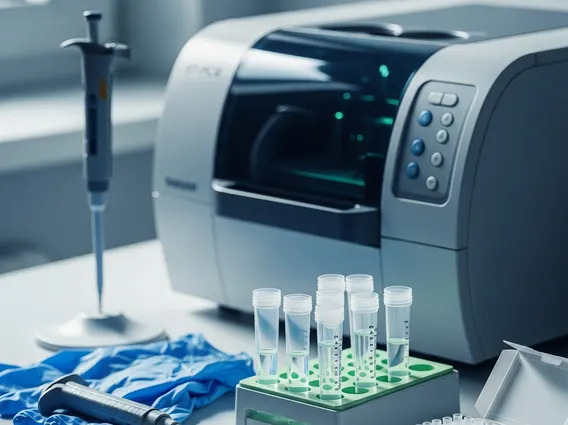
Key Takeaways
- RT-PCR is a highly sensitive laboratory method that detects specific RNA molecules.
- The process involves converting RNA into complementary DNA (cDNA) before amplification.
- It is widely considered a gold standard for diagnosing many infectious diseases, including viral infections.
- RT-PCR is also crucial in cancer research, gene expression studies, and genetic disease screening.
- The technique offers rapid and accurate results, making it indispensable in clinical and research settings.
What is RT-PCR?
Reverse Transcription Polymerase Chain Reaction (RT-PCR) is a highly sensitive molecular biology technique that combines reverse transcription of RNA into complementary DNA (cDNA) with subsequent amplification of the cDNA using polymerase chain reaction (PCR). This method is crucial for detecting and quantifying specific RNA sequences, making it invaluable in various scientific and clinical settings. The RT-PCR test explained involves a two-step process: first, converting an RNA template into DNA, and then amplifying that DNA to detectable levels. It is widely recognized for its exceptional sensitivity and specificity in molecular diagnostics, allowing for the detection of even minute quantities of target RNA in a sample. This capability makes it a cornerstone for identifying pathogens and analyzing gene expression with high precision.
How RT-PCR Works
The mechanism of RT-PCR involves several distinct stages, beginning with the careful extraction of RNA from a biological sample, such as blood, saliva, or tissue. This extracted RNA then undergoes a two-part molecular process:
- Reverse Transcription: The extracted RNA serves as a template for the enzyme reverse transcriptase, which synthesizes a complementary DNA (cDNA) strand. This step is critical because standard PCR enzymes are designed to amplify DNA, not RNA. The resulting cDNA molecule is a stable and amplifiable representation of the original RNA sequence, preserving the genetic information for subsequent steps.
- Polymerase Chain Reaction (PCR) Amplification: The newly synthesized cDNA then becomes the template for conventional PCR. This process involves multiple cycles, typically 30-40, each consisting of three main steps:
- Denaturation: The reaction mixture is heated to a high temperature (e.g., 95°C) to separate the double-stranded cDNA into single strands.
- Annealing: The temperature is lowered (e.g., 50-65°C), allowing short DNA primers to bind to specific regions on the single-stranded cDNA templates.
- Extension: DNA polymerase enzyme extends the primers at an optimal temperature (e.g., 72°C), synthesizing new DNA strands complementary to the template.
Each cycle effectively doubles the amount of target DNA, leading to exponential amplification. In Real-Time RT-PCR (qRT-PCR), fluorescent dyes or probes are incorporated to monitor the amplification in real-time, providing quantitative results that indicate the initial amount of RNA present in the sample. This real-time monitoring enhances the precision and speed of detection.
Key Applications of RT-PCR Testing
The RT-PCR test uses are diverse, spanning clinical diagnostics, research, and public health surveillance. This powerful molecular technique has become indispensable in various fields due to its high sensitivity and specificity. Its ability to detect and quantify RNA makes it uniquely suited for:
- Infectious Disease Diagnosis: RT-PCR is a gold standard for detecting RNA viruses such as SARS-CoV-2 (COVID-19), influenza, HIV, and hepatitis C. Its ability to detect viral RNA directly makes it invaluable for early and accurate diagnosis, enabling timely intervention and public health responses. According to the World Health Organization (WHO), RT-PCR remains the primary diagnostic tool for confirming COVID-19 infections globally.
- Cancer Research and Diagnostics: RT-PCR is extensively used to detect specific gene fusions, mutations, or altered gene expression levels associated with various cancers. This aids in precise diagnosis, prognosis assessment, and monitoring treatment efficacy, contributing to personalized oncology.
- Gene Expression Analysis: Researchers utilize RT-PCR to quantify messenger RNA (mRNA) levels, providing crucial insights into gene activity under different physiological or pathological conditions. This is fundamental in understanding biological processes, drug responses, and disease mechanisms.
- Genetic Disease Screening: The technique can identify genetic predispositions or diagnose certain inherited disorders by detecting specific RNA transcripts, contributing to personalized medicine and early intervention strategies.