
PSA Test
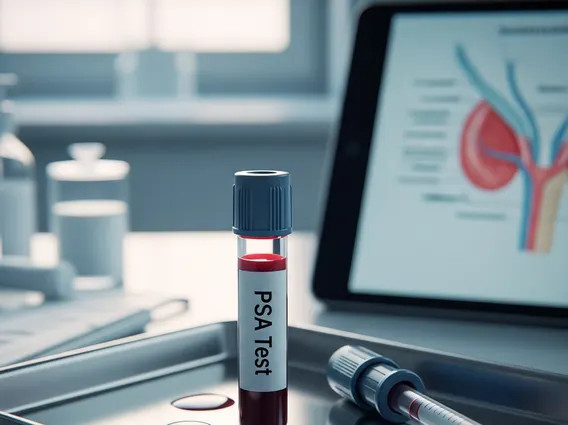
The PSA Test is a crucial blood test used primarily to screen for prostate cancer and monitor prostate health. It measures the level of prostate-specific antigen, a protein produced by cells in the prostate gland.
Key Takeaways
- The PSA Test measures prostate-specific antigen levels in the blood, aiding in the detection of prostate issues.
- It is widely used for prostate cancer screening, though its effectiveness and interpretation require careful consideration.
- Results are influenced by various factors, and elevated levels do not always indicate cancer.
- The test has limitations, including potential for false positives and negatives, impacting its overall accuracy.
- Shared decision-making with a healthcare provider is essential when considering and interpreting PSA test results.
What is a PSA (Prostate-Specific Antigen) Test?
A PSA Test measures the amount of prostate-specific antigen (PSA) in a man’s blood. PSA is a protein produced by both cancerous and non-cancerous cells in the prostate, a small gland located below the bladder in men. While PSA is primarily found in semen, a small amount is normally present in the blood. Higher levels of PSA in the blood can indicate various prostate conditions, including benign prostatic hyperplasia (BPH), prostatitis (inflammation of the prostate), or prostate cancer. This test serves as an important initial step in evaluating prostate health, prompting further diagnostic procedures if levels are elevated.
The test itself is a simple blood draw, typically performed in a doctor’s office or laboratory. The blood sample is then sent to a lab for analysis to determine the PSA concentration. Understanding what the PSA Test measures is the first step in comprehending its role in prostate health assessment.
PSA Test for Prostate Cancer Screening
The PSA test for prostate cancer screening is a widely discussed topic among medical professionals and patients. For many years, it has been a primary tool for early detection of prostate cancer, aiming to identify the disease before symptoms appear. Early detection can potentially lead to earlier treatment and improved outcomes, especially for aggressive cancers.
However, the use of the PSA test for screening is not without controversy. Organizations like the American Cancer Society (ACS) recommend that men discuss the potential benefits and harms of screening with their healthcare providers. For example, the ACS suggests that men at average risk begin this discussion at age 50, while those at higher risk (e.g., African American men or those with a family history) may start earlier. The decision to undergo screening should be a shared one, considering individual risk factors, life expectancy, and personal preferences. According to the Centers for Disease Control and Prevention (CDC), while the PSA test can help detect prostate cancer, it also has limitations that necessitate careful consideration.
Factors that may influence the decision to screen include:
- Age and overall health status.
- Family history of prostate cancer.
- Ethnic background (e.g., African American men have a higher risk).
- Potential for overdiagnosis and overtreatment of slow-growing cancers.
Interpreting PSA Test Results and Accuracy
Understanding how PSA test results are explained is crucial for patients. PSA levels are typically measured in nanograms per milliliter (ng/mL). Historically, a PSA level below 4.0 ng/mL was considered normal, but this threshold can vary based on age, race, and other factors. Elevated PSA levels do not automatically mean cancer; they can be caused by non-cancerous conditions like BPH or prostatitis. Conversely, some men with prostate cancer may have low PSA levels, highlighting the test’s limitations as a standalone diagnostic tool.
The accuracy of the PSA test is a significant consideration. It is not a definitive diagnostic tool for prostate cancer but rather an indicator that further investigation might be needed. The test has limitations, including:
| Aspect | Description |
|---|---|
| False Positives | An elevated PSA level when no cancer is present, leading to unnecessary biopsies and anxiety. |
| False Negatives | A normal PSA level despite the presence of cancer, potentially delaying diagnosis. |
| Overdiagnosis | Detection of slow-growing cancers that may never have caused harm, leading to overtreatment. |
To improve accuracy, healthcare providers often consider other factors alongside PSA levels, such as the rate of PSA change over time (PSA velocity), the ratio of free PSA to total PSA, and digital rectal exams (DRE). If PSA levels are concerning, a urologist may recommend additional tests, such as a prostate biopsy, to confirm a diagnosis and guide further treatment decisions. This comprehensive approach helps mitigate the inherent limitations of the PSA test alone.



















