
Proton Beam Radiation Therapy
Proton Beam Radiation Therapy is a highly advanced form of radiation treatment used to precisely target cancerous tumors. This innovative approach aims to minimize damage to surrounding healthy tissues, offering a refined option for various cancer types.
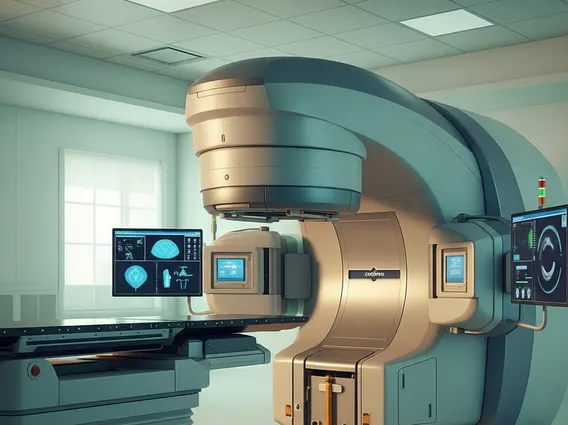
Key Takeaways
- Proton Beam Radiation Therapy is an advanced radiation treatment that uses protons to target tumors with high precision.
- Unlike traditional X-ray radiation, proton therapy delivers most of its energy directly to the tumor site, sparing healthy tissues.
- This precision can lead to fewer and less severe side effects, especially for sensitive areas or pediatric patients.
- Common side effects, though often milder, can include fatigue, skin irritation, and localized discomfort.
- The therapy is a complex process involving sophisticated technology and a multidisciplinary medical team.
What is Proton Beam Radiation Therapy?
Proton Beam Radiation Therapy is a sophisticated type of external beam radiation therapy that utilizes protons, which are positively charged particles, to treat cancer. Unlike conventional radiation therapy that uses X-rays (photons), protons have a unique physical property known as the Bragg peak. This allows them to deposit the majority of their energy at a specific, controlled depth within the body, directly at the tumor site, before rapidly falling to zero. This precision is particularly beneficial for tumors located near critical organs or in pediatric patients, where minimizing radiation exposure to healthy tissues is paramount. According to the World Health Organization (WHO), cancer is a leading cause of death worldwide, and radiation therapy plays a crucial role in its treatment, with proton therapy offering a specialized approach for specific cases.
This advanced treatment requires specialized equipment, including a particle accelerator (cyclotron or synchrotron) to generate and accelerate protons to high energies. The beams are then guided to the patient’s treatment room, where they are precisely shaped and delivered to the tumor. The ability to control the depth and intensity of the proton beam allows oncologists to deliver a highly conformal dose of radiation, maximizing tumor destruction while significantly reducing the dose to adjacent healthy structures.
How Proton Beam Therapy Works
The mechanism of how proton beam therapy works hinges on the unique physical properties of protons. When a proton beam enters the body, it travels through tissue, gradually losing energy until it reaches a specific depth. At this point, it releases a burst of energy, known as the Bragg peak, and then stops. This contrasts sharply with X-ray radiation, which deposits energy along its entire path through the body, both before and after the tumor.
The process involves several key steps:
- Imaging and Planning: Before treatment, detailed imaging (CT, MRI, PET scans) is used to precisely map the tumor’s location, size, and proximity to critical structures. A treatment plan is then meticulously designed by a team of radiation oncologists, medical physicists, and dosimetrists.
- Proton Generation: Protons are generated from hydrogen gas and accelerated to very high speeds (up to two-thirds the speed of light) by a cyclotron or synchrotron.
- Beam Delivery: The high-energy proton beam is then guided through a beamline to the treatment room. Sophisticated magnets and shaping devices are used to sculpt the beam to match the exact shape and depth of the tumor.
- Targeted Treatment: The patient is positioned accurately, and the proton beam is delivered to the tumor, releasing its therapeutic energy precisely where needed and minimizing radiation dose to surrounding healthy tissues.
This precise energy deposition allows for higher doses to be delivered to the tumor, potentially increasing the chances of tumor control, while simultaneously reducing the risk of treatment-related complications.
Benefits and Side Effects of Proton Beam Therapy
The primary benefits of proton beam therapy stem from its remarkable precision, which allows for a highly targeted delivery of radiation. This precision is particularly advantageous for tumors located in sensitive areas, such as the brain, spinal cord, eyes, head and neck, and pediatric cancers, where minimizing damage to developing or critical organs is crucial. The reduced radiation exposure to healthy tissues can translate into a lower risk of certain short-term and long-term side effects compared to conventional radiation therapy.
Key benefits include:
- Reduced Damage to Healthy Tissue: The Bragg peak effect ensures that radiation dose is concentrated within the tumor, sparing surrounding healthy organs and tissues.
- Lower Risk of Secondary Cancers: By reducing overall radiation exposure to healthy cells, proton therapy may lower the risk of developing secondary cancers later in life, a significant concern, especially for younger patients.
- Fewer and Milder Side Effects: Patients often experience fewer and less severe side effects, which can lead to a better quality of life during and after treatment.
- Effective for Complex Tumors: Its precision makes it suitable for treating tumors that are irregularly shaped or located close to vital structures.
Despite its advantages, proton beam therapy side effects can occur, similar to other forms of radiation therapy, though they are often less severe. These side effects are generally localized to the treated area and can vary depending on the tumor’s location, the total dose of radiation, and individual patient factors. Common side effects may include fatigue, skin irritation (redness, dryness, peeling) in the treated area, hair loss in the radiation field, and localized discomfort or pain. For treatments involving the head or neck, patients might experience mouth sores, difficulty swallowing, or changes in taste. Nausea or digestive issues can occur if the abdomen is treated. These side effects are typically managed with supportive care and often resolve after treatment concludes. Patients are closely monitored by their medical team to manage any emerging side effects effectively.



















