
Prosthesis
A prosthesis is an artificial device designed to replace a missing body part, which may be lost due to trauma, disease, or a congenital condition. These devices play a crucial role in restoring function and improving the quality of life for individuals with limb loss or other physical impairments.
Key Takeaways
- A prosthesis is an artificial device that replaces a missing body part, restoring both function and appearance.
- Prosthetic devices vary widely, from limbs to internal implants, and are tailored to individual needs.
- Modern prosthetics incorporate advanced materials and technologies, including myoelectric controls, to enhance functionality.
- Using a prosthesis can significantly improve mobility, independence, and overall quality of life for individuals.
- Proper fitting, rehabilitation, and ongoing care are essential for successful prosthetic use and adaptation.
What is a Prosthesis?
A prosthesis refers to an artificial device that replaces a missing body part, aiming to restore both the function and, in many cases, the appearance of the lost limb or organ. These devices are custom-designed to meet the specific needs of an individual, considering factors such as the level of amputation, lifestyle, and unique physical characteristics. The primary goal of a prosthesis is to enable individuals to perform daily activities, regain mobility, and enhance their independence, thereby significantly improving their overall quality of life.
The development of prosthetics has evolved considerably, moving from basic wooden or metal replacements to sophisticated devices incorporating advanced materials like carbon fiber, titanium, and silicone. This evolution allows for lighter, stronger, and more aesthetically pleasing prostheses that can be precisely fitted and controlled. According to the Centers for Disease Control and Prevention (CDC), approximately 1.8 million people in the United States are living with limb loss, highlighting the widespread need for effective prosthetic solutions.
Types of Prosthetic Devices and How They Function
There is a wide array of prosthetic devices, each designed for specific body parts and functionalities. These devices are broadly categorized by the part of the body they replace and the technology they employ to function. Understanding the different types of prosthetic devices helps appreciate their diverse applications and capabilities.
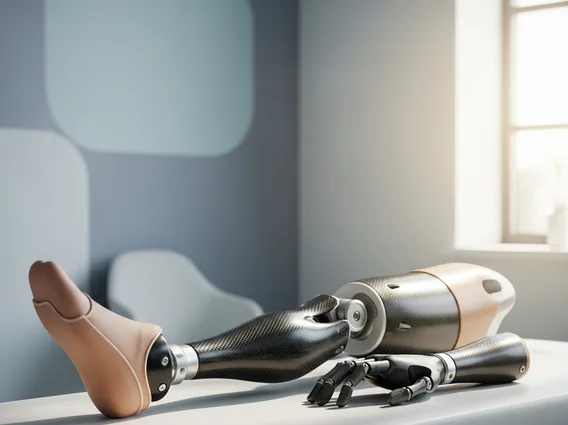
How do prosthetics work depends largely on their design and the type of limb or body part they replace. For external prostheses, such as those for limbs, they typically consist of a custom-fitted socket that attaches to the residual limb, an pylon (a structural component), and a terminal device (e.g., a foot, hand, or hook). Advanced prosthetics can incorporate microprocessors, sensors, and motors to mimic natural movement and provide greater control. For instance, myoelectric prostheses use electrodes that detect electrical signals from residual muscles, translating them into movement of the prosthetic hand or arm.
Common types of prosthetic devices include:
- Upper-Limb Prostheses: These replace parts of the arm, hand, or fingers. They can range from passive cosmetic devices to highly functional myoelectric or body-powered devices that allow for grasping and manipulation.
- Lower-Limb Prostheses: Designed for legs, feet, or toes. These are crucial for mobility and balance, with advanced designs featuring microprocessor-controlled knees and ankles that adapt to different terrains and walking speeds.
- Ocular Prostheses: Artificial eyes that restore the appearance of the eye socket after enucleation (removal of the eye). They are custom-painted to match the natural eye.
- Maxillofacial Prostheses: These replace parts of the face, such as ears, noses, or other facial structures, often used after surgery for cancer or trauma.
- Internal Prostheses: While not typically what people imagine, devices like artificial heart valves, joint replacements (e.g., hip or knee), and dental implants are also forms of prostheses that function internally to restore bodily functions.
Benefits of Using a Prosthesis
The benefits of using a prosthesis are extensive and significantly impact an individual’s physical, psychological, and social well-being. By replacing a missing body part, prostheses enable individuals to regain a substantial degree of their previous capabilities, fostering greater independence and participation in daily life.
One of the primary benefits is the restoration of mobility and function. For individuals with limb loss, a well-fitted prosthesis allows them to walk, run, grasp objects, and perform tasks that would otherwise be challenging or impossible. This functional restoration leads to increased self-sufficiency, reducing reliance on others for basic needs. Beyond physical capabilities, prostheses also offer significant psychological advantages. They can improve body image, boost self-confidence, and reduce feelings of isolation or self-consciousness, helping individuals reintegrate into social and professional environments. The ability to return to work, engage in hobbies, and participate in recreational activities further enhances mental health and overall life satisfaction.
Moreover, modern prosthetic technology continues to advance, offering increasingly sophisticated and comfortable devices that are tailored to individual lifestyles, from high-performance sports prostheses to those designed for everyday comfort and aesthetics. This ongoing innovation ensures that more people can benefit from these life-changing devices, leading to improved long-term health outcomes and a higher quality of life.



















