Poly Adp Ribose Polymerase 1
Poly Adp Ribose Polymerase 1 (PARP1) is a crucial enzyme involved in maintaining genomic integrity within cells. Its primary role lies in detecting and repairing DNA damage, a fundamental process for preventing mutations and cellular dysfunction.
Key Takeaways
- Poly Adp Ribose Polymerase 1 (PARP1) is a vital enzyme responsible for detecting and initiating the repair of DNA damage.
- PARP1 primarily recognizes single-strand breaks (SSBs) in DNA, binding to them and recruiting other repair proteins.
- Its mechanism involves synthesizing poly(ADP-ribose) (PAR) chains on itself and other proteins, signaling for DNA repair.
- The enzyme’s activity is essential for maintaining genomic stability and preventing diseases like cancer.
- PARP1 inhibitors are a class of drugs used in cancer therapy, leveraging the enzyme’s role in DNA repair to selectively target cancer cells.
What is Poly Adp Ribose Polymerase 1 (PARP1)?
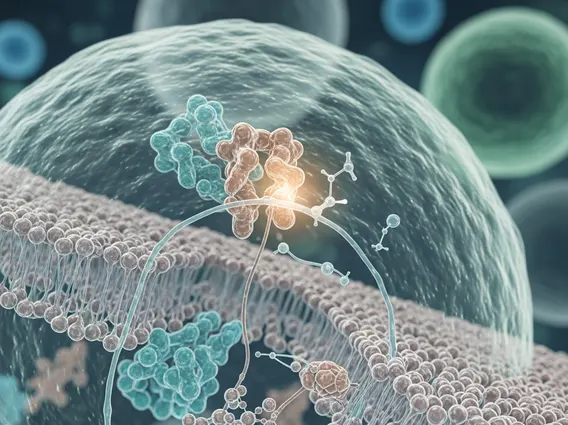
Poly Adp Ribose Polymerase 1 (PARP1) is a nuclear enzyme found in eukaryotic cells, playing a central role in DNA repair, genomic stability, and programmed cell death. As a member of the PARP family of proteins, PARP1 is the most abundant and well-characterized, responsible for the vast majority of cellular poly(ADP-ribosyl)ation activity. This enzyme acts as a “first responder” to DNA damage, particularly single-strand breaks (SSBs), which are common forms of DNA lesions. Upon detecting such damage, PARP1 rapidly binds to the affected site, initiating a cascade of events that ultimately leads to the restoration of DNA integrity. Its ubiquitous presence and high activity underscore its fundamental importance in cellular health and disease prevention.
PARP1’s significance extends beyond basic DNA repair; it also influences various cellular processes, including transcription, replication, and chromatin structure. The enzyme utilizes nicotinamide adenine dinucleotide (NAD+) as a substrate to synthesize branched chains of poly(ADP-ribose) (PAR) and attach them to target proteins, including itself. This process, known as poly(ADP-ribosyl)ation, acts as a molecular signal, recruiting other DNA repair proteins to the site of damage. The intricate regulation of PARP1 activity is critical, as both its overactivity and underactivity can have detrimental effects on cellular function and viability.
PARP1 Function and Mechanism in DNA Repair
The PARP1 function and mechanism are intricately linked to the cell’s ability to maintain its genetic blueprint. When DNA damage, such as single-strand breaks, occurs, Poly Adp Ribose Polymerase 1 rapidly recognizes and binds to these lesions. This binding event activates the enzyme, triggering its catalytic activity. Once activated, PARP1 begins to synthesize poly(ADP-ribose) (PAR) chains from NAD+ molecules. These PAR chains are then covalently attached to PARP1 itself (auto-poly(ADP-ribosyl)ation) and to other nuclear proteins involved in DNA repair, chromatin remodeling, and cell cycle control.
The role of PARP1 in DNA repair is primarily to facilitate the base excision repair (BER) pathway, which is crucial for fixing common DNA lesions like oxidized or alkylated bases and single-strand breaks. The PAR chains serve several vital functions:
- Recruitment of Repair Factors: PAR chains act as a “landing pad” for other DNA repair proteins, such as X-ray repair cross-complementing protein 1 (XRCC1) and DNA ligase III, bringing them to the site of damage.
- Chromatin Remodeling: Poly(ADP-ribosyl)ation can alter chromatin structure, making the damaged DNA more accessible to repair enzymes.
- Signaling: The presence of PAR chains signals the cell to halt replication and transcription temporarily, allowing time for repair before proceeding.
The PARP1 enzyme activity explained involves a precise sequence of events. First, the enzyme’s DNA-binding domain detects and binds to the broken DNA ends. This binding induces a conformational change that activates the catalytic domain. The activated domain then consumes NAD+ to synthesize PAR polymers. These polymers, once attached to target proteins, create a scaffold that orchestrates the recruitment and assembly of the entire repair machinery. After the DNA damage is repaired, the PAR chains are rapidly degraded by poly(ADP-ribose) glycohydrolase (PARG), allowing the chromatin structure to revert and cellular processes to resume. This dynamic process ensures efficient and timely DNA repair, safeguarding the cell from potentially harmful mutations. The critical nature of PARP1 in this process makes it a significant target in oncology, where inhibiting its activity can sensitize cancer cells to other DNA-damaging therapies.