Pituitary Gland
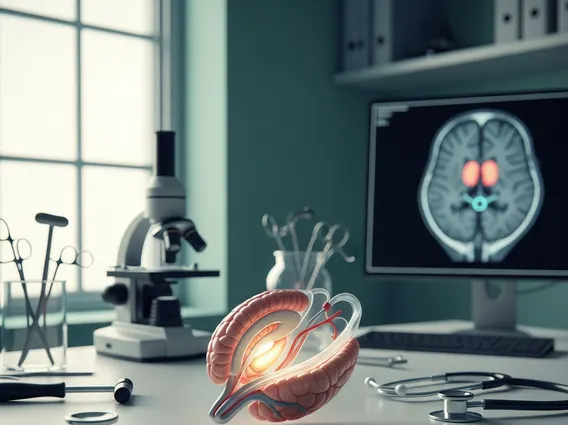
The pituitary gland is a small, pea-sized endocrine gland located at the base of the brain, playing a crucial role in regulating various bodily functions by producing and secreting hormones. Often referred to as the “master gland,” it influences many other endocrine glands.
Key Takeaways
- The pituitary gland is a vital endocrine gland situated at the base of the brain, beneath the hypothalamus.
- It regulates numerous bodily functions by producing hormones that control other glands, such as the thyroid, adrenal glands, and gonads.
- Key hormones include growth hormone, thyroid-stimulating hormone, adrenocorticotropic hormone, prolactin, and antidiuretic hormone.
- Disorders can arise from overproduction (hyperpituitarism) or underproduction (hypopituitarism) of these hormones.
- Common conditions include pituitary adenomas, acromegaly, Cushing’s disease, and diabetes insipidus.
What is the Pituitary Gland: Location and Purpose
The Pituitary Gland is a small, pea-sized endocrine gland that plays a central role in the endocrine system. It is nestled in a bony cavity at the base of the skull, behind the bridge of the nose, called the sella turcica. Its strategic location allows it to interact closely with the hypothalamus, a part of the brain that sends signals to the pituitary, influencing its hormone release. The primary pituitary gland location and purpose is to produce and release hormones that control the function of most other endocrine glands in the body, thereby regulating growth, metabolism, reproduction, and stress response.
Despite its small size, the pituitary gland is divided into two main parts: the anterior pituitary (adenohypophysis) and the posterior pituitary (neurohypophysis), each responsible for producing or releasing different sets of hormones. This intricate structure allows it to serve as a critical link between the nervous system and the endocrine system, ensuring overall bodily homeostasis.
Pituitary Gland Function and Hormones
The pituitary gland function and hormones it produces are essential for maintaining the body’s internal balance and regulating numerous physiological processes. The anterior pituitary synthesizes and secretes six major hormones, while the posterior pituitary releases two hormones produced by the hypothalamus. These hormones act on target glands and tissues throughout the body, orchestrating a wide range of functions.
Here is a summary of the key hormones released by the pituitary gland and their primary functions:
| Hormone | Source | Primary Function |
|---|---|---|
| Growth Hormone (GH) | Anterior Pituitary | Stimulates growth, cell reproduction, and regeneration. |
| Thyroid-Stimulating Hormone (TSH) | Anterior Pituitary | Stimulates the thyroid gland to produce thyroid hormones. |
| Adrenocorticotropic Hormone (ACTH) | Anterior Pituitary | Stimulates the adrenal glands to produce cortisol. |
| Follicle-Stimulating Hormone (FSH) | Anterior Pituitary | Regulates reproductive processes in both sexes. |
| Luteinizing Hormone (LH) | Anterior Pituitary | Triggers ovulation in females and testosterone production in males. |
| Prolactin (PRL) | Anterior Pituitary | Stimulates milk production in lactating mothers. |
| Antidiuretic Hormone (ADH) | Posterior Pituitary | Regulates water balance by controlling kidney reabsorption. |
| Oxytocin | Posterior Pituitary | Involved in uterine contractions during childbirth and milk ejection. |
Each of these hormones plays a vital role in specific bodily systems, highlighting the pituitary gland’s extensive influence over health and well-being.
Common Pituitary Gland Disorders
Dysfunction of the pituitary gland can lead to a variety of health issues, collectively known as common pituitary gland disorders. These conditions typically arise from either an overproduction (hyperpituitarism) or underproduction (hypopituitarism) of one or more pituitary hormones. The most frequent cause of pituitary disorders is the development of pituitary adenomas, which are benign (non-cancerous) tumors.
Examples of common disorders include:
- Acromegaly and Gigantism: Caused by an excess of Growth Hormone (GH), leading to abnormal growth, particularly in hands, feet, and face in adults (acromegaly) or excessive overall growth in children (gigantism).
- Cushing’s Disease: Results from an overproduction of Adrenocorticotropic Hormone (ACTH), which in turn causes the adrenal glands to produce too much cortisol, leading to weight gain, high blood pressure, and muscle weakness.
- Prolactinoma: The most common type of pituitary tumor, leading to an excess of prolactin. In women, this can cause irregular periods and milk production outside of pregnancy; in men, it can lead to decreased libido and erectile dysfunction.
- Hypopituitarism: A condition where the pituitary gland produces too little of one or more hormones. This can affect various bodily functions, depending on which hormones are deficient, leading to symptoms like fatigue, weight changes, and reproductive issues.
- Diabetes Insipidus: Caused by a deficiency in Antidiuretic Hormone (ADH), leading to excessive thirst and urination.
According to the Pituitary Society, pituitary tumors are relatively common, with an estimated prevalence of 1 in 1,000 people, although many remain undiagnosed due to their small size and lack of symptoms. Diagnosis and treatment of pituitary disorders often involve hormone level tests, imaging studies, and may include medication, surgery, or radiation therapy to restore hormone balance.