Photopheresis
Photopheresis is a specialized medical procedure used to treat certain autoimmune diseases and conditions where the immune system attacks the body’s own tissues. This therapeutic approach involves collecting a patient’s blood, treating a portion of it outside the body, and then returning it.
Key Takeaways
- Photopheresis is a therapeutic apheresis procedure that modifies immune cells.
- It involves collecting blood, separating white blood cells, treating them with a photosensitizing agent and UV light, and returning them to the patient.
- The treatment aims to induce immune tolerance or suppress harmful immune responses.
- It is primarily used for conditions like cutaneous T-cell lymphoma and graft-versus-host disease.
- The procedure is generally safe but requires specialized equipment and trained personnel.
What is Photopheresis?
Photopheresis is a form of apheresis, a medical procedure where blood is drawn from a patient, processed, and then returned. Specifically, it is an extracorporeal photochemotherapy that involves collecting a patient’s white blood cells (leukocytes), treating them with a photosensitizing agent (psoralen), exposing them to ultraviolet A (UVA) light, and then reinfusing them back into the patient. This process aims to modulate the immune system, making it less reactive or inducing tolerance in certain autoimmune and lymphoproliferative disorders. The core principle behind photopheresis is to selectively target and modify pathogenic immune cells, particularly T-lymphocytes, which play a crucial role in various immune-mediated diseases.
How Does Photopheresis Work?
The mechanism by which photopheresis exerts its therapeutic effects is complex and involves several steps that ultimately lead to immune modulation. The photosensitizing agent, 8-methoxypsoralen (8-MOP), intercalates into the DNA of the treated white blood cells. When these cells are exposed to UVA light, the 8-MOP forms covalent bonds with the DNA, causing cross-linking. This DNA damage prevents the cells from replicating and can induce apoptosis (programmed cell death) in the targeted lymphocytes. Importantly, the reinfusion of these treated, apoptotic cells is thought to trigger a broader immune response. Macrophages and dendritic cells in the patient’s body engulf these apoptotic cells, presenting their antigens in a way that promotes immune tolerance rather than an inflammatory response. This process can lead to the generation of regulatory T-cells, which suppress harmful immune reactions, thereby reducing disease activity.
Photopheresis Treatment: Procedure and Uses
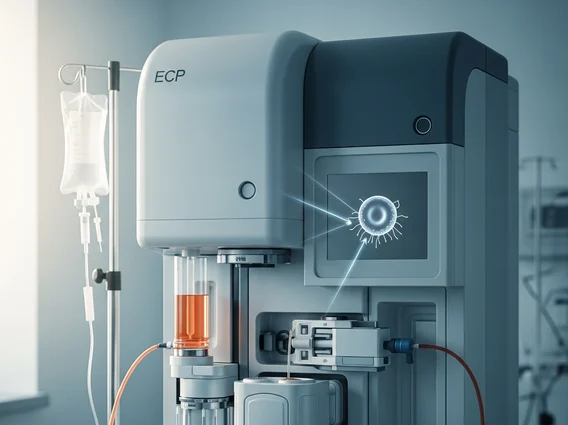
The Photopheresis treatment explained involves a multi-step process typically performed in a specialized apheresis unit. Patients usually have intravenous access established, often through a central line, to allow for continuous blood flow. The procedure begins with the collection of blood, which is then passed through an apheresis machine. This machine separates the blood components, specifically isolating the white blood cells. The isolated white blood cells are then mixed with 8-MOP. Following this, the mixture is exposed to UVA light within the machine. Finally, the treated white blood cells, along with the remaining blood components, are returned to the patient. A typical session lasts approximately 2-4 hours, and the frequency and duration of treatment cycles depend on the specific condition being treated and the patient’s response.
The Photopheresis procedure and uses are well-established for several conditions. It is FDA-approved for the treatment of cutaneous T-cell lymphoma (CTCL), particularly in its advanced stages, where it can significantly improve skin lesions and quality of life. Beyond CTCL, photopheresis is also widely used off-label for other severe immune-mediated diseases, including:
- Graft-versus-host disease (GVHD): A serious complication following allogeneic hematopoietic stem cell transplantation, where donor immune cells attack the recipient’s tissues. Photopheresis helps to modulate the donor T-cells, reducing their reactivity.
- Solid organ transplant rejection: Used in some cases of refractory rejection, particularly lung and heart transplant rejection, to suppress the recipient’s immune response against the transplanted organ.
- Autoimmune diseases: Explored for conditions like systemic sclerosis and Crohn’s disease, though its use in these areas is still under investigation or limited to specific refractory cases.
According to data from the International Society for Apheresis (ISFA), photopheresis is considered a first-line or second-line treatment for several of these conditions, highlighting its importance in specialized medical care.