Peripheral Blood Smear
A Peripheral Blood Smear (PBS) is a fundamental diagnostic tool in medicine, offering a microscopic view of a patient’s blood components. This simple yet powerful test provides crucial insights into various hematological conditions, aiding in diagnosis and monitoring.
Key Takeaways
- A Peripheral Blood Smear involves examining a thin layer of blood under a microscope to assess blood cell morphology and count.
- It is essential for identifying abnormalities in red blood cells, white blood cells, and platelets that automated analyzers might miss.
- The test plays a critical role in diagnosing and monitoring a wide range of conditions, including various forms of anemia, leukemia, infections, and platelet disorders.
- Expert interpretation of the smear is required to recognize subtle variations in cell size, shape, color, and internal structures.
- PBS complements automated complete blood counts by providing visual confirmation and detailed cellular assessment, guiding further diagnostic steps.
What is a Peripheral Blood Smear?
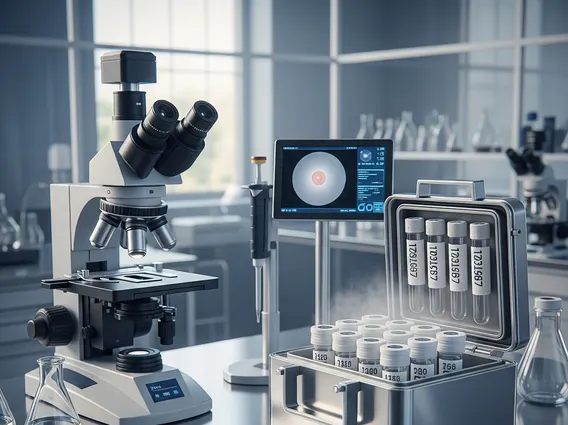
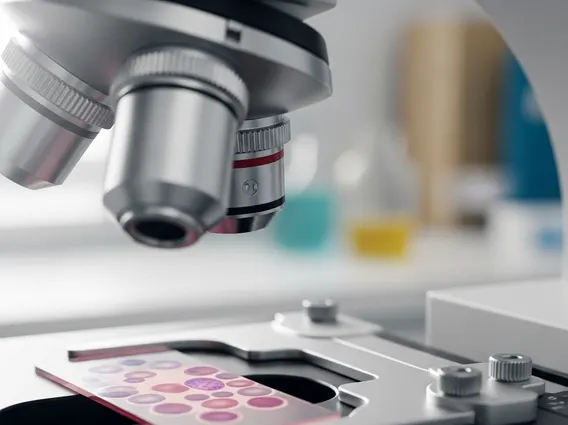
A Peripheral Blood Smear (PBS) is a laboratory procedure where a drop of blood, typically collected from a vein or fingertip, is spread thinly onto a glass slide. After drying, the slide is stained with specific dyes, most commonly Wright-Giemsa stain, which highlights various cellular components. This prepared slide is then examined under a microscope by a trained hematologist or medical technologist. The primary goal is to visually assess the size, shape, color, and internal structures of red blood cells (erythrocytes), white blood cells (leukocytes), and platelets (thrombocytes), as well as their relative proportions and distribution.
This microscopic examination provides a wealth of information that automated blood analyzers may not capture, such as subtle morphological changes in cells or the presence of abnormal cells. For instance, while an automated count might indicate a low red blood cell count, a PBS can reveal if the cells are unusually small (microcytic), large (macrocytic), or abnormally shaped (poikilocytosis), which helps pinpoint the specific type of anemia. According to the World Health Organization (WHO), accurate diagnosis of blood disorders, often reliant on PBS, is vital for effective treatment strategies globally.
Purpose and Interpretation of Peripheral Blood Smear Results
The peripheral blood smear purpose extends beyond merely counting cells; it serves as a critical diagnostic tool for a wide array of hematological and systemic conditions. Clinicians request a PBS to investigate unexplained anemia, abnormal white blood cell counts, unexplained bleeding or clotting issues, and to monitor the progression of known blood disorders. It is particularly invaluable in confirming or refining diagnoses suggested by automated complete blood count (CBC) results, as it allows for direct visualization of cellular abnormalities that automated systems might flag but not fully characterize.
For example, in cases of suspected leukemia, the presence of immature blast cells on a smear can be a definitive indicator, guiding immediate treatment decisions. Similarly, parasitic infections like malaria can be identified by observing the parasites within red blood cells. The comprehensive peripheral blood smear analysis involves a systematic examination of the entire smear, including the estimation of cell counts, assessment of cellular morphology, and identification of any abnormal or foreign elements.
How to Interpret Peripheral Blood Smear
Interpreting a peripheral blood smear requires extensive training and experience, focusing on several key aspects of blood cell morphology and distribution. The process begins with a low-power scan to assess overall cellularity, platelet estimation, and the presence of large abnormal cells or cell clumps. Subsequently, higher magnification is used for detailed examination of individual cell types. Key elements assessed include:
- Red Blood Cells (Erythrocytes): Evaluated for size (normocytic, microcytic, macrocytic), shape (e.g., sickle cells, spherocytes, target cells), color (normochromic, hypochromic), and the presence of inclusions (e.g., Howell-Jolly bodies, basophilic stippling).
- White Blood Cells (Leukocytes): A differential count is performed, identifying the percentages of neutrophils, lymphocytes, monocytes, eosinophils, and basophils. Abnormalities such as immature forms (e.g., myeloblasts, promyelocytes), toxic granulation, hypersegmentation, or atypical lymphocytes are noted.
- Platelets (Thrombocytes): Assessed for count (adequate, decreased, increased), size (e.g., giant platelets), and morphology (e.g., hypogranular platelets). Clumping is also noted.
The findings from a PBS are then correlated with the patient’s clinical history, symptoms, and other laboratory results to arrive at a definitive diagnosis. This holistic approach ensures accurate patient management and guides further diagnostic or therapeutic interventions. For instance, the presence of schistocytes (fragmented red blood cells) might indicate microangiopathic hemolytic anemia, while an increase in eosinophils could suggest an allergic reaction or parasitic infection.
In conclusion, the peripheral blood smear remains an indispensable diagnostic tool in modern medicine. Despite advancements in automated hematology, the detailed morphological information provided by a manual PBS is often critical for accurate diagnosis, differentiation of various conditions, and monitoring treatment efficacy. Its ability to reveal subtle cellular changes makes it a cornerstone in the management of patients with suspected or confirmed hematological disorders.