
Perihilar Bile Duct Cancer
Perihilar bile duct cancer is a rare and aggressive form of cancer that originates in the bile ducts just outside the liver. Understanding this complex disease is crucial for early detection and effective management.
Key Takeaways
- Perihilar Bile Duct Cancer, also known as a Klatskin tumor, is a rare cancer affecting the bile ducts near the liver.
- Common perihilar bile duct cancer symptoms include jaundice, itching, dark urine, and unexplained weight loss.
- The exact causes of perihilar bile duct cancer are often unknown, but risk factors include primary sclerosing cholangitis and chronic inflammation.
- Perihilar bile duct cancer treatment options primarily involve surgery, often combined with chemotherapy or radiation therapy.
- Early diagnosis is vital, as treatment effectiveness largely depends on the stage of the cancer at detection.
What is Perihilar Bile Duct Cancer?
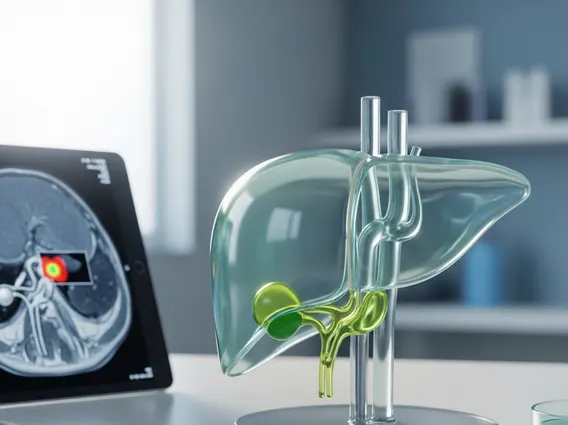
Perihilar Bile Duct Cancer, also medically referred to as a Klatskin tumor, is a type of cholangiocarcinoma that develops in the bile ducts located at the hilum of the liver. These ducts are critical for transporting bile, a digestive fluid, from the liver to the small intestine. This specific location, where the left and right hepatic ducts join to form the common hepatic duct, makes these tumors particularly challenging due to their proximity to major blood vessels and vital liver structures.
This cancer is considered rare, with cholangiocarcinoma, the broader category of bile duct cancers, having an incidence of approximately 1-2 cases per 100,000 people per year in Western countries, according to the National Cancer Institute. Its aggressive nature and tendency to present with non-specific symptoms often lead to diagnosis at advanced stages, complicating treatment and prognosis.
Symptoms and Causes of Perihilar Bile Duct Cancer
The manifestation of perihilar bile duct cancer symptoms typically occurs when the tumor grows large enough to obstruct the bile ducts, leading to a buildup of bile in the liver. These symptoms can be subtle initially but tend to worsen as the obstruction progresses. Recognizing these signs early is important for prompt medical evaluation.
- Jaundice: Yellowing of the skin and eyes, caused by bilirubin buildup.
- Itching (Pruritus): Generalized itching due to bile salts accumulating in the skin.
- Dark Urine: Urine may appear dark brown or tea-colored.
- Light-colored Stools: Stools may be pale or clay-colored due to lack of bile pigment.
- Unexplained Weight Loss: Significant and unintentional loss of body weight.
- Abdominal Pain: Discomfort or pain in the upper right quadrant of the abdomen.
- Fever and Chills: May indicate an infection in the bile ducts.
The exact causes of perihilar bile duct cancer are often not fully understood, and many cases occur without clear risk factors. However, several conditions are known to increase the risk of developing this cancer. These include primary sclerosing cholangitis (a chronic inflammatory disease of the bile ducts), chronic inflammation of the bile ducts (such as from recurrent infections or gallstones), certain parasitic infections (like liver flukes common in some parts of Asia), and exposure to specific toxins. Genetic predispositions or certain congenital abnormalities of the bile ducts can also play a role, though these are less common.
Perihilar Bile Duct Cancer Treatment Options
The selection of perihilar bile duct cancer treatment options depends on several factors, including the stage of the cancer, its exact location, the patient’s overall health, and whether the tumor can be surgically removed. Due to the complex anatomy of the perihilar region, treatment often requires a multidisciplinary approach involving surgeons, oncologists, radiation oncologists, and gastroenterologists.
Surgical resection is considered the primary curative treatment for perihilar bile duct cancer, but it is only feasible for a minority of patients whose tumors are localized and can be completely removed. This complex surgery may involve removing part of the liver and reconstructing the bile ducts. For patients who are not candidates for surgery, or as an adjuvant therapy, other treatments are utilized. Chemotherapy, often a combination of drugs, is used to kill cancer cells, while radiation therapy uses high-energy rays to target and destroy tumor cells. In very select cases, liver transplantation may be considered for early-stage tumors that cannot be removed surgically. Palliative care, including stenting to relieve bile duct obstruction and manage symptoms, is crucial for improving quality of life for patients with advanced or inoperable disease.



















