Pelvis
The pelvis is a crucial anatomical structure located at the base of the spine, serving as a connection point between the axial skeleton and the lower limbs. Understanding its composition and roles is fundamental to comprehending human movement and overall bodily support.
Key Takeaways
- The pelvis is a basin-shaped bony structure connecting the spine to the lower limbs.
- It protects internal organs, supports the upper body, and facilitates locomotion.
- Key bones include the sacrum, coccyx, and two hip bones (ilium, ischium, pubis).
- Pelvic variations exist, notably between male and female skeletons, influencing childbirth.
- Proper pelvic function is vital for stability, posture, and organ protection.
What is the Pelvis? Definition and Overview
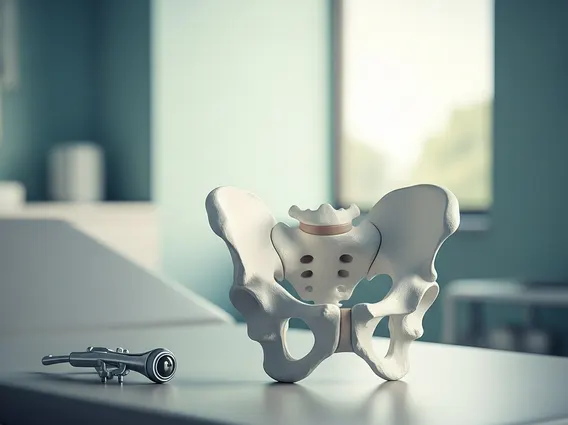
The Pelvis refers to the sturdy, basin-shaped bony structure situated at the lower part of the trunk, between the abdomen and the thighs. It forms the connection between the vertebral column and the lower limbs, playing a pivotal role in weight bearing and locomotion. This intricate structure is composed of several fused bones, creating a protective enclosure for various organs. The pelvis definition and overview highlight its importance as a central anatomical hub, providing support for the upper body and transmitting forces to the legs. It is essential for maintaining an upright posture and enabling diverse movements.
Pelvis Anatomy and Function
The pelvis anatomy and function are intrinsically linked, with its structure dictating its diverse roles in the human body. The pelvis is primarily formed by four bones: the sacrum, the coccyx, and two large hip bones (also known as innominate bones or coxal bones). Each hip bone is itself a fusion of three smaller bones: the ilium, the ischium, and the pubis. These bones articulate to form the pelvic girdle, which is further divided into the greater (false) pelvis and the lesser (true) pelvis.
The primary functions of the pelvis include:
- Support: It bears the weight of the upper body, transferring it to the lower limbs when standing or walking.
- Protection: It encases and protects vital organs such as the bladder, reproductive organs, and parts of the large intestine.
- Locomotion: It provides attachment points for numerous muscles of the trunk and lower limbs, facilitating movement.
- Childbirth (in females): The female pelvis is specifically adapted to allow for the passage of a baby during delivery.
What is the Pelvis Bone?
The pelvis bone refers collectively to the sacrum, coccyx, and the two hip bones (each comprising the ilium, ischium, and pubis) that form the entire pelvic girdle. These bones articulate at various joints, including the sacroiliac joints and the pubic symphysis, creating a robust yet flexible framework.
Types of Pelvis Bones
While the fundamental structure of the pelvis remains consistent, there are notable variations, particularly when considering the types of pelvis bones based on sex and anthropological classifications. The most commonly discussed distinction is between the male and female pelvis, which exhibit differences primarily adapted for reproductive functions in females.
- Female Pelvis: Generally wider and shallower than the male pelvis, with a larger and more circular pelvic inlet. The pubic arch is broader (typically >90 degrees), and the sacrum is shorter and less curved. These adaptations facilitate childbirth.
- Male Pelvis: Tends to be narrower and deeper, with a heart-shaped or oval pelvic inlet. The pubic arch is narrower (typically <90 degrees), and the sacrum is longer and more curved. These features provide a stronger framework for muscle attachment and weight bearing in a generally larger male physique.
Beyond sexual dimorphism, anthropologists also classify pelvic types based on the shape of the pelvic inlet, which can influence obstetric outcomes. The four main types, though often presenting as mixed forms, include:
- Gynaecoid: Considered the “ideal” female pelvis, rounded or slightly oval inlet, well-suited for childbirth.
- Android: Resembles the male pelvis, heart-shaped inlet, often associated with more difficult labor.
- Anthropoid: Long, narrow oval inlet, with a longer anteroposterior diameter.
- Platypelloid: Flat, wide oval inlet, with a shorter anteroposterior diameter.
These classifications highlight the diverse forms the pelvis can take, each with implications for its mechanical properties and biological functions.