
Pathologist
A pathologist is a medical doctor who specializes in diagnosing diseases by examining tissues, organs, bodily fluids, and autopsies. Their critical work underpins nearly all medical diagnoses, guiding patient care and treatment decisions.
Key Takeaways
- Pathologists are medical doctors crucial for disease diagnosis through laboratory analysis.
- Their responsibilities include examining biopsies, performing autopsies, and overseeing lab operations.
- Becoming a pathologist requires extensive education: medical school, residency, and often fellowship training.
- The field offers numerous subspecialties, from forensic pathology to dermatopathology.
- Pathologists play a vital, often behind-the-scenes, role in patient health and public health surveillance.
What is a Pathologist? Role and Responsibilities
A pathologist is a physician who acts as a detective in medicine, using laboratory findings to diagnose diseases. Their expertise is fundamental to patient care, as they provide definitive diagnoses that inform treatment plans. The work of a pathologist is broad, encompassing various analytical methods to identify disease processes, making their role indispensable in modern healthcare.
Pathologist job responsibilities are diverse and critical, impacting patient care at every stage. These include:
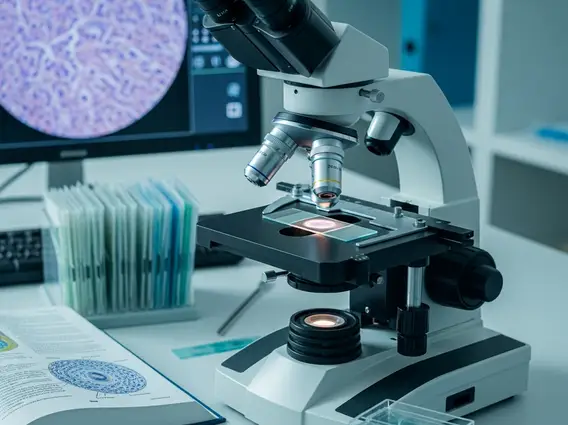
- Diagnosing diseases: Examining biopsies, surgical specimens, and cytology samples under a microscope to identify cancerous cells, infections, and other abnormalities.
- Performing autopsies: Determining the cause and manner of death, which can be crucial for legal, public health, and research purposes.
- Managing clinical laboratories: Overseeing blood banks, microbiology labs, and chemistry labs, ensuring accurate and timely test results.
- Consulting with other physicians: Providing expert interpretation of laboratory data and pathology reports to guide clinical decisions.
- Research and education: Contributing to medical knowledge through research and training future medical professionals.
According to the World Health Organization (WHO), accurate pathology services are essential for effective disease control and public health surveillance, particularly in diagnosing infectious diseases and monitoring cancer prevalence globally. Their work directly impacts patient outcomes by ensuring precise and timely diagnoses.
Pathologist Career Path: Education and Training
The journey to become a pathologist is rigorous and demanding, requiring extensive education and specialized training. The how to become a pathologist career path typically spans over a decade, building a strong foundation in medical science and diagnostic techniques.
The general steps involved in this extensive training include:
- Undergraduate Education: Earning a bachelor’s degree, often in a science-related field such as biology or chemistry, which typically takes four years.
- Medical School: Completing a Doctor of Medicine (MD) or Doctor of Osteopathic Medicine (DO) degree, a four-year program that provides a comprehensive medical education.
- Pathology Residency: After medical school, aspiring pathologists enter a residency program, typically lasting four years. This training provides hands-on experience in both anatomic pathology (examining tissues and organs) and clinical pathology (overseeing laboratory tests).
- Fellowship Training (Optional but Common): Many pathologists pursue an additional one to two years of fellowship training to specialize in a particular area of pathology, such as forensic pathology, dermatopathology, or hematopathology.
- Board Certification: Obtaining certification from the American Board of Pathology (or equivalent national board) is crucial for professional recognition and practice. This involves passing comprehensive examinations.
This structured training ensures that pathologists are highly skilled and knowledgeable in diagnosing a wide array of diseases, from common infections to rare genetic disorders, making them vital members of the healthcare team.
Exploring Pathology Subspecialties
The field of pathology is vast, offering numerous areas for specialization. Pathology subspecialties explained allow pathologists to focus their expertise on specific organ systems, disease types, or diagnostic techniques. This specialization enhances diagnostic accuracy and contributes significantly to advanced medical research and patient care.
Some prominent pathology subspecialties include:
- Anatomic Pathology: Focuses on the diagnosis of disease based on the macroscopic and microscopic examination of surgical specimens, biopsies, and whole bodies (autopsies).
- Clinical Pathology: Involves the laboratory diagnosis of disease using laboratory tests on bodily fluids and tissues, overseeing areas like hematology, microbiology, and clinical chemistry.
- Forensic Pathology: Determines the cause and manner of death in cases of unexpected or suspicious fatalities, often working closely with law enforcement.
- Dermatopathology: Specializes in diagnosing skin diseases by examining skin biopsies.
- Hematopathology: Focuses on diseases of the blood and blood-forming organs, such as leukemia and lymphoma.
- Neuropathology: Deals with diseases of the nervous system, including the brain, spinal cord, and nerves.
- Gastrointestinal Pathology: Specializes in diagnosing diseases of the digestive tract.
- Molecular Pathology: Uses molecular and genetic techniques to diagnose diseases, particularly cancers and genetic disorders.
These subspecialties highlight the depth and breadth of a pathologist’s role, demonstrating their integral contribution to nearly every aspect of modern medicine. Their specialized knowledge ensures precise diagnoses, which are paramount for effective patient treatment and public health initiatives.



















