Pathological Staging
Pathological staging is a critical process in oncology, providing essential information about the extent of cancer within a patient’s body. It involves the microscopic examination of tissue removed during surgery, offering a definitive assessment that guides subsequent treatment decisions.
Key Takeaways
- Pathological staging precisely determines the extent of cancer by analyzing surgically removed tissue.
- It provides crucial information about tumor size, lymph node involvement, and distant metastasis.
- The process relies on detailed microscopic examination by expert pathologists.
- Accurate staging is fundamental for tailoring effective treatment plans and predicting patient prognosis.
- It differs from clinical staging, which uses imaging and physical exams before surgery.
What is Pathological Staging?
What is pathological staging refers to the definitive assessment of cancer’s extent based on the microscopic examination of tissue samples obtained during surgery. Unlike clinical staging, which relies on imaging scans and physical examinations performed before an operation, pathological staging provides a more precise and direct evaluation of the tumor’s characteristics and spread. This detailed analysis is crucial for understanding the disease’s aggressiveness and its potential impact on the patient. The pathological staging cancer explanation involves determining several key factors, including the primary tumor’s size, whether cancer cells have spread to nearby lymph nodes, and if there is evidence of distant metastasis. According to the World Health Organization (WHO), cancer is a leading cause of death worldwide, and accurate staging is paramount for effective management, contributing significantly to improved patient outcomes.
Determining Pathological Staging
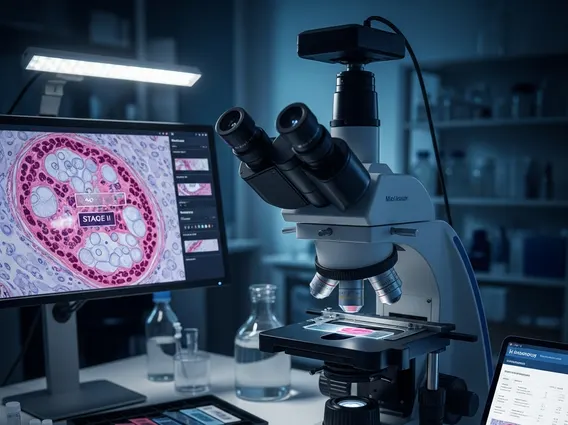
How is pathological staging determined involves a meticulous process carried out by expert pathologists. Following surgical removal of the tumor and often surrounding tissues or lymph nodes, these specimens are sent to the pathology laboratory. Here, the tissue is carefully processed, sectioned into very thin slices, and stained to highlight cellular structures. Pathologists then examine these slides under a microscope, looking for specific characteristics that define the cancer’s stage.
Key elements assessed during this examination include:
- Primary Tumor (T): Evaluating the size of the tumor and how deeply it has invaded surrounding tissues.
- Regional Lymph Nodes (N): Checking if cancer cells have spread to nearby lymph nodes, and if so, how many are affected.
- Distant Metastasis (M): Identifying if cancer has spread to distant organs or sites, though this is less commonly determined solely by surgical pathology and often involves pre-operative imaging.
This comprehensive microscopic analysis allows pathologists to assign a specific stage to the cancer, typically using systems like the TNM (Tumor, Node, Metastasis) classification, which is globally recognized and provides a standardized language for describing cancer extent.
Significance for Cancer Care
The importance of pathological staging cannot be overstated in modern oncology. It serves as the cornerstone for making informed decisions regarding a patient’s treatment plan. An accurate pathological stage allows oncologists to:
- Tailor Treatment Strategies: Based on the stage, doctors can determine the most appropriate course of action, which might include further surgery, chemotherapy, radiation therapy, targeted therapy, or immunotherapy. For instance, early-stage cancers might be treated with surgery alone, while advanced stages often require a multi-modal approach.
- Predict Prognosis: The stage of cancer is one of the strongest indicators of a patient’s likely outcome and survival rate. Patients with localized disease generally have a better prognosis than those with widespread metastasis.
- Guide Clinical Trials: Pathological staging is essential for stratifying patients in clinical trials, ensuring that new treatments are tested on comparable groups and that results are meaningful.
- Facilitate Communication: It provides a universal language for healthcare professionals to discuss a patient’s condition, ensuring consistency in care across different institutions and specialists.
Ultimately, precise pathological staging empowers medical teams to provide personalized, effective care, significantly impacting the quality of life and survival chances for individuals battling cancer.