Parp 1
Parp 1 is a crucial enzyme involved in various cellular processes, particularly DNA repair. Understanding its multifaceted roles is essential for comprehending cellular maintenance and its implications in disease.
Key Takeaways
- PARP1 is a vital enzyme primarily known for its role in DNA repair.
- It detects DNA damage and initiates repair pathways through poly ADP-ribosylation.
- Beyond DNA repair, PARP1 influences transcription, replication, and chromatin structure.
- Dysregulation of PARP1 is implicated in cancer development and other diseases.
- PARP1 inhibition is a significant strategy in cancer therapy, especially for cancers with homologous recombination deficiencies.
What is PARP1 (Poly ADP-ribose Polymerase 1)?
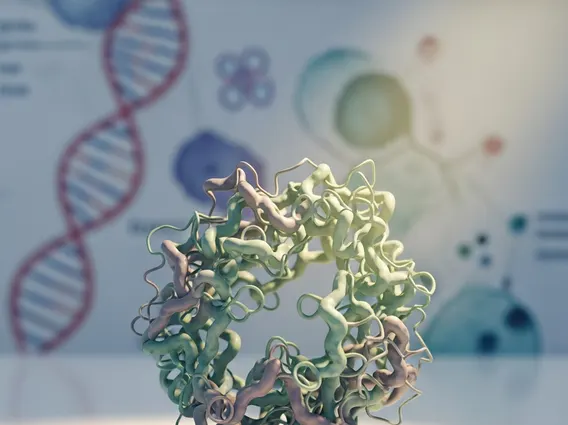
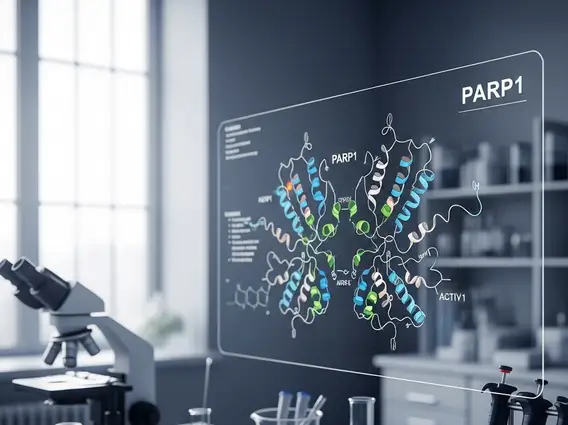
PARP1 (Poly ADP-ribose Polymerase 1) is a nuclear enzyme that plays a pivotal role in maintaining genomic integrity. It is one of the most abundant proteins in the nucleus, acting as a critical sensor and signal transducer of DNA damage. In cellular terms, PARP1 is an enzyme that catalyzes the transfer of ADP-ribose units from nicotinamide adenine dinucleotide (NAD+) to target proteins, a process known as poly ADP-ribosylation (PARylation). This modification is crucial for various cellular functions, most notably DNA repair, but also extends to gene transcription, chromatin remodeling, and cell death pathways. Its rapid activation upon DNA strand breaks makes it an immediate responder to cellular stress, initiating a cascade of events aimed at preserving the cell’s genetic material.
PARP1 Function, Mechanism, and Biological Significance
The PARP1 function and role are extensive, primarily centered around its ability to detect and respond to DNA damage. Upon encountering single-strand breaks or other DNA lesions, PARP1 rapidly binds to the damaged site. This binding activates the enzyme, initiating its catalytic activity. The PARP1 mechanism of action involves the synthesis of long, branched chains of poly(ADP-ribose) (PAR) polymers on itself (auto-PARylation) and on various acceptor proteins, including histones, DNA repair enzymes, and transcription factors. These PAR chains act as molecular signals, recruiting other DNA repair proteins to the site of damage, facilitating the repair process. For instance, PARP1 is a key player in the base excision repair (BER) pathway, which is responsible for repairing common types of DNA damage such as oxidized or alkylated bases.
Beyond its direct involvement in DNA repair, the PARP1 biological significance extends to several other crucial cellular processes. PARP1 influences chromatin structure by modifying histones, thereby impacting gene expression and DNA replication. It can also regulate inflammatory responses and cell death pathways, including apoptosis and necroptosis. The widespread involvement of PARP1 in these fundamental cellular activities underscores its importance in maintaining cellular homeostasis and preventing disease. Dysregulation or overactivation of PARP1 can lead to various pathological conditions. For example, excessive PARP1 activation can deplete cellular NAD+ and ATP stores, leading to cell death, which is implicated in conditions like stroke and myocardial infarction. Conversely, insufficient PARP1 activity can impair DNA repair, contributing to genomic instability, a hallmark of cancer.
The understanding of PARP1’s roles has led to significant advancements in medicine, particularly in oncology. PARP inhibitors, which block the enzyme’s activity, have emerged as a successful class of anticancer drugs. These inhibitors are particularly effective in treating cancers with underlying defects in homologous recombination repair, such as those with BRCA1 or BRCA2 mutations. In these cancers, PARP inhibition leads to synthetic lethality, where the cancer cells, already compromised in one repair pathway, cannot survive when PARP1-mediated repair is also blocked. Clinical applications of PARP inhibitors include treatments for:
- Ovarian cancer
- Breast cancer
- Prostate cancer
- Pancreatic cancer
According to the National Cancer Institute, PARP inhibitors have significantly improved outcomes for patients with these cancers, highlighting the profound clinical impact of understanding PARP1’s intricate biology.