Optic Chiasma
The optic chiasma is a crucial part of the visual pathway, responsible for processing visual information from both eyes. Understanding its structure and function is essential for comprehending how we perceive the world around us.
Key Takeaways
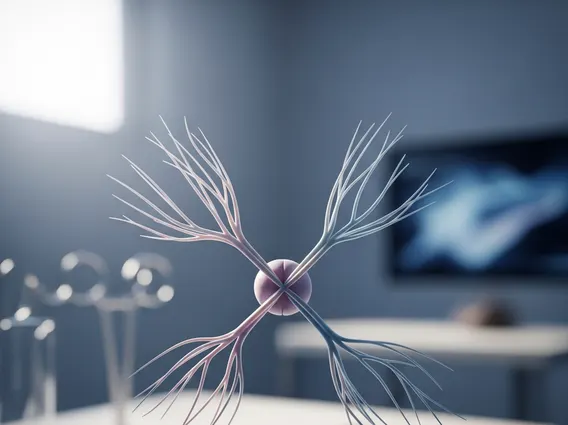
- The optic chiasma is a vital X-shaped structure in the brain where optic nerves partially cross.
- It plays a critical role in binocular vision and depth perception by integrating visual data from both eyes.
- Located beneath the brain, anterior to the pituitary gland, it’s a central hub for visual information.
- Disorders affecting the optic chiasma, such as tumors, can lead to specific visual field defects.
- Symptoms of optic chiasma conditions often include peripheral vision loss and headaches.
What is the Optic Chiasma?
Optic Chiasma refers to the X-shaped structure formed by the partial crossing of the optic nerves (cranial nerve II) in the brain. This anatomical arrangement is fundamental for binocular vision, allowing the brain to receive visual information from both visual fields. It is a critical junction where nerve fibers from the medial (nasal) retina of each eye cross over to the opposite side of the brain, while fibers from the lateral (temporal) retina remain on the same side. This decussation ensures that the visual cortex receives a complete representation of the contralateral visual field.
Optic Chiasma Anatomy, Location, and Function
The optic chiasm function and anatomy are intricately linked to its pivotal role in vision. The optic chiasma is strategically located at the base of the brain, anterior and superior to the pituitary gland, and inferior to the hypothalamus. It sits within the cranial cavity, specifically in the suprasellar cistern, a space filled with cerebrospinal fluid. This central location makes it susceptible to pressure from surrounding structures, particularly the pituitary gland.
The primary function of the optic chiasma is the partial decussation of optic nerve fibers. Specifically, fibers originating from the nasal (inner) half of each retina, which perceive the temporal (outer) visual field, cross over to the opposite side of the brain. Conversely, fibers from the temporal (outer) half of each retina, which perceive the nasal (inner) visual field, continue on the same side. This crossing ensures that the left visual field (seen by the temporal retina of the right eye and the nasal retina of the left eye) is processed by the right cerebral hemisphere, and vice versa for the right visual field. This organized relay of visual information is crucial for depth perception, visual field integration, and overall visual processing. Without this precise crossing, our ability to perceive a unified visual world would be severely impaired, leading to significant visual field defects.
Conditions Affecting the Optic Chiasma and Their Symptoms
Various conditions can impact the optic chiasma, leading to characteristic visual disturbances. Due to its close proximity to the pituitary gland, tumors originating from this gland, such as pituitary adenomas, are the most common cause of optic chiasm disorders symptoms. As these tumors grow, they can compress the chiasma, disrupting the transmission of visual signals. Other potential causes include craniopharyngiomas, meningiomas, gliomas, aneurysms, inflammatory conditions like multiple sclerosis, and traumatic injuries.
Symptoms often develop gradually and can vary depending on the exact location and extent of the compression or damage. The classic symptom associated with chiasmal compression is bitemporal hemianopsia, a loss of vision in the outer (temporal) halves of both visual fields. This occurs because the crossing fibers from the nasal retinas, which perceive the temporal visual fields, are most commonly affected.
Other symptoms of optic chiasma disorders may include:
- Headaches: Often a result of the underlying mass or increased intracranial pressure.
- Blurred vision or reduced visual acuity: Can affect one or both eyes.
- Difficulty with peripheral vision: Leading to bumping into objects or difficulty driving.
- Endocrine dysfunction: If the pituitary gland is also affected, symptoms like fatigue, weight changes, or menstrual irregularities may occur.
- Optic atrophy: In chronic cases, prolonged compression can lead to degeneration of the optic nerve fibers, resulting in irreversible vision loss.
Early diagnosis and treatment are crucial for preserving vision and managing underlying conditions. Treatment options depend on the cause and may include surgery to remove tumors, radiation therapy, or medication to manage inflammatory conditions.