Olfactory Neuroblastoma
Olfactory Neuroblastoma is a rare and complex cancer originating in the nasal cavity. Understanding this condition is crucial for early diagnosis and effective management, as its symptoms can often be mistaken for more common ailments.
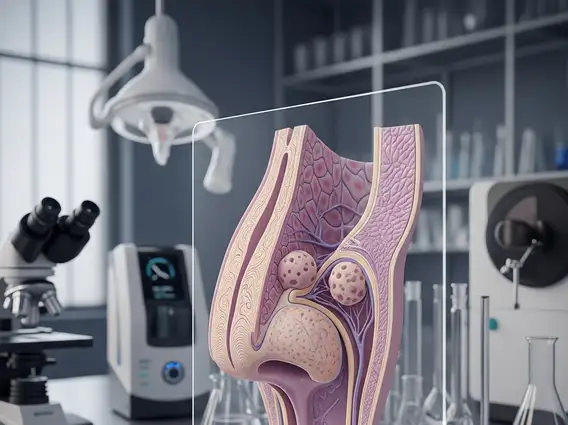
Key Takeaways
- Olfactory Neuroblastoma is a rare malignant tumor arising from the olfactory epithelium in the nasal cavity.
- Symptoms often mimic common sinus issues, including nasal obstruction, bleeding, and loss of smell, potentially leading to delayed diagnosis.
- The exact causes of this cancer are largely unknown, though research continues into potential genetic or environmental factors.
- Treatment typically involves a multidisciplinary approach, combining surgery, radiation therapy, and sometimes chemotherapy.
- Due to its rarity and location, specialized care and a comprehensive treatment plan are essential for managing the disease.
What is Olfactory Neuroblastoma?
Olfactory Neuroblastoma (ONB), also known as esthesioneuroblastoma, is a rare type of malignant tumor that originates from the olfactory neuroepithelium, the specialized tissue responsible for the sense of smell, located in the upper part of the nasal cavity. This cancer is characterized by its slow growth but can be locally aggressive, potentially invading surrounding structures such as the paranasal sinuses, orbit, and even the brain. Its rarity means it accounts for less than 5% of all sinonasal tumors, with an estimated incidence of about 0.3 cases per million people per year globally, according to various epidemiological studies.
The classification of olfactory neuroblastoma often involves the Kadish staging system, which categorizes the tumor based on its extent: Stage A (confined to the nasal cavity), Stage B (extension to paranasal sinuses), and Stage C (extension beyond the sinuses into the orbit, anterior cranial fossa, or with regional/distant metastases). This staging helps guide treatment decisions and predict prognosis.
Olfactory Neuroblastoma Symptoms and Potential Causes
The presentation of olfactory neuroblastoma symptoms can be insidious, often mimicking more common benign conditions, which can delay diagnosis. Early symptoms are typically localized to the nasal cavity and may include:
- Unilateral nasal obstruction or stuffiness that progressively worsens.
- Epistaxis (nosebleeds), which can be recurrent.
- Anosmia (loss of the sense of smell) or hyposmia (reduced sense of smell).
- Headaches or facial pain, particularly around the eyes or forehead.
- Rhinorrhea (nasal discharge).
As the tumor grows and invades adjacent structures, more advanced symptoms may appear, such as changes in vision (e.g., double vision, proptosis), swelling around the eyes, or neurological symptoms if there is intracranial extension. Regarding the causes of olfactory neuroblastoma, the exact etiology remains largely unknown. Unlike many other cancers, there are no clearly identified risk factors, such as specific environmental exposures or strong genetic predispositions, that are definitively linked to its development. Research continues to explore potential genetic mutations or viral associations, but no conclusive evidence has been established. It is generally considered to arise sporadically.
Treatment Approaches for Olfactory Neuroblastoma
The management of olfactory neuroblastoma treatment requires a multidisciplinary approach involving head and neck surgeons, radiation oncologists, medical oncologists, and neuroradiologists. The primary goal is to achieve complete tumor removal and control local recurrence, while preserving function and quality of life. Treatment strategies are highly individualized, depending on the tumor’s stage, size, and extent of invasion.
The cornerstone of treatment for most stages is surgical resection, often performed using advanced endoscopic techniques or open craniofacial approaches for more extensive tumors. This aims to remove the tumor with clear margins. Following surgery, radiation therapy is frequently recommended, especially for higher-stage tumors or those with positive surgical margins, to reduce the risk of recurrence. Chemotherapy may be used in conjunction with radiation (chemoradiation) for locally advanced disease or in cases of metastatic spread, though its role as a primary treatment is less defined compared to surgery and radiation. Regular follow-up with imaging and clinical examination is crucial for long-term monitoring due to the potential for late recurrence.