Nuclear Factor Kappa B

Nuclear Factor Kappa B

Nuclear Factor Kappa B

Nuclear Factor Kappa B

Nuclear Factor Kappa B (NF-κB) is a critical protein complex found in nearly all animal cell types, playing a pivotal role in regulating immune responses, inflammation, and cell survival. Its proper function is essential for maintaining cellular homeostasis, while its dysregulation is implicated in numerous diseases.

Nuclear Factor Kappa B

Key Takeaways

  • Nuclear Factor Kappa B (NF-κB) is a protein complex that acts as a transcription factor, controlling gene expression.
  • It is fundamental for immune responses, cellular stress responses, and the regulation of inflammation.
  • The nuclear factor kappa b signaling pathway can be activated by various stimuli, including pathogens, cytokines, and cellular stress.
  • A key aspect of its activity is the nf-kb role in inflammation, where it promotes the production of pro-inflammatory molecules.
  • Dysregulation of NF-κB is associated with chronic inflammatory diseases, autoimmune disorders, and cancer.

What is Nuclear Factor Kappa B (NF-κB)?

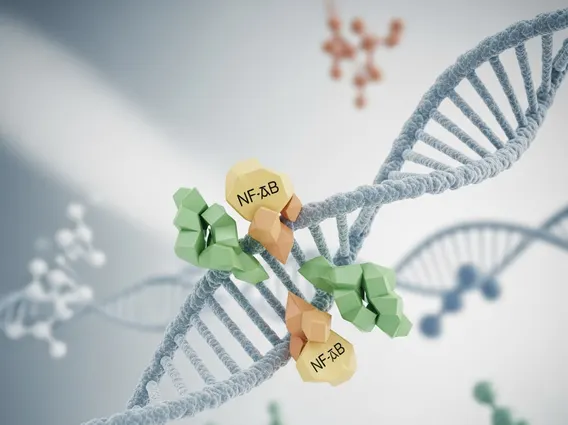
Nuclear Factor Kappa B (NF-κB) refers to a ubiquitous and rapidly acting primary transcription factor that is central to the regulation of genes involved in immunity, inflammation, and cell survival. This protein complex exists in the cytoplasm in an inactive state, bound to inhibitory IκB proteins. Upon activation, NF-κB translocates to the nucleus, where it binds to specific DNA sequences, initiating the transcription of target genes.

The primary nuclear factor kappa b function involves orchestrating cellular responses to a wide array of stimuli, including bacterial and viral infections, inflammatory cytokines, and various forms of cellular stress. It is composed of different protein subunits, most commonly a heterodimer of p50 and RelA (p65) subunits. The precise composition of the NF-κB complex can influence its DNA binding specificity and the genes it regulates, allowing for a diverse range of cellular responses.

The NF-κB Signaling Pathway and Its Role in Inflammation

The nuclear factor kappa b signaling pathway is a complex cascade that can be broadly categorized into canonical (classical) and non-canonical (alternative) pathways. The canonical pathway is the most extensively studied and is rapidly activated by stimuli such as tumor necrosis factor-alpha (TNF-α), interleukin-1 beta (IL-1β), and pathogen-associated molecular patterns (PAMPs). This activation typically involves the phosphorylation and subsequent degradation of IκB proteins by the IκB kinase (IKK) complex, which frees NF-κB to translocate to the nucleus.

Once in the nucleus, activated NF-κB binds to κB enhancer elements in the promoters of target genes, leading to their transcription. This transcriptional activity is crucial for the nf-kb role in inflammation. NF-κB drives the expression of numerous pro-inflammatory mediators, including cytokines (e.g., TNF-α, IL-1β, IL-6), chemokines (e.g., IL-8, MCP-1), and adhesion molecules (e.g., ICAM-1, VCAM-1).

The sustained activation of the NF-κB pathway can contribute to chronic inflammation, which is a hallmark of many debilitating diseases. For instance, dysregulated NF-κB activity is implicated in conditions such as rheumatoid arthritis, inflammatory bowel disease, asthma, and certain cancers. According to research published in the journal Nature Reviews Immunology, NF-κB is considered a central mediator in the pathogenesis of numerous inflammatory and autoimmune diseases, making it a significant therapeutic target.


[EN] Cancer Types

Cancer Clinical Trial Options

Specialized matching specifically for oncology clinical trials and cancer care research.

Your Birthday


By filling out this form, you’re consenting only to release your medical records. You’re not agreeing to participate in clinical trials yet.

[EN] Cancer Types
Cancer Clinical Trial Options

Specialized matching specifically for oncology clinical trials and cancer care research.

Your Birthday


By filling out this form, you're consenting only to release your medical records. You're not agreeing to participate in clinical trials yet.

Nuclear Factor Kappa B

Nuclear Factor Kappa B (NF-κB) is a critical protein complex found in nearly all animal cell types, playing a pivotal role in regulating immune responses, inflammation, and cell survival. Its proper function is essential for maintaining cellular homeostasis, while its dysregulation is implicated in numerous diseases.

Nuclear Factor Kappa B

Key Takeaways

  • Nuclear Factor Kappa B (NF-κB) is a protein complex that acts as a transcription factor, controlling gene expression.
  • It is fundamental for immune responses, cellular stress responses, and the regulation of inflammation.
  • The nuclear factor kappa b signaling pathway can be activated by various stimuli, including pathogens, cytokines, and cellular stress.
  • A key aspect of its activity is the nf-kb role in inflammation, where it promotes the production of pro-inflammatory molecules.
  • Dysregulation of NF-κB is associated with chronic inflammatory diseases, autoimmune disorders, and cancer.

What is Nuclear Factor Kappa B (NF-κB)?

Nuclear Factor Kappa B (NF-κB) refers to a ubiquitous and rapidly acting primary transcription factor that is central to the regulation of genes involved in immunity, inflammation, and cell survival. This protein complex exists in the cytoplasm in an inactive state, bound to inhibitory IκB proteins. Upon activation, NF-κB translocates to the nucleus, where it binds to specific DNA sequences, initiating the transcription of target genes.

The primary nuclear factor kappa b function involves orchestrating cellular responses to a wide array of stimuli, including bacterial and viral infections, inflammatory cytokines, and various forms of cellular stress. It is composed of different protein subunits, most commonly a heterodimer of p50 and RelA (p65) subunits. The precise composition of the NF-κB complex can influence its DNA binding specificity and the genes it regulates, allowing for a diverse range of cellular responses.

The NF-κB Signaling Pathway and Its Role in Inflammation

The nuclear factor kappa b signaling pathway is a complex cascade that can be broadly categorized into canonical (classical) and non-canonical (alternative) pathways. The canonical pathway is the most extensively studied and is rapidly activated by stimuli such as tumor necrosis factor-alpha (TNF-α), interleukin-1 beta (IL-1β), and pathogen-associated molecular patterns (PAMPs). This activation typically involves the phosphorylation and subsequent degradation of IκB proteins by the IκB kinase (IKK) complex, which frees NF-κB to translocate to the nucleus.

Once in the nucleus, activated NF-κB binds to κB enhancer elements in the promoters of target genes, leading to their transcription. This transcriptional activity is crucial for the nf-kb role in inflammation. NF-κB drives the expression of numerous pro-inflammatory mediators, including cytokines (e.g., TNF-α, IL-1β, IL-6), chemokines (e.g., IL-8, MCP-1), and adhesion molecules (e.g., ICAM-1, VCAM-1).

The sustained activation of the NF-κB pathway can contribute to chronic inflammation, which is a hallmark of many debilitating diseases. For instance, dysregulated NF-κB activity is implicated in conditions such as rheumatoid arthritis, inflammatory bowel disease, asthma, and certain cancers. According to research published in the journal Nature Reviews Immunology, NF-κB is considered a central mediator in the pathogenesis of numerous inflammatory and autoimmune diseases, making it a significant therapeutic target.

[EN] Cancer Types

Cancer Clinical Trial Options

Specialized matching specifically for oncology clinical trials and cancer care research.

Your Birthday


By filling out this form, you’re consenting only to release your medical records. You’re not agreeing to participate in clinical trials yet.

[EN] Cancer Types
Cancer Clinical Trial Options

Specialized matching specifically for oncology clinical trials and cancer care research.

Your Birthday


By filling out this form, you're consenting only to release your medical records. You're not agreeing to participate in clinical trials yet.

Massive Bio has onboarded over 160,000+ cancer patients to find their clinical trial