Neurofeedback
Neurofeedback is a non-invasive therapeutic technique that trains individuals to self-regulate their brain activity. It offers a unique approach to improving mental and neurological health by teaching the brain to function more efficiently.
Key Takeaways
- Neurofeedback is a brain training technique that helps individuals learn to self-regulate their brainwave patterns.
- It utilizes real-time monitoring of brain activity, often through electroencephalography (EEG), to provide immediate feedback.
- The therapy aims to optimize brain function, potentially improving symptoms associated with various neurological and psychological conditions.
- Benefits may include enhanced focus, reduced anxiety, improved mood, and better sleep quality.
- Neurofeedback is a complementary approach and should be pursued under the guidance of qualified professionals.
What is Neurofeedback?
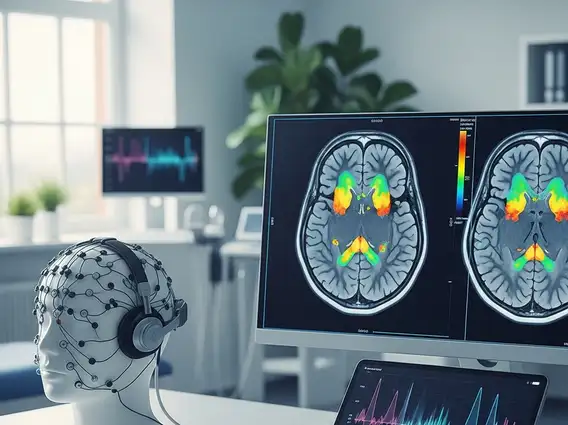
Neurofeedback refers to a type of biofeedback that uses real-time displays of brain activity—most commonly electroencephalography (EEG)—to teach self-regulation of brain function. This non-invasive process helps individuals learn to alter their brainwave patterns, which are electrical impulses produced by the brain. The goal of neurofeedback therapy is to guide the brain towards healthier, more stable patterns, thereby improving cognitive function and emotional regulation. It operates on the principle of operant conditioning, where desirable brainwave patterns are reinforced, and undesirable ones are discouraged. This training can lead to lasting changes in brain activity.
How Does Neurofeedback Work?
The process of Neurofeedback involves placing sensors on the scalp to monitor brainwave activity. These sensors detect the electrical signals produced by the brain, which are then amplified and displayed in real-time on a computer screen. The individual undergoing the therapy receives immediate feedback, often in the form of a game, video, or sound, that reflects their brain’s current state. For instance, if the brain produces desired brainwave patterns (e.g., those associated with focus), the game might progress, or a sound might become clearer. Conversely, if undesirable patterns emerge (e.g., those linked to anxiety), the feedback might indicate a slowdown or interruption. Over multiple sessions, the brain learns to associate certain mental states with the positive feedback, gradually adjusting its activity to produce more optimal patterns. This training helps to strengthen neural pathways and improve the brain’s ability to regulate itself.
Therapeutic Benefits and Conditions Addressed
The benefits of neurofeedback treatment are wide-ranging and extend to various neurological and psychological conditions. By promoting healthier brainwave patterns, Neurofeedback can help individuals achieve better emotional balance, improved cognitive performance, and enhanced overall well-being. Clinical research and practice suggest its efficacy in addressing conditions such as attention-deficit/hyperactivity disorder (ADHD), where it can improve focus and reduce impulsivity. It is also increasingly explored as a supportive therapy for sleep disorders, chronic pain, and even post-traumatic stress disorder (PTSD).
Neurofeedback for anxiety and depression has shown promising results, with studies indicating that it can help reduce symptoms by training the brain to produce more calming alpha and theta waves and less high-frequency beta waves often associated with anxious states. For instance, anxiety disorders affect a significant portion of the global population, with the World Health Organization (WHO) reporting that depression is a leading cause of disability worldwide. While more large-scale, randomized controlled trials are needed to fully establish Neurofeedback as a primary treatment, existing evidence supports its potential as a complementary approach to help manage these widespread conditions.
Here are some common areas where Neurofeedback may offer support:
- Attention and Focus: Enhancing concentration, reducing distractibility, and improving executive functions, particularly beneficial for individuals with ADHD.
- Emotional Regulation: Helping to manage and alleviate symptoms of anxiety, depression, and chronic stress, leading to greater emotional stability.
- Sleep Improvement: Training the brain for more balanced sleep architecture, which can lead to more restful and restorative sleep.
- Pain Management: Assisting in reducing the perception and impact of chronic pain conditions by influencing brain regions involved in pain processing.
- Peak Performance: Utilized by athletes, artists, and executives to optimize cognitive function, enhance resilience, and improve performance under pressure.
It is important to note that Neurofeedback is often used as a complementary therapy and should not replace conventional medical treatments. Individuals considering Neurofeedback should consult with a qualified healthcare professional to determine if it is appropriate for their specific needs and to ensure it aligns with FDA guidelines for medical devices, if applicable.