Neuroepithelial
Neuroepithelial refers to the specialized embryonic tissue that serves as the precursor for the entire central nervous system, including the brain and spinal cord. It plays a critical role in early development by forming the foundational structures from which all neural cells originate.
Key Takeaways
- Neuroepithelial tissue is the embryonic origin of the central nervous system.
- It consists of multipotent cells capable of generating both neurons and glial cells.
- Key functions include proliferation, differentiation, and structural organization of the neural tube.
- Its development involves the transformation of the neural plate into the neural tube during embryogenesis.
- Understanding neuroepithelial cells is crucial for insights into neurological disorders and regenerative medicine.
What is Neuroepithelial Tissue?
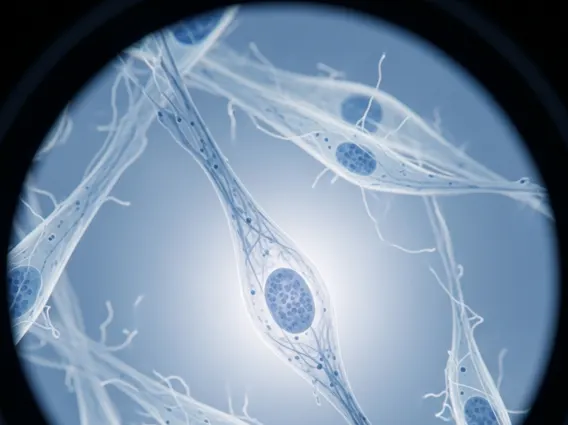
Neuroepithelial refers to the pseudostratified epithelium that lines the neural tube during embryonic development. This foundational tissue is responsible for generating all the cells of the central nervous system (CNS), including neurons and glial cells. Characterized by its unique cellular architecture, neuroepithelial cells span the entire thickness of the neural tube wall, with their nuclei undergoing characteristic interkinetic nuclear migration during the cell cycle, moving towards the apical surface for mitosis and then basally during interphase.
The primary role of neuroepithelial tissue is to act as a highly proliferative germinal zone, providing a continuous source of progenitor cells. These cells undergo extensive division and subsequently differentiate into the diverse cell types required for a functional brain and spinal cord. Its structural integrity and dynamic cellular processes are essential for the proper formation, patterning, and initial growth of the developing CNS, laying the groundwork for all subsequent neural development.
Neuroepithelial Cell Function and Types
The primary neuroepithelial cells function involves both extensive self-renewal and the generation of various neural cell types through tightly regulated processes of neurogenesis (formation of neurons) and gliogenesis (formation of glial cells). These cells act as multipotent neural stem cells, capable of dividing symmetrically to expand the progenitor pool or asymmetrically to produce daughter cells that will embark on differentiation pathways. This precise control over cell division and fate specification ensures the correct number and types of cells are generated at specific times and locations within the developing nervous system.
Regarding the types of neuroepithelial cells, the initial population within the early neural tube is relatively homogeneous. However, as development progresses, these cells give rise to more specialized progenitors and differentiated cell types. Key cell types and their derivatives include:
- Neural Stem Cells: The earliest neuroepithelial cells possess stem cell characteristics, capable of self-renewal and multipotent differentiation.
- Radial Glial Cells: A prominent type of neuroepithelial cell, particularly in the developing cerebral cortex. They act as neural stem cells, providing a scaffold for neuronal migration and differentiating into neurons, astrocytes, and oligodendrocytes.
- Intermediate Progenitor Cells: Derived from radial glial cells, these cells have more restricted proliferative capacity and typically undergo a limited number of divisions to generate post-mitotic neurons or glial precursors.
The intricate interplay and sequential emergence of these cell types, guided by intrinsic genetic programs and extrinsic signaling cues, are fundamental for establishing the complex architecture and functionality of the adult brain and spinal cord.
Neuroepithelium Development
Neuroepithelium development is a fundamental process in embryogenesis that initiates with the formation of the neural plate. This critical structure, a thickened region of the embryonic ectoderm, is induced by signaling molecules, most notably from the underlying notochord. Cells within the neural plate then undergo significant morphological changes, beginning to fold inward to form the neural groove, a central depression flanked by elevated neural folds.
The neural folds subsequently elevate further and eventually fuse along the dorsal midline of the embryo, a process that typically starts in the cervical region and proceeds both cranially (towards the head) and caudally (towards the tail). This fusion results in the formation of the neural tube, an enclosed structure that is the precursor to the entire central nervous system. The cells lining the lumen of this newly formed neural tube are the neuroepithelial cells, which will then proliferate extensively and differentiate to construct the complex cellular landscape of the brain and spinal cord. Proper closure of the neural tube is paramount, as defects can lead to severe congenital conditions such as anencephaly or spina bifida.