
Nephroureterectomy
Nephroureterectomy is a significant surgical procedure involving the removal of a kidney and its entire ureter, often performed to treat specific types of cancer affecting these organs. This comprehensive operation aims to eliminate cancerous tissue and prevent its spread.
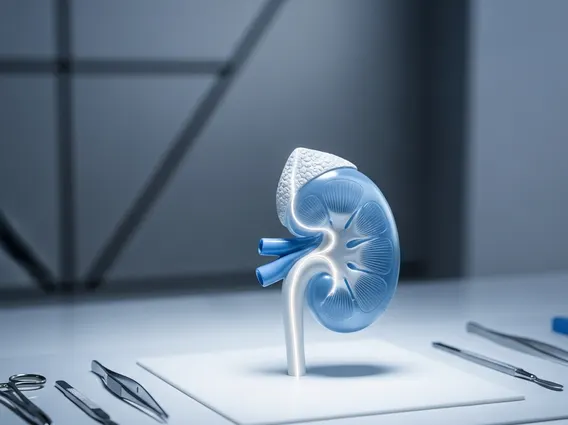
Key Takeaways
- Nephroureterectomy is the surgical removal of a kidney and its corresponding ureter, primarily performed for certain cancers.
- The procedure is most commonly indicated for upper tract urothelial carcinoma (UTUC).
- It can be performed using open, laparoscopic, or robotic surgical techniques.
- Recovery involves a hospital stay, pain management, and activity restrictions, with full recovery taking several weeks to months.
- Potential risks include bleeding, infection, injury to surrounding organs, and complications from anesthesia.
What is Nephroureterectomy?
Nephroureterectomy refers to a complex surgical procedure that involves the complete removal of a kidney along with the entire ureter on the same side, including a small cuff of the bladder where the ureter connects. This extensive operation is primarily performed to treat malignant conditions, most commonly upper tract urothelial carcinoma (UTUC), which is a cancer originating in the lining of the kidney’s collecting system or the ureter. The goal of this surgery is to eradicate the cancerous tissue and minimize the risk of recurrence or metastasis.
While less common than kidney cancer (renal cell carcinoma), UTUC accounts for approximately 5-10% of all urothelial cancers. According to the American Cancer Society, early detection and appropriate surgical intervention, such as nephroureterectomy, are crucial for improving patient outcomes. The decision to proceed with this surgery is made after careful evaluation, including imaging studies and biopsies, to confirm the diagnosis and assess the extent of the disease.
Nephroureterectomy Procedure Details
The Nephroureterectomy procedure explanation involves several critical steps, varying slightly based on the surgical approach chosen. Surgeons may perform the operation using an open technique, which requires a larger incision, or through minimally invasive methods such as laparoscopy or robotic-assisted surgery. Minimally invasive approaches typically involve several small incisions, offering potential benefits like reduced pain, shorter hospital stays, and quicker recovery times, though the choice depends on the tumor’s characteristics and the patient’s overall health.
During the procedure, the surgeon carefully detaches the kidney from its surrounding tissues and blood vessels. Simultaneously, the entire ureter is dissected down to its junction with the bladder. A small portion of the bladder wall, known as the bladder cuff, is also removed to ensure complete excision of any potential cancerous cells that may have spread to this area. The remaining bladder is then repaired. The removed kidney and ureter are sent for pathological examination to confirm the diagnosis and assess the tumor’s stage and grade.
The specific steps for a minimally invasive approach often include:
- Making small incisions to insert a laparoscope (a thin, lighted tube with a camera) and surgical instruments.
- Inflating the abdomen with carbon dioxide gas to create working space.
- Carefully dissecting and removing the kidney and ureter.
- Extracting the specimen through one of the small incisions, sometimes requiring a slightly larger incision for removal.
Recovery, Risks, and Long-Term Outlook
The Nephroureterectomy recovery and outlook varies among individuals, influenced by the surgical technique used, the patient’s overall health, and the extent of the disease. Immediately after surgery, patients typically spend several days in the hospital for pain management, fluid balance monitoring, and early mobilization. Post-operative care often includes managing drains, monitoring urinary output, and gradually resuming oral intake. Full recovery can take several weeks to a few months, during which patients are advised to avoid heavy lifting and strenuous activities.
Like any major surgery, there are potential Risks of nephroureterectomy operation. These can include, but are not limited to:
- Bleeding, which may necessitate blood transfusions.
- Infection at the surgical site or within the urinary tract.
- Injury to adjacent organs, such as the bowel, spleen, or major blood vessels.
- Complications related to anesthesia, including allergic reactions or respiratory issues.
- Urinary leakage or stricture formation at the bladder repair site.
- Development of a hernia at the incision site.
- Kidney failure in the remaining kidney, especially if pre-existing kidney disease is present.
The long-term outlook following nephroureterectomy largely depends on the stage and grade of the cancer, as well as whether it has spread. Regular follow-up appointments, including imaging and cystoscopies (to check the bladder for new tumors), are crucial for monitoring for recurrence. Patients with one remaining kidney generally adapt well, but may need to adopt lifestyle changes to protect their remaining kidney function, such as maintaining good hydration and avoiding nephrotoxic medications. For many patients, nephroureterectomy offers a curative treatment option for upper tract urothelial carcinoma.



















