Mutation
Mutation refers to a fundamental change in the genetic material of an organism. These alterations play a crucial role in both health and disease, influencing everything from evolution to the development of various medical conditions.
Key Takeaways
- Mutations are permanent changes in the DNA sequence that can alter gene function.
- They can occur spontaneously during DNA replication or be induced by environmental factors like radiation and chemicals.
- Mutations are categorized by their scale, ranging from single nucleotide changes (point mutations) to large chromosomal rearrangements.
- The effects of mutations vary, from being neutral or beneficial to causing genetic disorders and increasing disease susceptibility.
- Understanding mutations is vital for diagnosing and developing treatments for many genetic and acquired diseases, including cancer.
What is Mutation: Understanding Genetic Changes
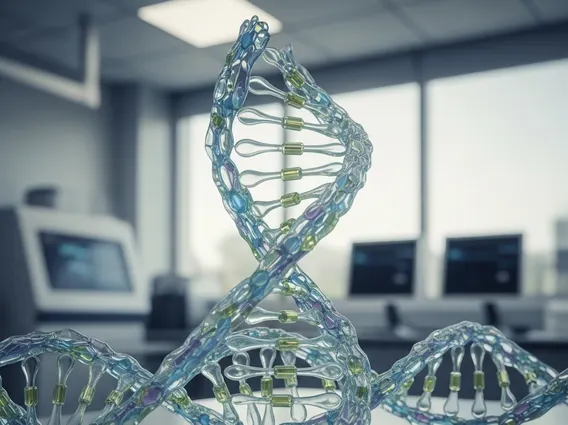
A genetic mutation refers to an alteration in the deoxyribonucleic acid (DNA) sequence that makes up a gene. This change can affect a single DNA building block (base pair) or a large segment of a chromosome, including multiple genes. These changes are the primary source of genetic variation within populations and can have significant impacts on an organism’s traits and functions.
Mutation is a broad term encompassing any change to the genetic material. While often associated with negative outcomes, mutations are essential for evolution, providing the raw material for natural selection. They can lead to new or altered proteins that may confer advantages, be neutral, or result in impaired cellular function, potentially leading to disease.
How Do Mutations Happen in Humans?
Mutations can arise through various mechanisms, broadly categorized as spontaneous or induced. Spontaneous mutations occur naturally during DNA replication or repair processes. For instance, errors can happen when DNA polymerase, the enzyme responsible for copying DNA, inserts an incorrect base pair. Although DNA repair mechanisms are highly efficient, some errors inevitably slip through, leading to a small but consistent rate of new mutations in every generation.
The causes of DNA mutations also include exposure to environmental factors, known as mutagens. These can be physical agents, such as ultraviolet (UV) radiation from the sun or ionizing radiation (e.g., X-rays, gamma rays), which can damage DNA directly. Chemical mutagens, found in substances like cigarette smoke, certain industrial chemicals, or some chemotherapy drugs, can also alter DNA bases or interfere with replication. These induced mutations can significantly increase the risk of various health conditions, including cancer, with an estimated 5-10% of all cancers being hereditary, according to the National Cancer Institute.
Types of Mutations and Their Effects
The types of mutations and their effects vary widely depending on the nature and location of the genetic change. Mutations can be classified based on their scale, from single nucleotide changes to large-scale chromosomal alterations. Understanding these distinctions is crucial for diagnosing and treating genetic disorders.
- Point Mutations: These involve a change in a single DNA nucleotide. They can be:
- Missense mutations: Result in a different amino acid being produced, potentially altering protein function.
- Nonsense mutations: Introduce a premature stop codon, leading to a truncated, often non-functional protein.
- Silent mutations: Do not change the amino acid sequence due to the redundancy of the genetic code, often having no observable effect.
- Frameshift Mutations: Occur when nucleotides are inserted or deleted in a number not divisible by three. This alters the reading frame of the gene, typically leading to a completely different protein sequence from the point of the mutation onwards, often resulting in a non-functional protein.
- Chromosomal Mutations: These are large-scale changes affecting entire chromosomes or significant parts of them. Examples include deletions (loss of genetic material), duplications (extra copies of genetic material), inversions (segment reversed), and translocations (segment moved to another chromosome). These can lead to severe developmental disorders and conditions like Down syndrome.
The effects of these mutations range from neutral, where the change has no impact on protein function, to beneficial, providing an evolutionary advantage, or harmful, leading to genetic disorders or increased disease susceptibility. For instance, a single point mutation is responsible for sickle cell anemia, a severe blood disorder affecting millions worldwide, as highlighted by the World Health Organization (WHO).