Mucin Peptide
Mucin peptides are biologically active fragments derived from mucins, a family of large, heavily glycosylated proteins. These peptides play diverse and crucial roles in maintaining physiological health, particularly in protecting epithelial surfaces throughout the body.

Key Takeaways
- Mucin Peptide refers to bioactive fragments originating from mucin proteins, essential components of mucus.
- These peptides are integral to the body’s innate immune system, forming protective barriers and modulating inflammatory responses.
- They contribute to lubrication, hydration, and defense against pathogens across various epithelial surfaces.
- Emerging research highlights their potential therapeutic applications in areas like inflammatory diseases, wound healing, and antimicrobial strategies.
What is Mucin Peptide?
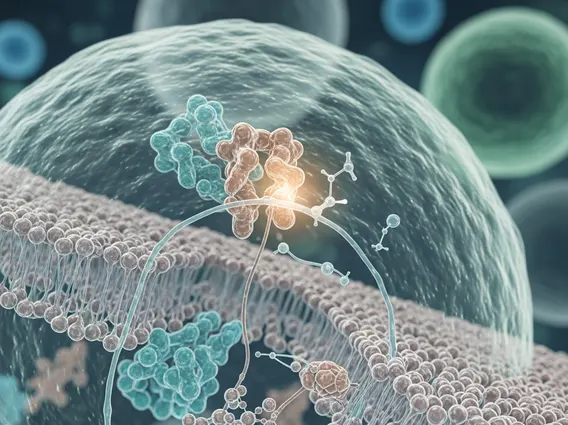
Mucin Peptide refers to smaller, bioactive fragments derived from mucins, which are high-molecular-weight glycoproteins that form the primary structural component of mucus. Mucus is a viscous, gel-like substance that coats and protects epithelial surfaces in the respiratory, gastrointestinal, reproductive, and ocular systems. These peptides are generated through enzymatic cleavage of larger mucin molecules and retain or acquire specific biological functions distinct from the full-length proteins. Their composition often includes specific amino acid sequences and glycosylation patterns that dictate their activity.
The human body produces various types of mucins, each with unique structures and locations. For instance, secreted mucins like MUC2 and MUC5AC form protective gels, while transmembrane mucins like MUC1 and MUC4 are involved in cell signaling and adhesion. The peptides derived from these diverse mucins contribute to a complex biological network, offering localized defense and regulatory functions. Understanding what is mucin peptide is crucial for appreciating its multifaceted contributions to health and disease.
Functions and Benefits of Mucin Peptides
The diverse biological activities of mucin peptides contribute significantly to maintaining physiological balance and protecting the body from various threats. The primary mucin peptide function and role revolve around their involvement in innate immunity, tissue protection, and cellular communication. These peptides act as modulators of inflammation, participate in antimicrobial defense, and support tissue repair mechanisms. For example, some mucin peptides can directly inhibit bacterial adhesion or neutralize toxins, while others signal immune cells to initiate protective responses.
The benefits of mucin peptide are extensive and impact several bodily systems. In the gastrointestinal tract, they help maintain the integrity of the mucosal barrier, preventing pathogen invasion and reducing inflammation. In the respiratory system, they contribute to the clearance of inhaled particles and microbes. Furthermore, mucin peptides are known to possess anti-inflammatory properties, which can be beneficial in conditions characterized by chronic inflammation. Their ability to promote cell proliferation and migration also suggests a role in wound healing and tissue regeneration. According to a review published in the journal Frontiers in Immunology, mucin-derived peptides are increasingly recognized for their roles in modulating immune responses and maintaining mucosal homeostasis.
- Antimicrobial Defense: Directly inhibit bacterial growth or prevent pathogen adhesion to epithelial cells.
- Anti-inflammatory Effects: Modulate immune responses, reducing excessive inflammation in tissues.
- Barrier Reinforcement: Contribute to the structural integrity and protective capacity of mucosal layers.
- Cell Signaling: Interact with cell surface receptors to influence cellular processes like proliferation and differentiation.
- Lubrication and Hydration: Help maintain the moist and slippery nature of mucosal surfaces, essential for their function.
Emerging Research on Mucin Peptides
Current mucin peptide research findings are rapidly expanding our understanding of their therapeutic potential. Scientists are investigating how these peptides can be harnessed for various medical applications, from treating inflammatory bowel diseases to developing novel antimicrobial agents. Studies are exploring synthetic mucin peptides designed to mimic the beneficial properties of natural ones, offering a pathway for targeted drug development. For instance, specific mucin peptides have shown promise in preclinical models for their ability to reduce inflammation in colitis and accelerate wound healing.
Further research is also focusing on the role of mucin peptides in oncology, particularly their involvement in cancer progression and metastasis. While some mucins are overexpressed in certain cancers, the specific peptides derived from them might hold diagnostic or therapeutic value. The complexity of mucin glycosylation patterns and their impact on peptide function is another active area of investigation, aiming to unlock more precise applications. These ongoing studies underscore the significant potential of mucin peptides as a frontier in biomedical science, promising innovative approaches to disease prevention and treatment.