MSH6 Gene
The MSH6 gene plays a critical role in maintaining genomic stability by participating in the DNA mismatch repair system. Understanding its function and the implications of its mutations is vital for diagnosing and managing associated medical conditions.
Key Takeaways
- The MSH6 gene is essential for DNA mismatch repair, correcting errors that occur during DNA replication.
- Mutations in the MSH6 gene can impair this repair process, leading to an accumulation of genetic errors.
- These mutations are primarily associated with an increased risk of certain cancers, most notably Lynch syndrome.
- Lynch syndrome, linked to MSH6 mutations, is inherited in an autosomal dominant pattern.
- Early detection and regular screening are crucial for individuals with MSH6 gene mutations due to elevated cancer risks.
What is the MSH6 Gene and its Function?
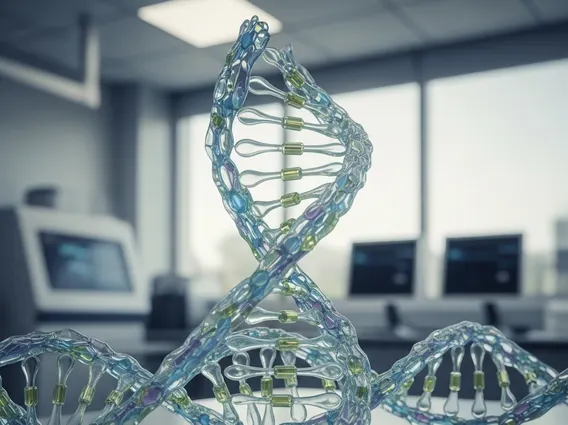
The MSH6 gene, located on chromosome 2, is a crucial component of the DNA mismatch repair (MMR) system in human cells. This system is responsible for identifying and correcting errors that occur during DNA replication, such as incorrectly paired bases or small insertions and deletions. The protein produced by the MSH6 gene, known as MSH6 protein, forms a complex with the MSH2 protein to create MutSα. This MutSα complex is primarily tasked with recognizing single-base mismatches and small insertion-deletion loops in the DNA helix.
Once a mismatch is detected, the MutSα complex initiates a cascade of events involving other MMR proteins, which ultimately leads to the removal of the erroneous DNA segment and its replacement with the correct sequence. This meticulous repair process is fundamental for preventing the accumulation of mutations, which can otherwise lead to uncontrolled cell growth and the development of cancer. Therefore, the proper functioning of the MSH6 gene and its protein product is indispensable for maintaining genomic integrity and preventing disease.
MSH6 Gene Mutations and Associated Conditions
A MSH6 gene mutation refers to an alteration in the DNA sequence of the MSH6 gene that can impair its ability to produce a functional protein or affect the protein’s activity. When the MSH6 protein is non-functional or deficient, the DNA mismatch repair system becomes compromised, leading to an increased rate of mutations throughout the genome. This genomic instability significantly elevates an individual’s lifetime risk of developing certain cancers.
The primary condition associated with MSH6 gene mutations is Lynch syndrome, also known as hereditary nonpolyposis colorectal cancer (HNPCC). Lynch syndrome is an inherited disorder that increases the risk of various cancers, particularly colorectal cancer and endometrial cancer. Individuals with MSH6 mutations typically have a higher risk of endometrial cancer compared to other MMR gene mutations, and also an increased risk of ovarian, gastric, urinary tract, and brain cancers. According to the National Cancer Institute, Lynch syndrome accounts for about 3% of all colorectal cancers and 2-3% of all endometrial cancers. In rare cases, biallelic (two copies) MSH6 mutations can lead to constitutional mismatch repair deficiency (CMMRD), a severe childhood cancer predisposition syndrome characterized by early-onset cancers, including brain tumors, leukemia, and lymphomas.
Common cancers associated with MSH6 gene mutations include:
- Colorectal cancer
- Endometrial cancer
- Ovarian cancer
- Gastric cancer
- Urinary tract cancer
- Brain tumors
Inheritance Patterns of MSH6 Gene Mutations
The inheritance pattern of MSH6 gene mutations primarily follows an autosomal dominant mode for Lynch syndrome. This means that only one copy of the altered MSH6 gene in each cell is sufficient to increase an individual’s cancer risk. If a parent carries a mutated MSH6 gene, there is a 50% chance that each child will inherit the mutation. Individuals who inherit the mutation are predisposed to developing Lynch syndrome-associated cancers, though not everyone with the mutation will develop cancer, indicating incomplete penetrance.
In contrast, the rare and more severe condition, constitutional mismatch repair deficiency (CMMRD), is inherited in an autosomal recessive pattern. This means that an individual must inherit two copies of the mutated MSH6 gene—one from each parent—to develop the condition. Parents of an individual with CMMRD are typically carriers of one mutated MSH6 gene copy but do not show symptoms of CMMRD themselves, although they may have a predisposition to Lynch syndrome-associated cancers. Genetic counseling is highly recommended for families with known MSH6 mutations to understand the inheritance risks and available screening options.
| Condition | Inheritance Pattern | Number of Mutated Copies | Associated Risks |
|---|---|---|---|
| Lynch Syndrome | Autosomal Dominant | One | Increased risk of colorectal, endometrial, ovarian, and other cancers |
| Constitutional Mismatch Repair Deficiency (CMMRD) | Autosomal Recessive | Two | Early-onset brain tumors, leukemia, lymphomas, and other childhood cancers |