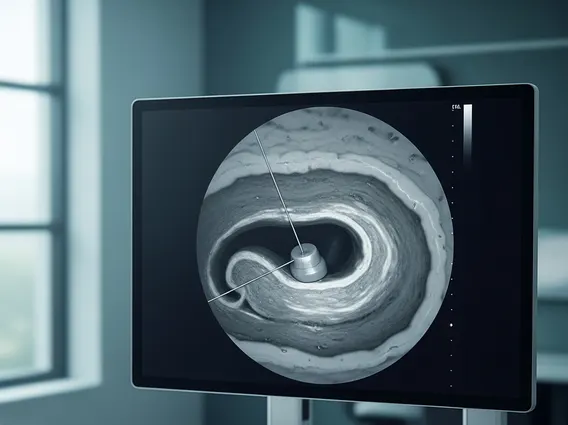
Mr
In the realm of medicine, the term Mr holds specific significance, often serving as an abbreviation for a crucial diagnostic technology. This article delves into the meaning, historical context, and appropriate application of Mr within clinical and research settings, emphasizing its role in modern healthcare.

Key Takeaways
- Mr, in a medical context, typically refers to Magnetic Resonance, a powerful imaging technique.
- Magnetic Resonance imaging (MRI) provides detailed images of organs, soft tissues, bone, and virtually all other internal body structures.
- The technology originated from fundamental discoveries in nuclear magnetic resonance in the mid-20th century.
- Proper usage of Mr in formal medical writing ensures clarity and adherence to professional standards.
- Understanding the precise meaning of Mr title is essential for accurate communication in healthcare.
What is Mr: Understanding the Title’s Meaning
In clinical and research environments, the term Mr is primarily recognized as an abbreviation for Magnetic Resonance. This advanced medical imaging technology utilizes strong magnetic fields and radio waves to generate detailed cross-sectional images of organs, soft tissues, bone, and virtually all other internal body structures. Unlike X-rays or CT scans, Magnetic Resonance (Mr) does not use ionizing radiation, making it a valuable tool for various diagnostic purposes, especially for conditions affecting the brain, spinal cord, joints, and soft tissues.
The meaning of Mr title, when encountered in a medical document or discussion, therefore points to this sophisticated diagnostic procedure. It is crucial for healthcare professionals and researchers to understand that Mr refers to the underlying principle of magnetic resonance, which is then applied in various forms, most commonly as Magnetic Resonance Imaging (MRI). This distinction ensures precise communication and avoids ambiguity in medical discourse, where accuracy is paramount for patient care and scientific integrity.
Origin and Evolution of the Title Mr
The origin of the title Mr, in its medical interpretation as Magnetic Resonance, traces back to fundamental scientific discoveries in the mid-20th century. The phenomenon of nuclear magnetic resonance (NMR) was first described independently by Felix Bloch and Edward Purcell in 1946, for which they shared the Nobel Prize in Physics in 1952. Their work laid the groundwork for understanding how atomic nuclei absorb and re-emit radiofrequency energy when placed in a magnetic field.
It was later, in the 1970s, that Raymond Damadian, Paul Lauterbur, and Peter Mansfield pioneered the application of NMR principles to create images of the human body. Lauterbur developed the idea of using gradients in the magnetic field to create images, while Mansfield further refined the techniques for rapid image acquisition. This transformative shift from basic physics to a clinical diagnostic tool marked the true evolution of Magnetic Resonance (Mr) into the medical lexicon. The abbreviation “Mr” itself became a concise way to refer to this complex technology, particularly in contexts where brevity is valued, such as in research abstracts or clinical notes.
Applying Mr in Formal Writing and Etiquette
Understanding how to use Mr in formal writing within the medical field is essential for maintaining clarity and professionalism. When referring to Magnetic Resonance, it is generally best practice to introduce the full term “Magnetic Resonance” first, followed by its abbreviation “Mr” in parentheses. For subsequent mentions within the same document or section, “Mr” or “MRI” (Magnetic Resonance Imaging) can be used consistently. This approach ensures that readers unfamiliar with the abbreviation can easily understand the context.
In formal medical reports, research papers, and clinical guidelines, precision in terminology is paramount. For example, one might write: “The patient underwent a Magnetic Resonance (Mr) scan of the brain,” or “Findings from the Mr study indicated…” Adhering to established guidelines for medical abbreviations and terminology helps prevent misinterpretation, which can have significant implications in patient diagnosis and treatment. While “Mr” might appear as a social title in general English, its specific and consistent application as “Magnetic Resonance” in medical documentation underscores its critical role as a diagnostic tool, demanding careful and accurate usage.