Mitosis
Mitosis is a fundamental biological process essential for life, enabling cells to divide and create new, genetically identical cells. This intricate cellular division plays a crucial role in growth, tissue repair, and the maintenance of an organism’s overall health.
Key Takeaways
- Mitosis is a type of cell division that results in two daughter cells each having the same number and kind of chromosomes as the parent nucleus.
- It is vital for growth, repair of damaged tissues, and asexual reproduction in many organisms.
- The process involves distinct phases: Prophase, Metaphase, Anaphase, and Telophase, followed by cytokinesis.
- Each phase involves specific chromosomal movements and structural changes within the cell.
What is Mitosis?
Mitosis is a critical biological process where a single eukaryotic cell divides into two identical daughter cells. This form of cell division ensures that each new cell receives a complete and identical set of chromosomes from the parent cell. It is fundamental for the growth and development of multicellular organisms, as well as for the repair and replacement of old or damaged cells throughout the body. Unlike meiosis, which produces genetically diverse gametes, mitosis maintains genetic continuity, ensuring that all somatic cells within an organism are genetically uniform.
The Phases of Mitosis
The process of cell division is a highly organized and continuous sequence of events, traditionally divided into several distinct phases. These mitosis stages explained below ensure the accurate segregation of genetic material.
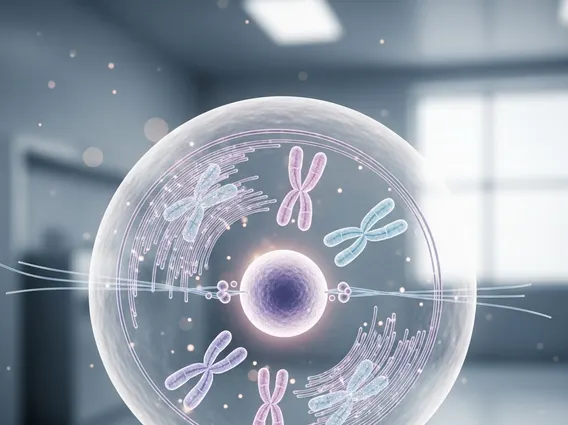
- Prophase: During prophase, the chromatin condenses into visible chromosomes, each consisting of two sister chromatids joined at the centromere. The nuclear envelope begins to break down, and the mitotic spindle, made of microtubules, starts to form from the centrosomes moving to opposite poles of the cell.
- Metaphase: In metaphase, the chromosomes align along the metaphase plate, an imaginary plane equidistant from the two spindle poles. Each sister chromatid is attached to a spindle microtubule from opposite poles. This alignment is crucial for ensuring that each daughter cell receives an identical set of chromosomes.
- Anaphase: Anaphase is characterized by the separation of sister chromatids. The centromeres divide, and the sister chromatids, now considered individual chromosomes, are pulled apart towards opposite poles of the cell by the shortening of the spindle microtubules.
- Telophase: During telophase, the chromosomes arrive at the poles and begin to decondense. New nuclear envelopes form around the two sets of chromosomes, and the mitotic spindle disassembles. The cell begins to divide its cytoplasm.
- Cytokinesis: While often considered a separate process, cytokinesis typically overlaps with the late stages of mitosis (anaphase and telophase). It involves the division of the cytoplasm, resulting in two distinct daughter cells, each with its own nucleus and complete set of organelles. In animal cells, a cleavage furrow forms, pinching the cell into two. In plant cells, a cell plate forms to create a new cell wall between the daughter cells.
The Function of Mitosis in Cellular Life
The function of mitosis in cells is multifaceted and essential for the survival and propagation of life. Its primary roles include growth, repair, and reproduction. For multicellular organisms, mitosis is the engine of growth, allowing a single fertilized egg to develop into a complex organism by increasing the number of cells. It is also indispensable for tissue repair and regeneration; when cells are damaged or die, mitosis replaces them with new, healthy cells, maintaining the integrity and function of tissues and organs. For example, skin cells and cells lining the digestive tract are constantly replaced through mitotic division. Furthermore, in many single-celled organisms and some multicellular organisms, mitosis serves as a form of asexual reproduction, producing genetically identical offspring. This ensures the rapid proliferation of organisms without the need for gamete fusion.