Microorganism
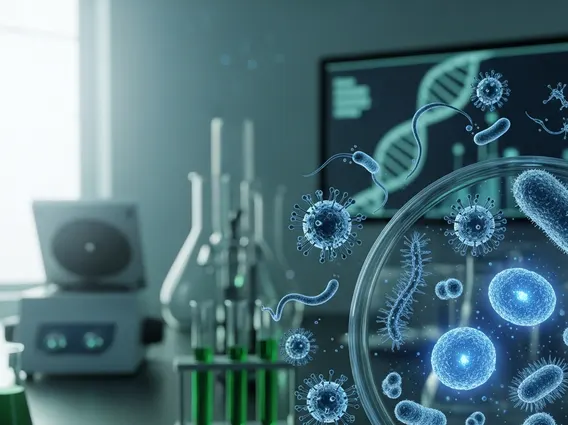
Microorganisms are ubiquitous life forms, too small to be seen with the naked eye, yet profoundly influential on all aspects of life on Earth. Understanding these tiny entities is crucial for grasping fundamental biological processes and their impact on health and the environment.
Key Takeaways
- Microorganism refers to any organism of microscopic size, including bacteria, viruses, fungi, protozoa, and algae.
- These diverse life forms are found in virtually every environment, from soil and water to the human body.
- Microorganisms play critical roles in ecosystem functioning, such as nutrient cycling and decomposition.
- They are essential for human health, contributing to digestion and immune system development, but can also cause diseases.
- Their study is vital across various fields, including medicine, agriculture, and environmental science.
What is a Microorganism?
A Microorganism is any living organism that is microscopic, meaning it is too small to be seen individually with the naked eye. These minute life forms require a microscope for observation and encompass an incredibly diverse group of organisms. They are found in virtually every environment on Earth, from the deepest oceans and polar ice caps to the human body and even extreme conditions like hot springs and acidic lakes. For instance, the human body alone is home to trillions of microorganisms, collectively known as the microbiome, which significantly influence health and disease.
Understanding what a microorganism is provides foundational microorganism facts for students and anyone interested in biology. These organisms are fundamental to life, performing essential functions that sustain ecosystems and impact human well-being. Despite their small size, their collective biomass and metabolic activities are immense, driving global biogeochemical cycles and shaping the evolution of other life forms.
Types and Classification of Microorganisms
The biological world of microorganisms is vast and varied, encompassing several distinct domains and kingdoms. The primary types of microorganisms are generally classified into five major groups, each with unique characteristics and ecological roles. These classifications help scientists understand their structure, reproduction, and impact on other organisms and environments.
- Bacteria: These are single-celled prokaryotic organisms that lack a membrane-bound nucleus. They are incredibly diverse and can be found in almost every habitat. While some bacteria cause diseases, many are beneficial, playing roles in digestion, nutrient cycling, and food production.
- Viruses: Non-cellular entities, viruses consist of genetic material (DNA or RNA) enclosed in a protein coat. They are obligate intracellular parasites, meaning they can only replicate inside living host cells. Viruses are responsible for a wide range of diseases in humans, animals, and plants.
- Fungi: This group includes yeasts, molds, and mushrooms. Fungi can be single-celled or multicellular and are eukaryotic, possessing a true nucleus. They are crucial decomposers in ecosystems and are also used in fermentation processes and antibiotic production, though some can cause infections.
- Protozoa: Single-celled eukaryotic organisms, protozoa are typically motile and often found in aquatic environments. They can be free-living predators or parasites, with some species causing diseases like malaria.
- Algae: Primarily aquatic, algae are diverse photosynthetic eukaryotes, ranging from single-celled microalgae to large multicellular seaweeds. They produce a significant portion of the Earth’s oxygen and form the base of many aquatic food webs.
The Role of Microorganisms in Health and Environment
Microorganisms play an indispensable role of microorganisms in environment and human health, acting as both essential contributors to life and potential agents of disease. In the environment, they are the primary drivers of nutrient cycles, such as nitrogen, carbon, and sulfur cycles, which are vital for maintaining ecosystem productivity. For example, decomposer microorganisms break down dead organic matter, returning essential nutrients to the soil for plants to utilize. They also play a crucial role in wastewater treatment and bioremediation, helping to clean up pollutants.
In human health, the relationship with microorganisms is complex and multifaceted. The human gut microbiome, for instance, is a complex community of bacteria, fungi, and viruses that aids in digestion, synthesizes vitamins, and helps train the immune system. Disruptions to this delicate balance can lead to various health issues, from digestive disorders to autoimmune conditions. Conversely, pathogenic microorganisms are responsible for infectious diseases, ranging from common colds to life-threatening conditions like tuberculosis and HIV. Medical advancements, including antibiotics and vaccines, have largely focused on managing these harmful microorganisms to protect public health.