Microarray
Microarray is a powerful laboratory tool widely used in molecular biology and medicine to simultaneously measure the expression levels of large numbers of genes or to detect specific DNA sequences.
Key Takeaways
- Microarray technology allows for the simultaneous analysis of thousands of genes or DNA sequences on a single chip.
- It operates on the principle of hybridization between labeled sample DNA/RNA and immobilized probes.
- The process involves sample preparation, hybridization, washing, and scanning to detect fluorescent signals.
- Microarrays are crucial for gene expression profiling, genetic variation detection, and disease research, including oncology.
- This tool provides valuable data for understanding disease progression, drug response, and identifying potential biomarkers.
What is Microarray Technology?
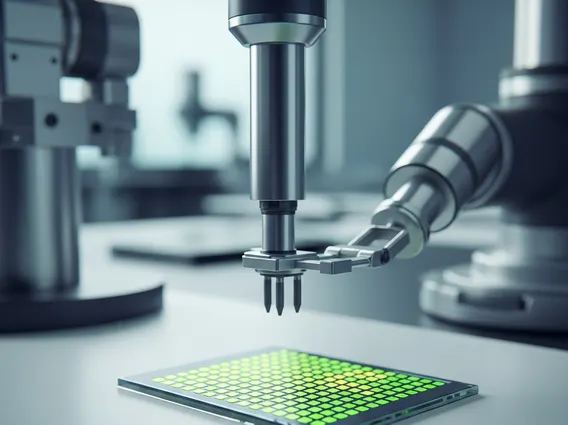
Microarray technology refers to a sophisticated molecular biology tool that enables scientists to study the expression of thousands of genes at once, or to identify multiple genetic variations within a genome. At its core, a microarray is a solid surface, typically a glass slide or silicon chip, to which a collection of microscopic DNA spots, called probes, are attached. Each spot contains picomoles of a specific DNA sequence, representing a gene or a genetic marker. The comprehensive microarray definition highlights its utility in high-throughput analysis, providing a snapshot of genetic activity or variations across an entire genome or specific regions.
This technique is instrumental in understanding complex biological systems, such as how genes are turned on or off in different conditions, or how genetic mutations contribute to disease development. It allows for comparative studies, for instance, between healthy and diseased tissues, to pinpoint genes that are differentially expressed, offering critical clues about disease pathology and potential therapeutic targets.
How Microarray Works
The operational principle of a microarray relies on the fundamental property of DNA hybridization, where complementary single-stranded nucleic acid sequences bind to each other. Here’s a simplified breakdown of how microarray works:
- Sample Preparation: Genetic material (mRNA or DNA) is extracted from the biological samples of interest, such as cells or tissues. For gene expression studies, mRNA is reverse-transcribed into complementary DNA (cDNA) and labeled with fluorescent dyes.
- Hybridization: The labeled sample cDNA/DNA is then applied to the microarray chip. If a sequence in the sample is complementary to a probe on the chip, it will bind, or “hybridize,” to that probe.
- Washing: After a period of incubation, the chip is washed to remove any unbound or non-specifically bound sample material, ensuring that only specific hybridization signals remain.
- Scanning and Data Analysis: The microarray chip is then scanned by a laser that excites the fluorescent dyes. A detector measures the intensity of the fluorescence at each spot, which is directly proportional to the amount of labeled sample hybridized to that probe. Specialized software analyzes these signals, generating data that indicates the presence and quantity of specific genetic sequences or gene expression levels.
This detailed process allows researchers to quantify gene activity or detect genetic changes with high precision, making it a cornerstone technique in genomics and molecular diagnostics.
Microarray Applications and Uses
The versatility of microarray technology has led to its widespread adoption across various scientific and clinical domains. The primary microarray applications include gene expression profiling, genotyping, and comparative genomic hybridization. These capabilities provide invaluable insights into disease mechanisms, drug development, and personalized medicine.
Specifically, the uses of microarrays are diverse:
| Application Area | Description |
|---|---|
| Gene Expression Profiling | Identifying genes that are up- or down-regulated in specific diseases (e.g., cancer, autoimmune disorders) or in response to drug treatments. This helps in understanding disease pathogenesis and discovering biomarkers. |
| Genotyping and SNP Detection | Detecting single nucleotide polymorphisms (SNPs) and other genetic variations associated with disease susceptibility, drug response, or inherited traits. |
| Comparative Genomic Hybridization (CGH) | Identifying chromosomal abnormalities, such as deletions or duplications, which are common in many cancers and genetic disorders. |
| Pathogen Detection | Rapidly identifying and characterizing infectious agents, including bacteria and viruses, by detecting their specific genetic sequences. |
| Toxicology and Pharmacogenomics | Studying how genes respond to environmental toxins or how genetic variations influence an individual’s response to drugs, aiding in personalized medicine. |
For instance, in oncology, microarrays are crucial for classifying tumors, predicting patient prognosis, and determining the likelihood of response to specific therapies. The ability to analyze thousands of genes simultaneously makes microarrays an indispensable tool for both fundamental research and clinical diagnostics, continually advancing our understanding of health and disease.