
Mesenteric Membrane
The mesenteric membrane is a continuous, fan-shaped fold of the peritoneum that attaches the small intestine and parts of the large intestine to the posterior abdominal wall. Historically considered fragmented, it is now recognized as a distinct and continuous organ with significant implications for understanding abdominal anatomy and disease.
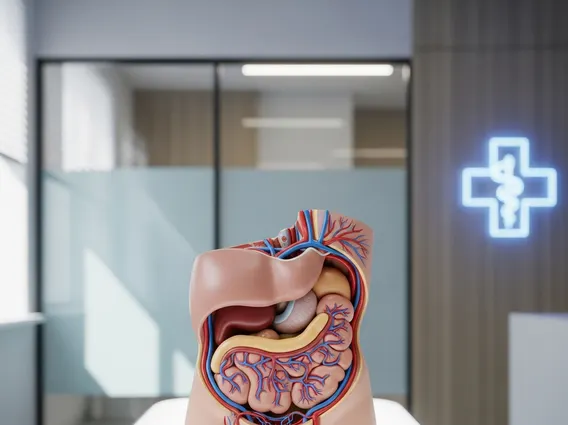
Key Takeaways
- The Mesenteric Membrane is a continuous peritoneal fold anchoring the intestines to the abdominal wall.
- It was reclassified as a distinct organ in 2017, challenging previous anatomical understanding.
- Its structure provides crucial pathways for blood vessels, nerves, and lymphatic vessels to reach the intestines.
- Key functions include mechanical support, nutrient transport, immune surveillance, and fat storage.
- Understanding its anatomy and function is vital for surgical procedures and managing various abdominal conditions.
What is the Mesenteric Membrane?
The Mesenteric Membrane is a double layer of peritoneum, the serous membrane lining the abdominal cavity. It extends from the posterior abdominal wall, enveloping the jejunum and ileum (parts of the small intestine), and attaching them securely. This continuous structure, once thought to be a series of disconnected fragments, was reclassified as a distinct organ in 2017, revolutionizing anatomical understanding. Its recognition as a single, cohesive entity has profound implications for surgical approaches and the study of gastrointestinal diseases.
Composed of connective tissue, the mesenteric membrane provides structural support while also serving as a conduit for vital structures. Within its layers, it encases blood vessels that supply the intestines, lymphatic vessels that drain fluid and transport immune cells, and nerves that regulate intestinal function. This intricate arrangement highlights its multifaceted role beyond mere mechanical attachment, underscoring its importance in maintaining intestinal health and function.
Mesenteric Membrane Anatomy and Location
The mesenteric membrane’s anatomy is characterized by its remarkable continuity and specific attachments within the abdominal cavity. It originates from the posterior abdominal wall, extending obliquely from the duodenojejunal flexure (near the second lumbar vertebra) down to the right sacroiliac joint. This broad attachment allows it to suspend the mobile parts of the small intestine, specifically the jejunum and ileum, within the peritoneal cavity.
Beyond the small intestine, the concept of the mesentery extends to other parts of the digestive tract, forming specialized regions:
- Mesentery Proper: This is the primary part connecting the jejunum and ileum to the posterior abdominal wall.
- Mesocolon: This term refers to the portions of the mesentery that attach parts of the large intestine. It includes the transverse mesocolon (for the transverse colon), the sigmoid mesocolon (for the sigmoid colon), and the mesoappendix (for the appendix).
- Mesorectum: This attaches the rectum to the posterior pelvic wall.
These various mesenteric components are continuous, forming an interconnected network that supports and supplies the entire gastrointestinal tract. The folds within the mesenteric membrane create spaces and pathways that are critical for understanding the spread of diseases, including infections and cancers, within the abdomen.
Functions and Purpose of the Mesenteric Membrane
The mesenteric membrane performs several critical functions essential for the proper operation of the digestive system and overall abdominal health. Its primary role is mechanical support, firmly anchoring the intestines to the posterior abdominal wall, preventing entanglement, and allowing for their necessary motility during digestion. Without this structural support, the long loops of the small and large intestines would be prone to twisting and obstruction.
Beyond structural integrity, the mesenteric membrane serves as a vital neurovascular highway. It provides a protected pathway for the superior mesenteric artery and vein, along with their numerous branches, to deliver oxygenated blood and nutrients to the intestines and return deoxygenated blood. Similarly, it houses an extensive network of lymphatic vessels and lymph nodes, which are crucial for immune surveillance, absorbing dietary fats, and draining interstitial fluid. Nerves, both sympathetic and parasympathetic, also traverse the mesentery, regulating intestinal motility, secretion, and blood flow. Understanding the mesenteric membrane function and purpose is therefore paramount in fields such as gastroenterology and abdominal surgery, as its integrity and health directly impact digestive processes and the body’s ability to fight disease.



















