Melanoma In Situ
Melanoma In Situ represents the earliest form of melanoma, a serious type of skin cancer. At this stage, the cancerous cells are confined to the outermost layer of the skin, making early detection and treatment crucial for a favorable outcome.

Key Takeaways
- Melanoma In Situ is the earliest, non-invasive stage of melanoma, limited to the epidermis.
- Early detection is vital, often through self-skin exams and professional dermatological checks.
- Symptoms typically involve changes in existing moles or the appearance of new, unusual lesions, guided by the ABCDE rule.
- Treatment primarily involves surgical excision to remove the lesion and a margin of healthy tissue.
- Unlike invasive melanoma, Melanoma In Situ has not spread beyond the top skin layer, leading to an excellent prognosis with proper treatment.
What is Melanoma In Situ?
Melanoma In Situ refers to a condition where abnormal melanocytes (pigment-producing cells) are present in the epidermis, the outermost layer of the skin, but have not yet invaded deeper into the dermis. This means the cancer cells are “in place” or “in situ” and have not spread. It is considered the earliest and most curable stage of melanoma. According to the American Cancer Society, melanoma accounts for about 1% of all skin cancers but causes the vast majority of skin cancer deaths, underscoring the importance of identifying it at this non-invasive stage. When detected and treated at the in situ stage, the prognosis is excellent, with nearly 100% cure rates.
Recognizing Melanoma In Situ: Symptoms and Diagnosis
Recognizing melanoma in situ symptoms often involves observing changes in existing moles or the development of new, suspicious lesions. These changes are typically subtle and can be identified using the “ABCDE” rule, a helpful guide for self-examination and professional screening. Early detection is paramount, as these lesions are often asymptomatic in their initial stages, meaning they don’t cause pain, itching, or bleeding.
The ABCDE rule helps identify characteristics that may indicate melanoma:
- Asymmetry: One half of the mole does not match the other half.
- Border irregularity: The edges are ragged, notched, or blurred.
- Color variation: The mole has uneven color, with shades of brown, black, tan, white, red, or blue.
- Diameter: The mole is larger than 6 millimeters (about the size of a pencil eraser).
- Evolving: The mole is changing in size, shape, color, or elevation, or any new symptom like bleeding, itching, or crusting appears.
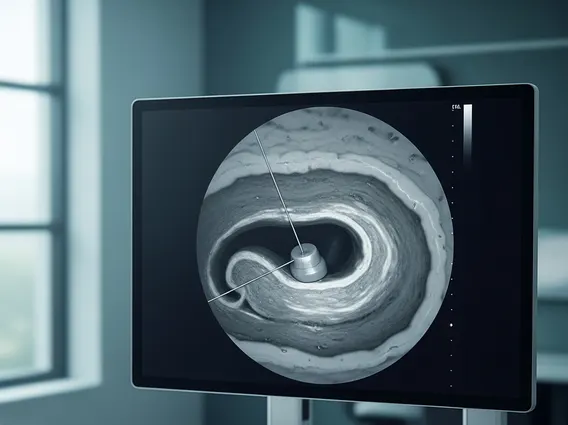
Diagnosis typically begins with a visual examination by a dermatologist, often using a dermatoscope. If a suspicious lesion is found, a biopsy is performed, where a small tissue sample is removed and examined under a microscope by a pathologist to confirm the presence of melanoma in situ.
Treatment and Distinction from Invasive Melanoma
The primary melanoma in situ treatment is surgical excision. This procedure involves removing the entire lesion along with a small margin of healthy surrounding skin to ensure all cancerous cells are eliminated. The goal is to achieve “clear margins,” meaning no cancer cells are found at the edges of the removed tissue. In some cases, Mohs micrographic surgery may be used, particularly for lesions on cosmetically sensitive areas, as it allows for precise removal of cancerous tissue while preserving as much healthy skin as possible.
Understanding the difference between melanoma in situ vs invasive melanoma is crucial for prognosis and treatment planning. The key distinction lies in the depth of cancer cell penetration. Melanoma in situ is confined to the epidermis, the top layer of skin, and has not breached the basement membrane to invade the dermis below. Invasive melanoma, conversely, has penetrated into the dermis and potentially deeper layers, increasing its risk of spreading to lymph nodes or distant organs (metastasis). This fundamental difference means that in situ melanoma has a significantly better prognosis and does not require further staging or systemic treatments like chemotherapy or radiation, which are often necessary for invasive forms.
The table below summarizes the key differences:
| Feature | Melanoma In Situ | Invasive Melanoma |
|---|---|---|
| Depth of Invasion | Confined to the epidermis (top skin layer) | Invades into the dermis and potentially deeper layers |
| Risk of Metastasis | Extremely low to none | Significant risk, increases with depth of invasion |
| Treatment | Surgical excision (local removal) | Surgical excision, possibly lymph node biopsy, systemic therapy (e.g., immunotherapy, targeted therapy) |
| Prognosis | Excellent (nearly 100% cure rate with proper treatment) | Varies depending on stage, can be serious if advanced |
Following successful treatment for melanoma in situ, regular follow-up appointments with a dermatologist are recommended to monitor for any new or recurring lesions, as individuals who have had one melanoma are at an increased risk of developing another.