
Mediastinoscope
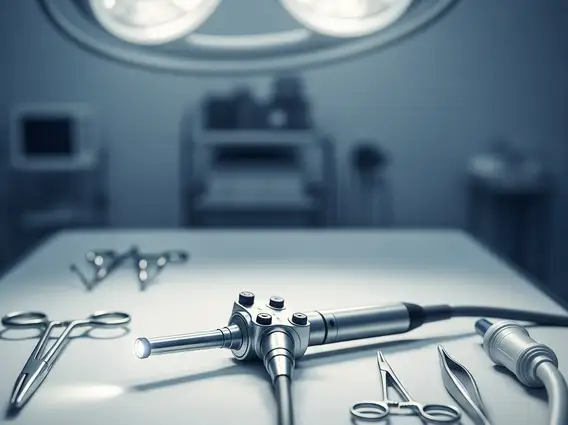
A mediastinoscope is a specialized medical instrument used in a diagnostic and staging procedure known as mediastinoscopy. This minimally invasive technique allows physicians to visualize and biopsy lymph nodes and other tissues in the mediastinum, the central compartment of the chest.
Key Takeaways
- A mediastinoscope is an endoscope used for examining the mediastinum, the space between the lungs.
- It is crucial for diagnosing and staging various conditions, particularly lung cancer and lymphoma.
- The procedure, mediastinoscopy, involves a small incision and provides direct visualization and tissue sampling.
- Modern mediastinoscopes offer advanced optics and channels for precise biopsies.
- It helps guide treatment decisions by providing accurate information about disease spread.
Mediastinoscope: Definition and Purpose
A what is a mediastinoscope? It is a rigid endoscope specifically designed for examining the mediastinum. The mediastinoscope definition and function centers around its role in allowing direct visualization and biopsy of structures within this critical anatomical region. The mediastinum houses vital organs such as the heart, trachea, esophagus, and major blood vessels, along with numerous lymph nodes. These lymph nodes are often the first sites where cancers, particularly lung cancer, spread, making their assessment crucial for accurate diagnosis and staging.
The primary purpose of the mediastinoscope is to facilitate mediastinoscopy, a surgical procedure that provides access to these deep-seated lymph nodes and tissues without requiring a full thoracotomy (open chest surgery). By enabling precise tissue sampling, the mediastinoscope plays a pivotal role in determining the presence of disease, its type, and its extent, which is essential for guiding appropriate treatment strategies for conditions like lung cancer, lymphoma, sarcoidosis, and other mediastinal masses.
How Mediastinoscopes Are Used
A mediastinoscope is used during a surgical procedure called mediastinoscopy. This procedure is typically performed under general anesthesia. The surgeon makes a small incision, usually about 2-3 cm long, just above the sternal notch at the base of the neck. Through this incision, the mediastinoscope is carefully inserted into the pretracheal space, allowing the surgeon to navigate and visualize the mediastinal structures.
The scope is equipped with a light source and a camera, transmitting images to a monitor, providing the surgical team with a clear view of the area. The surgeon can then identify enlarged or suspicious lymph nodes and use specialized instruments passed through the scope’s working channel to obtain tissue samples (biopsies). This mediastinoscopy procedure information is vital for diagnosing various conditions. For instance, in lung cancer staging, biopsies of specific lymph node stations help determine if the cancer has spread beyond the lung, influencing whether surgery, chemotherapy, or radiation therapy is the most suitable treatment. According to the American Cancer Society, accurate staging is paramount for effective cancer management, and mediastinoscopy remains a gold standard for assessing mediastinal lymph node involvement.
Key steps in how a mediastinoscope is used include:
- Patient positioning and general anesthesia.
- Small incision made at the sternal notch.
- Mediastinoscope insertion into the pretracheal space.
- Direct visualization of mediastinal lymph nodes and tissues.
- Biopsy of suspicious nodes using instruments passed through the scope.
- Removal of the scope and closure of the incision.
Components and Design
A mediastinoscope is typically a rigid, tube-like instrument, though flexible versions also exist for specific applications. Its design is optimized for navigating the confined spaces of the mediastinum while providing clear visualization and access for instrumentation. Key components include a rigid shaft, an optical system, a light source, and one or more working channels.
The optical system usually consists of a high-resolution lens and a camera, which transmits magnified images to an external monitor, allowing the surgical team to observe the internal anatomy in detail. Modern mediastinoscopes often incorporate advanced fiber optics or digital imaging capabilities for enhanced clarity. The light source, typically a powerful LED or xenon lamp, illuminates the surgical field, which is essential given the deep and often dark nature of the mediastinum. Working channels within the scope allow for the insertion of various surgical instruments, such as biopsy forceps, aspirating needles, and dissecting tools, enabling the surgeon to perform precise maneuvers and obtain tissue samples.
The design also includes a handle for ergonomic control and often features a mechanism for insufflation (introducing gas) or irrigation to improve visibility. The robust construction ensures durability and sterility, as the instrument must withstand repeated sterilization cycles. These design elements collectively contribute to the mediastinoscope’s effectiveness as a diagnostic and staging tool in thoracic medicine.



















