Maximum Inspiratory Pressure Test
The Maximum Inspiratory Pressure (MIP) Test is a crucial diagnostic tool used in respiratory medicine to assess the strength of the inspiratory muscles. This non-invasive test provides valuable insights into a patient’s respiratory health and capacity.
Key Takeaways
- The Maximum Inspiratory Pressure (MIP) Test measures the strength of the muscles responsible for inhalation.
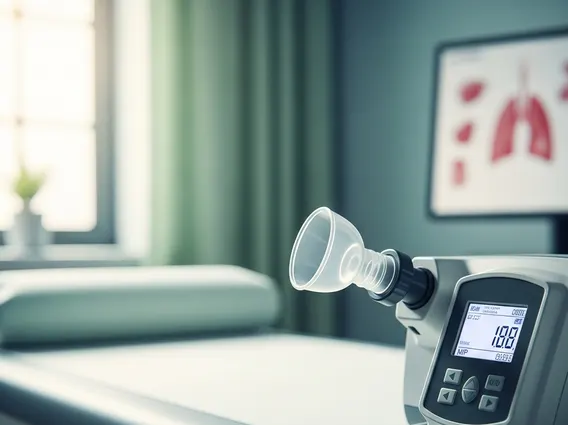
- It involves exhaling completely and then inhaling forcefully against a blocked mouthpiece, with the pressure recorded.
- The purpose of maximum inspiratory pressure test is to diagnose and monitor respiratory muscle weakness in various conditions.
- Results are interpreted based on age, gender, and reference values, with lower values often indicating muscle weakness.
- MIP testing helps guide treatment decisions, particularly in patients requiring ventilatory support or rehabilitation.
What is the Maximum Inspiratory Pressure (MIP) Test?
The Maximum Inspiratory Pressure Test (MIP test), also known as PImax, is a simple yet effective pulmonary function test that quantifies the strength of the inspiratory muscles, primarily the diaphragm. It measures the maximum pressure a person can generate when inhaling forcefully against an occluded airway. This test is vital for evaluating respiratory muscle function and identifying potential weakness, which can be a symptom or complication of various medical conditions.
The purpose of maximum inspiratory pressure test is to assist clinicians in diagnosing and monitoring conditions that affect respiratory muscle strength, such as neuromuscular diseases (e.g., amyotrophic lateral sclerosis, muscular dystrophy), chronic obstructive pulmonary disease (COPD), spinal cord injuries, and critical illness. Respiratory muscle weakness can significantly impact a patient’s ability to breathe effectively, clear secretions, and maintain adequate ventilation, potentially leading to respiratory failure. According to the American Thoracic Society, assessing MIP is a standard component of comprehensive pulmonary function testing in patients with suspected respiratory muscle dysfunction.
How to Perform a Maximum Inspiratory Pressure Test
Performing a Maximum Inspiratory Pressure Test requires specific equipment and patient cooperation to ensure accurate results. The test typically uses a pressure transducer connected to a mouthpiece with a small leak, which helps prevent glottic closure and ensures true inspiratory effort. Proper instruction and encouragement are essential for the patient to achieve their maximal effort.
The general steps for how to perform maximum inspiratory pressure test are as follows:
- The patient sits comfortably and is instructed to place the mouthpiece firmly in their mouth, sealing their lips around it.
- They are then asked to exhale completely to residual volume, expelling as much air from their lungs as possible.
- Immediately after full exhalation, the patient is instructed to inhale as forcefully and rapidly as possible against the occluded mouthpiece.
- The maximum negative pressure generated during this inspiratory maneuver is recorded by the transducer.
- The maneuver is typically repeated several times (usually 3-5 times) with short rests in between to ensure reproducibility and capture the highest, most consistent value.
- The highest recorded value, provided it is consistent with other efforts, is taken as the patient’s MIP.
It is crucial that the patient understands the instructions and performs the maneuver with maximal effort, as suboptimal effort can lead to falsely low readings.
Interpreting Maximum Inspiratory Pressure Test Results
The maximum inspiratory pressure test interpretation involves comparing the patient’s measured MIP value to established reference values, which vary based on factors such as age, gender, and body size. These reference values provide a range considered normal for a healthy individual. A significantly lower MIP value than the predicted normal range suggests inspiratory muscle weakness.
Generally, MIP values are expressed in centimeters of water (cmH2O) and are negative pressures. For instance, a healthy young adult might have an MIP between -80 to -120 cmH2O, while values less negative than -60 cmH2O are often considered indicative of clinically significant inspiratory muscle weakness. In patients with severe respiratory muscle weakness, MIP values can be as low as -20 to -30 cmH2O, indicating a compromised ability to breathe independently and potentially signaling the need for ventilatory support. Interpreting these results in the context of the patient’s overall clinical picture, symptoms, and other diagnostic findings is critical for accurate diagnosis and treatment planning.