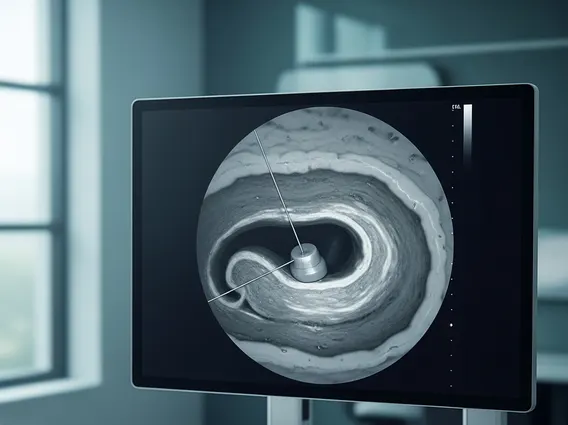
Malignant Meningioma
Malignant meningioma represents a rare and aggressive form of tumor originating from the meninges, the protective layers surrounding the brain and spinal cord. Understanding this condition is crucial for effective diagnosis and management.

Key Takeaways
- Malignant meningioma is a rare, aggressive (WHO Grade III) tumor of the brain or spinal cord lining.
- Symptoms vary based on tumor location and size, often including headaches, seizures, and neurological deficits.
- Diagnosis relies on imaging (MRI/CT) and confirmed by biopsy for accurate grading.
- Treatment primarily involves surgical removal, often followed by radiation therapy to reduce recurrence risk.
- Prognosis is generally guarded due to the tumor’s aggressive nature and high likelihood of recurrence.
What is Malignant Meningioma?
Malignant meningioma is a rare and aggressive type of tumor that arises from the meninges, the membranes that envelop and protect the brain and spinal cord. Unlike more common benign meningiomas, which are slow-growing and typically do not spread, malignant meningiomas are classified as World Health Organization (WHO) Grade III tumors. This classification indicates a high degree of cellular atypia, increased mitotic activity, and a greater propensity for rapid growth and local invasion into surrounding brain tissue or bone. While all meningiomas originate from arachnoid cap cells within the meninges, the malignant form exhibits a significantly more aggressive biological behavior, posing substantial challenges in treatment and management due to its invasive nature and higher recurrence rates.
Symptoms and Diagnosis of Malignant Meningioma
The presentation of malignant meningioma symptoms can be highly variable, depending largely on the tumor’s size, location within the brain or spinal cord, and its rate of growth. As the tumor expands, it can exert pressure on adjacent neural structures, leading to a range of neurological deficits. Common symptoms often include persistent headaches, which may worsen over time, and seizures, which can be a presenting symptom in a significant number of patients. Other manifestations may involve specific neurological impairments:
- Weakness or numbness in limbs
- Vision changes, such as blurred vision or double vision
- Hearing loss or ringing in the ears (tinnitus)
- Cognitive difficulties, including memory problems or personality changes
- Speech difficulties (aphasia)
- Balance problems or dizziness
Diagnosing malignant meningioma typically begins with a thorough neurological examination and a review of the patient’s medical history. Imaging studies are crucial for initial detection and characterization. Magnetic Resonance Imaging (MRI) with contrast is the preferred method, providing detailed images of the tumor’s size, location, and relationship to surrounding structures. Computed Tomography (CT) scans may also be used, particularly to assess bone involvement. However, a definitive diagnosis and accurate grading of the tumor (WHO Grade III) can only be confirmed through a tissue biopsy, usually obtained during surgical resection, which allows for histopathological examination by a neuropathologist.
Treatment Options and Prognosis for Malignant Meningioma
Managing malignant meningioma treatment options typically involves a multidisciplinary approach due to its aggressive nature. The primary treatment modality is surgical resection, aiming for the most complete removal of the tumor possible while preserving neurological function. Achieving a gross total resection (GTR) is associated with a better outcome, but this can be challenging depending on the tumor’s location and invasion into critical structures. Following surgery, adjuvant therapies are often recommended to reduce the risk of recurrence. Radiation therapy, including external beam radiation therapy or stereotactic radiosurgery, is commonly employed to target any residual tumor cells or areas at high risk for recurrence. Chemotherapy is generally less effective for meningiomas compared to other brain tumors, but it may be considered for recurrent or highly aggressive cases, or when other treatments have failed. Clinical trials exploring novel targeted therapies or immunotherapies may also be an option for eligible patients.
The malignant meningioma prognosis is generally guarded compared to benign meningiomas, reflecting its aggressive biology and higher rates of recurrence. Factors influencing prognosis include the extent of surgical resection (GTR versus subtotal resection), the tumor’s specific pathological features (e.g., mitotic index, brain invasion), the patient’s age and overall health, and whether radiation therapy was administered. Recurrence rates for malignant meningiomas are significantly higher than for lower-grade meningiomas, with studies indicating that a substantial percentage of patients experience recurrence within a few years, even after aggressive treatment. Regular follow-up imaging and neurological assessments are essential for long-term monitoring and early detection of any recurrence. Ongoing research continues to explore more effective treatment strategies to improve outcomes for individuals diagnosed with this challenging condition.