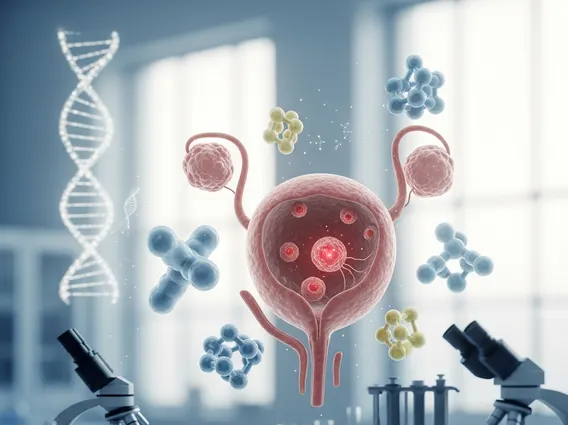
Latest Research and Clinical Trials on Vulvar Cancer
Vulvar cancer, a rare malignancy affecting the external female genitalia, presents unique challenges in diagnosis and treatment. However, ongoing scientific endeavors are continually shedding light on its complexities, leading to significant advancements. This article delves into the vulvar cancer latest research, exploring emerging therapies and the crucial role of clinical trials for vulvar cancer in shaping future patient care.

Key Takeaways
- Recent advancements in vulvar cancer research are focusing on genomic profiling and immunotherapy, offering new insights into disease mechanisms.
- New treatments for vulvar cancer include targeted therapies and novel immunotherapeutic agents, moving beyond traditional surgery and radiation.
- Clinical trials for vulvar cancer are essential for evaluating the safety and efficacy of these innovative therapies, providing patients with access to cutting-edge care.
- Understanding the molecular landscape of vulvar cancer is paving the way for personalized treatment strategies.
- Participation in vulvar cancer clinical trial information is crucial for accelerating the development of more effective interventions.
Recent Advances in Vulvar Cancer Research
The landscape of vulvar cancer research has seen remarkable progress, driven by a deeper understanding of the disease’s molecular underpinnings and immune interactions. Historically, treatment relied heavily on surgery, often extensive, followed by radiation therapy. While these methods remain foundational, vulvar cancer research updates are revealing opportunities for less invasive and more targeted approaches, aiming to improve both survival rates and quality of life for patients.
According to the American Cancer Society, vulvar cancer is relatively uncommon, with an estimated 6,660 new cases and 1,670 deaths in the U.S. in 2024. Despite its rarity, the impact on affected individuals can be profound, underscoring the urgency of continued investigation. Recent vulvar cancer studies are increasingly leveraging advanced technologies, such as next-generation sequencing, to identify specific genetic mutations and biomarkers that can predict disease progression or response to particular therapies. This shift towards precision medicine is a cornerstone of current research efforts.
Genomic Profiling and Biomarker Discovery
One of the most significant advances in vulvar cancer treatment stems from comprehensive genomic profiling. Researchers are meticulously mapping the genetic alterations present in vulvar cancer cells, identifying key mutations in genes like TP53, PIK3CA, and HRAS, which are frequently implicated in squamous cell carcinomas, the most common type of vulvar cancer. Understanding these genetic signatures allows for the development of targeted therapies designed to specifically inhibit the pathways driven by these mutations, potentially offering more effective treatment with fewer side effects than conventional chemotherapy.
Furthermore, the discovery of novel biomarkers is revolutionizing early detection and prognosis. For instance, studies are exploring the role of human papillomavirus (HPV) infection, which is a major risk factor for many vulvar cancers, and how its presence influences tumor biology and treatment response. Identifying specific protein markers or gene expression patterns in tumor tissue or blood samples could enable clinicians to stratify patients more effectively, predicting who might benefit most from certain therapies or who may be at higher risk of recurrence, thereby personalizing treatment plans.
Immunotherapy Breakthroughs
Immunotherapy represents another exciting frontier in vulvar cancer latest research. This approach harnesses the body’s own immune system to recognize and destroy cancer cells. Checkpoint inhibitors, a class of immunotherapeutic drugs, have shown promise in various cancers by blocking proteins that prevent immune cells from attacking tumors. In vulvar cancer, studies are investigating the efficacy of these inhibitors, particularly in advanced or recurrent cases where other treatments have failed.
Beyond checkpoint inhibitors, other immunotherapeutic strategies are under investigation, including therapeutic vaccines and adoptive cell therapies. These innovative treatments aim to either stimulate a stronger immune response against cancer or introduce immune cells specifically engineered to target tumor cells. While still in early phases for vulvar cancer, the potential for these therapies to offer durable responses and improve long-term outcomes is a major focus of ongoing vulvar cancer research updates.
Exploring New Treatments for Vulvar Cancer
The quest for new treatments of vulvar cancer is multifaceted, encompassing a range of innovative approaches designed to improve efficacy, reduce toxicity, and enhance patient quality of life. Beyond traditional surgery and radiation, which remain critical, researchers are exploring targeted therapies, advanced radiation techniques, and novel drug combinations. These efforts are often informed by the molecular insights gained from genomic profiling, allowing for a more precise attack on cancer cells.
One area of significant interest involves targeted therapies that specifically interfere with molecules involved in tumor growth and progression. For example, inhibitors of the PI3K/AKT/mTOR pathway, frequently activated in vulvar cancers, are being evaluated. Similarly, drugs that target angiogenesis (the formation of new blood vessels that feed tumors) are also under investigation. These therapies aim to selectively kill cancer cells while sparing healthy tissue, leading to fewer side effects compared to conventional chemotherapy.
Moreover, advancements in radiation therapy delivery, such as intensity-modulated radiation therapy (IMRT) and proton therapy, allow for more precise targeting of tumors, minimizing damage to surrounding healthy tissues and reducing treatment-related complications. Combining these advanced radiation techniques with systemic therapies, including chemotherapy or targeted agents, is also a focus of current research to enhance treatment effectiveness. The following are some key areas of focus for developing advances in vulvar cancer treatment:
- Targeted Molecular Therapies: Drugs designed to block specific genes or proteins that contribute to cancer growth.
- Immunotherapy: Treatments that boost the body’s natural defenses to fight cancer, such as checkpoint inhibitors.
- Advanced Radiation Techniques: Precision radiation delivery methods that spare healthy tissue.
- Novel Chemotherapy Regimens: Exploring new drug combinations or delivery methods for chemotherapy.
- Photodynamic Therapy: Using light-activated drugs to destroy cancer cells, particularly for superficial lesions.
Current Clinical Trials for Vulvar Cancer
Clinical trials for vulvar cancer are the cornerstone of medical progress, serving as the essential bridge between laboratory discoveries and approved patient treatments. These meticulously designed research studies evaluate the safety and efficacy of new drugs, surgical techniques, radiation protocols, and combination therapies. For patients, participating in a clinical trial can offer access to cutting-edge treatments that are not yet widely available, potentially leading to improved outcomes.
Understanding vulvar cancer clinical trial information is crucial for both patients and healthcare providers. Trials typically proceed through several phases, each with specific objectives. Phase I trials focus on safety and dosage, Phase II trials assess efficacy and side effects in a larger group, and Phase III trials compare the new treatment to standard care in even larger populations. The ultimate goal is to gather enough evidence to demonstrate that a new treatment is both safe and more effective than existing options.
Currently, numerous trials are underway globally, investigating a wide array of interventions for vulvar cancer, from early-stage disease to advanced or recurrent cases. These trials often explore novel immunotherapies, targeted agents, and innovative combinations of existing treatments. Patients interested in learning more about participation can consult resources like ClinicalTrials.gov or discuss options with their oncology team. The table below provides a general overview of common types of interventions being studied in ongoing trials:
| Intervention Type | Primary Focus | Potential Benefit |
|---|---|---|
| Immunotherapy (e.g., Checkpoint Inhibitors) | Activating the immune system against cancer cells | Durable responses, reduced recurrence for advanced disease |
| Targeted Therapy | Blocking specific molecular pathways in cancer cells | Fewer side effects, personalized treatment |
| Combination Therapy (e.g., Chemo + Immuno) | Synergistic effects of multiple treatments | Enhanced tumor response, improved survival rates |
| Advanced Radiation Techniques | Precise delivery of radiation to tumors | Reduced toxicity to healthy tissues, better local control |
| Surgical Innovations | Minimally invasive approaches, sentinel lymph node biopsy | Less extensive surgery, faster recovery, reduced lymphedema risk |
Participation in these trials is vital for advancing medical knowledge and improving future care for all individuals affected by vulvar cancer. Each patient who contributes helps researchers gather critical data, accelerating the development of more effective and less toxic therapies.
Frequently Asked Questions
What is the most common type of vulvar cancer?
The most common type of vulvar cancer is squamous cell carcinoma, accounting for about 90% of all cases. This type of cancer originates in the thin, flat cells that line the surface of the vulva. Other less common types include melanoma, adenocarcinoma, and sarcoma. Understanding the specific type of vulvar cancer is crucial for determining the most appropriate treatment strategy, as each type may respond differently to various therapies, influencing the direction of vulvar cancer research.
How is vulvar cancer typically diagnosed?
Vulvar cancer is typically diagnosed through a physical examination, followed by a biopsy of any suspicious lesions or growths on the vulva. During a biopsy, a small tissue sample is removed and examined under a microscope by a pathologist to confirm the presence of cancer cells. Imaging tests such as MRI, CT scans, or PET scans may also be used to determine the extent of the cancer and if it has spread, which is critical for staging and planning treatment, often guiding decisions about participation in clinical trials for vulvar cancer.
What are the main risk factors for vulvar cancer?
Several factors can increase the risk of developing vulvar cancer. The most significant risk factor is infection with high-risk types of human papillomavirus (HPV), particularly HPV-16 and HPV-18. Other risk factors include a history of vulvar intraepithelial neoplasia (VIN), lichen sclerosus, a weakened immune system, smoking, and increasing age. Awareness of these risk factors can encourage earlier detection and intervention, aligning with efforts in vulvar cancer latest research to improve outcomes.