Internal Tandem Duplication
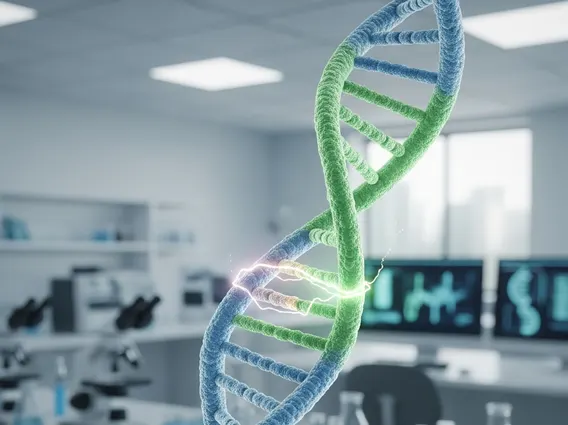
Internal Tandem Duplication (ITD) refers to a specific type of genetic mutation where a segment of DNA is duplicated and inserted immediately adjacent to the original sequence. This genetic alteration plays a significant role in various diseases, particularly in the context of cancer development and progression.
Key Takeaways
- Internal Tandem Duplication (ITD) is a gene mutation involving the duplication and reinsertion of a DNA segment within a gene.
- ITDs are primarily somatic mutations, meaning they are acquired during a person’s lifetime, often due to errors in DNA replication or repair.
- They are notably prevalent in certain cancers, such as Acute Myeloid Leukemia (AML), where they can affect critical genes like FLT3.
- The presence of ITDs can significantly influence disease prognosis, often indicating a more aggressive disease course.
- Understanding ITDs is crucial for accurate diagnosis, risk stratification, and guiding targeted therapeutic strategies in affected patients.
What is Internal Tandem Duplication (ITD)?
Internal Tandem Duplication (ITD) is a type of gene mutation characterized by the insertion of an extra copy of a DNA sequence directly next to the original sequence within the same gene. This genetic rearrangement results in an elongated protein, which often leads to altered or unregulated protein function. The internal tandem duplication definition highlights its unique structural characteristic: the duplicated segment maintains its original orientation and is found in tandem with the initial sequence, without any intervening DNA.
These mutations are particularly well-studied in hematological malignancies, most notably in Acute Myeloid Leukemia (AML), where ITDs in the FMS-like tyrosine kinase 3 (FLT3) gene are common. The presence of FLT3-ITD mutations can disrupt normal cellular signaling pathways, promoting uncontrolled cell proliferation and survival, which are hallmarks of cancer development.
Causes of Internal Tandem Duplication
The causes of internal tandem duplication are primarily attributed to errors that occur during DNA replication and repair processes within somatic cells. Unlike germline mutations, which are inherited from parents, ITDs are typically acquired during an individual’s lifetime. These errors can arise spontaneously or be influenced by various endogenous and exogenous factors, though the precise triggers for many ITDs remain under investigation.
During DNA replication, the cellular machinery responsible for copying DNA can sometimes “slip,” leading to the duplication of a short sequence. Similarly, faulty DNA repair mechanisms, which are meant to correct damage or errors in the DNA, can inadvertently create ITDs. For instance, in the context of FLT3-ITD in AML, these duplications are thought to arise from non-homologous end-joining (NHEJ) or microhomology-mediated end-joining (MMEJ) pathways during DNA repair, particularly when double-strand breaks occur in the DNA.
Clinical Effects of Internal Tandem Duplication
The internal tandem duplication effects are diverse and highly dependent on the specific gene affected, but they often lead to significant clinical consequences, particularly in oncology. In many cases, ITDs result in a gain-of-function mutation, where the altered protein becomes constitutively active or functions abnormally, driving disease progression. For example, FLT3-ITD mutations in AML lead to continuous activation of the FLT3 receptor, promoting cell growth and inhibiting apoptosis, contributing to a more aggressive disease phenotype.
Clinically, the presence of ITDs often serves as a crucial prognostic marker. In AML, patients with FLT3-ITD generally have a higher risk of relapse and a poorer overall survival compared to those without the mutation. According to the World Health Organization (WHO), FLT3-ITD is recognized as a significant molecular marker influencing risk stratification in AML. The detection of these mutations is therefore critical for guiding treatment decisions, including the consideration of targeted therapies such as FLT3 inhibitors, which aim to block the activity of the mutated protein.
Beyond prognosis, ITDs can also influence treatment response. Patients with certain ITDs may respond differently to conventional chemotherapy regimens, necessitating more intensive treatment approaches or the integration of novel targeted agents. Key clinical implications include:
- Increased disease aggressiveness and a higher risk of relapse in certain cancers.
- Poorer overall survival rates for affected patients compared to those without the mutation.
- Potential for resistance to standard chemotherapy protocols.
- Identification of specific molecular targets for novel therapeutic agents.
The identification of ITDs through molecular diagnostics is thus an essential step in personalized medicine, allowing clinicians to tailor therapeutic strategies to the individual genetic profile of a patient’s disease.