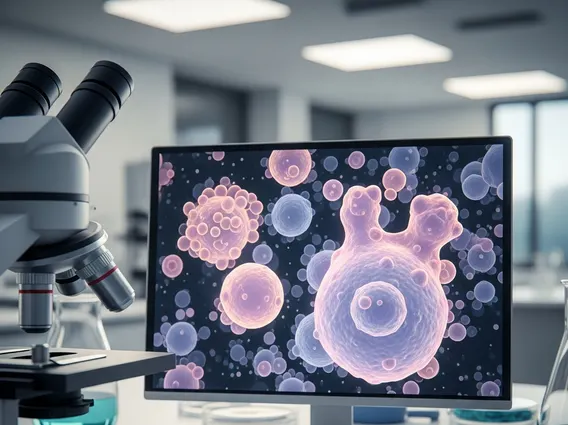
Hyperdiploid
Hyperdiploid refers to a cellular state characterized by the presence of more than the normal diploid number of chromosomes. This condition is a significant area of study in genetics and oncology, as it is frequently observed in various types of cancer and can influence disease progression and treatment response.
Key Takeaways
- Hyperdiploid describes cells containing more than the standard two sets of chromosomes.
- It is a form of aneuploidy, indicating an abnormal chromosome number.
- The primary hyperdiploidy causes are errors during cell division, such as nondisjunction.
- Hyperdiploid cells explanation often involves their association with specific cancers, where they can impact prognosis.
- Understanding hyperdiploidy is crucial for diagnosing and potentially treating certain malignancies.
What is Hyperdiploid?
Hyperdiploid refers to a cell or organism that possesses more than the typical two complete sets of chromosomes. In humans, a normal diploid cell contains 46 chromosomes (23 pairs). A hyperdiploid cell, therefore, would have more than 46 chromosomes, such as 47, 48, or even many more, depending on the extent of the chromosomal gain. This condition is a specific type of aneuploidy, which broadly describes any deviation from the normal chromosome number. The hyperdiploid meaning is fundamentally linked to an abnormal increase in genetic material, which can have profound effects on cellular function and viability.
While often associated with disease states, particularly cancer, hyperdiploidy is a descriptive term for a chromosomal count. Its presence can range from a gain of a single chromosome (e.g., trisomy 21 in Down syndrome) to a substantial increase involving multiple chromosomes, which is more common in malignant cells. The specific number and type of extra chromosomes can vary widely, leading to diverse biological consequences.
Causes of Hyperdiploidy
Understanding the hyperdiploidy causes primarily involves examining errors that occur during cell division, specifically mitosis and meiosis. These errors lead to an unequal distribution of chromosomes into daughter cells. The most common mechanisms include:
- Nondisjunction: This is the failure of homologous chromosomes or sister chromatids to separate properly during anaphase of cell division. If nondisjunction occurs, one daughter cell receives an extra chromosome, while the other receives one less.
- Endoreduplication: A process where DNA replication occurs without subsequent cell division, leading to cells with multiple sets of chromosomes (polyploidy), which can then become hyperdiploid through subsequent errors or partial chromosome loss.
- Multipolar Mitosis: Cell division involving more than two spindle poles, which can lead to chaotic chromosome segregation and an uneven distribution of chromosomes into multiple daughter cells, often resulting in hyperdiploidy.
- Defects in Spindle Checkpoint: The spindle assembly checkpoint ensures that all chromosomes are correctly attached to the mitotic spindle before anaphase begins. Defects in this checkpoint can allow cells with incorrect chromosome numbers to proceed through division, contributing to hyperdiploidy.
These cellular errors can be influenced by genetic predispositions, environmental factors, or a combination of both. In the context of cancer, genomic instability, a hallmark of many malignancies, significantly increases the likelihood of these errors, leading to the accumulation of extra chromosomes.
Characteristics of Hyperdiploid Cells
The hyperdiploid cells explanation centers on their distinctive chromosomal profile and the biological implications of having excess genetic material. These cells are characterized by an increased number of chromosomes, which can range from a few extra to a near-triploid or tetraploid state. This chromosomal imbalance often leads to several cellular characteristics:
Firstly, hyperdiploid cells frequently exhibit genomic instability. The presence of extra chromosomes can disrupt gene dosage, leading to an overexpression of certain genes and an imbalance in cellular pathways. This imbalance can contribute to uncontrolled cell proliferation, resistance to apoptosis (programmed cell death), and an increased capacity for metastasis, particularly in cancer cells. For instance, in acute lymphoblastic leukemia (ALL), hyperdiploidy is a common cytogenetic abnormality, often associated with a more favorable prognosis in children, depending on the specific chromosomes gained.
Secondly, the altered gene expression in hyperdiploid cells can affect their morphology and functional properties. They may display abnormal sizes, shapes, and nuclear features compared to their normal diploid counterparts. The presence of extra chromosomes can also impact cellular responses to stress and therapeutic agents, making them a critical factor in determining treatment strategies and predicting patient outcomes in various diseases.