Hydrocarbon
Hydrocarbon refers to a fundamental class of organic chemical compounds composed exclusively of hydrogen and carbon atoms. These compounds form the backbone of organic chemistry and are ubiquitous in nature and industrial applications.
Key Takeaways
- Hydrocarbons are organic compounds consisting solely of hydrogen and carbon atoms.
- They are broadly classified into several types, including alkanes, alkenes, alkynes, and aromatic hydrocarbons, based on their bonding and structure.
- Hydrocarbons serve as primary energy sources, raw materials for plastics, and components in various industrial products.
- Their diverse structures dictate their unique physical and chemical properties, leading to a wide range of applications.
What is a Hydrocarbon? Definition and Key Examples
A Hydrocarbon is an organic compound made up entirely of hydrogen and carbon atoms. These atoms are linked together by covalent bonds, forming diverse structures ranging from simple chains to complex rings. The unique ability of carbon atoms to form stable bonds with other carbon atoms, as well as with hydrogen, allows for an immense variety of Hydrocarbon structures. This fundamental composition makes them central to organic chemistry and essential components of petroleum, natural gas, and coal.
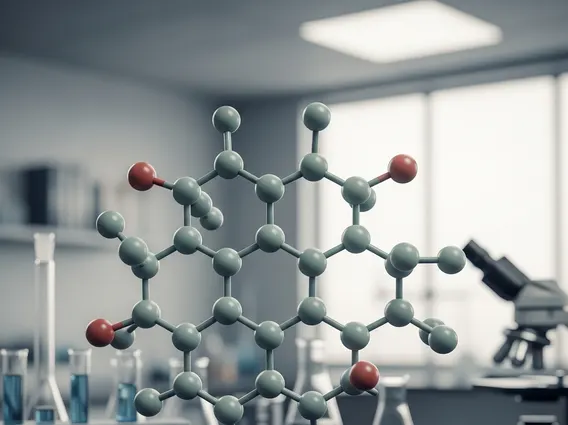
The hydrocarbon definition and examples illustrate their basic nature. For instance, methane (CH₄) is the simplest Hydrocarbon, consisting of one carbon atom bonded to four hydrogen atoms. Ethane (C₂H₆) has two carbon atoms, while propane (C₃H₈) has three. Benzene (C₆H₆) is a classic example of an aromatic Hydrocarbon, featuring a stable ring structure. These examples highlight the varying complexities and arrangements possible within this class of compounds.
Types of Hydrocarbons
Hydrocarbons are categorized based on the types of bonds between their carbon atoms and their overall molecular structure. Understanding these classifications is crucial for predicting their properties and reactions. The types of hydrocarbons explained below cover the primary categories:
- Alkanes: These are saturated Hydrocarbons, meaning they contain only single bonds between carbon atoms. They have the general formula CnH₂n+₂. Examples include methane, ethane, and propane. Alkanes are relatively unreactive and are commonly found in natural gas and petroleum.
- Alkenes: Unsaturated Hydrocarbons that contain at least one carbon-carbon double bond. Their general formula is CnH₂n. Ethene (ethylene) and propene (propylene) are common examples. Alkenes are more reactive than alkanes due to the presence of the double bond, making them important in the production of polymers.
- Alkynes: Also unsaturated Hydrocarbons, but they feature at least one carbon-carbon triple bond. Their general formula is CnH₂n-₂. Ethyne (acetylene) is the simplest alkyne and is widely used in welding. Alkynes are highly reactive.
- Aromatic Hydrocarbons: These are cyclic (ring-shaped) Hydrocarbons that exhibit special stability due to delocalized pi electrons. Benzene is the most well-known example. Aromatic Hydrocarbons are important in the synthesis of many industrial chemicals and pharmaceuticals.
Uses of Hydrocarbons in Daily Life
The widespread utility of Hydrocarbons makes them indispensable in modern society, impacting nearly every aspect of daily life. The uses of hydrocarbons in daily life span from energy generation to the production of consumer goods.
Primarily, Hydrocarbons serve as the world’s leading energy sources. Petroleum, natural gas, and coal are all rich in various Hydrocarbons. Gasoline, diesel, and jet fuel, derived from petroleum, power transportation. Natural gas, predominantly methane, is used for heating homes and generating electricity. Liquefied petroleum gas (LPG), a mixture of propane and butane, is used for cooking and heating in many regions.
Beyond energy, Hydrocarbons are crucial raw materials for the petrochemical industry. They are processed to create a vast array of products, including plastics (such as polyethylene, polypropylene, and PVC), synthetic rubbers, and fibers. These materials are found in everything from packaging and clothing to automotive parts and medical devices. Furthermore, Hydrocarbons are used as solvents in various industrial processes, as lubricants in machinery, and as building blocks in the synthesis of pharmaceuticals, dyes, and agricultural chemicals. Their versatility underscores their profound impact on technology, economy, and everyday convenience.