Human Leukocyte Antigen Matching
Human Leukocyte Antigen (HLA) matching is a critical process in transplantation medicine, essential for determining the compatibility between organ or tissue donors and recipients. This intricate biological system plays a pivotal role in the success and longevity of transplants by minimizing the risk of immune rejection.
Key Takeaways
- Human Leukocyte Antigens (HLAs) are proteins on cell surfaces that help the immune system distinguish between “self” and “non-self.”
- Human Leukocyte Antigen Matching is the process of comparing HLA markers between a donor and a recipient to predict transplant compatibility.
- A closer HLA match significantly reduces the risk of transplant rejection and improves long-term graft survival.
- The HLA typing process explained involves genetic testing to identify specific HLA alleles in both donor and recipient.
- HLA matching is crucial for various transplants, particularly kidney, bone marrow, and stem cell transplants.
What is Human Leukocyte Antigen (HLA) Matching?
Human Leukocyte Antigen (HLA) Matching refers to the process of identifying and comparing specific proteins, known as Human Leukocyte Antigens, found on the surface of most cells in the body. These proteins are encoded by genes located on chromosome 6 and are a fundamental part of the immune system, acting as molecular “fingerprints” that allow the body to recognize its own cells and distinguish them from foreign invaders like bacteria, viruses, or transplanted organs. Each individual inherits a unique set of HLA genes from their parents, resulting in a vast array of possible HLA combinations across the population.
The primary function of HLAs is to present small fragments of proteins (peptides) to T-cells, which are key components of the immune system. When T-cells encounter peptides presented by “self” HLAs, they typically do not react. However, if they encounter peptides presented by “non-self” HLAs, as would be the case with a mismatched transplanted organ, they can trigger an immune response aimed at destroying the foreign cells. This immune response is the primary cause of transplant rejection, highlighting why understanding and matching these antigens is paramount in transplantation.
How Human Leukocyte Antigen (HLA) Matching Works for Transplants
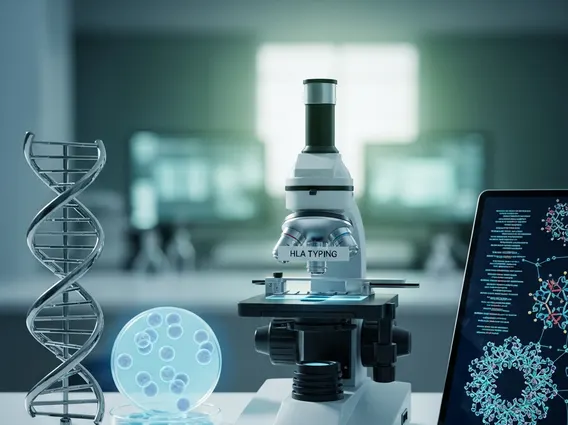
The process of determining HLA compatibility between a donor and a recipient is known as HLA typing process explained. This involves sophisticated genetic testing to identify the specific HLA alleles (different forms of a gene) present in both individuals. Blood samples are typically used for this analysis, which focuses on several key HLA genes, including HLA-A, HLA-B, HLA-C (Class I antigens), and HLA-DR, HLA-DQ, HLA-DP (Class II antigens). These genes are highly polymorphic, meaning they have many different variations, making a perfect match challenging but highly desirable.
Modern HLA typing methods utilize advanced molecular techniques to achieve high-resolution results, identifying specific alleles rather than just broad antigen groups. The goal is to find a donor whose HLA profile is as close as possible to the recipient’s. A “match” is often described by the number of shared HLA antigens or alleles. For instance, a “6/6 match” typically refers to compatibility across the HLA-A, HLA-B, and HLA-DR loci, with two alleles at each locus. The degree of matching required can vary depending on the type of transplant, with bone marrow and stem cell transplants generally demanding a much higher degree of matching compared to solid organ transplants like kidneys or livers.
The steps involved in HLA typing generally include:
- Sample Collection: Blood samples are drawn from both the potential donor and recipient.
- DNA Extraction: DNA is extracted from the white blood cells in the samples.
- Genetic Amplification: Specific HLA genes are amplified using Polymerase Chain Reaction (PCR).
- Allele Identification: Advanced sequencing or probe-based technologies are used to identify the precise HLA alleles present.
- Crossmatching: In addition to typing, a crossmatch test is often performed to detect pre-existing antibodies in the recipient’s blood that could react against the donor’s HLA antigens.
Why Human Leukocyte Antigen (HLA) Matching is Crucial for Organ Donation
The importance of HLA matching in organ donation cannot be overstated, as it directly impacts the success rate and long-term outcome of a transplant. A significant mismatch between donor and recipient HLA proteins can trigger a strong immune response in the recipient, leading to acute or chronic rejection of the transplanted organ. Acute rejection typically occurs shortly after transplantation and involves a rapid immune attack on the new organ, while chronic rejection develops over months or years, gradually damaging the graft.
A closer HLA match offers several critical advantages. It significantly reduces the likelihood of immune rejection, thereby improving graft survival rates and reducing the need for high doses of immunosuppressive medications. While these drugs are essential to prevent rejection, they carry substantial side effects, including increased risk of infection, cancer, and other complications. By minimizing the immune response through better matching, the recipient’s overall health and quality of life can be improved. For example, in kidney transplantation, a well-matched donor can lead to significantly longer graft survival compared to a poorly matched one. According to the Organ Procurement and Transplantation Network (OPTN), better HLA matching is associated with improved long-term kidney transplant outcomes.
While a perfect HLA match is ideal, especially for bone marrow and stem cell transplants, it is not always feasible for solid organ transplants due to the scarcity of suitable donors and the urgency of some cases. In such situations, medical teams weigh the risks and benefits, often proceeding with less than perfect matches while relying on potent immunosuppressive therapies to manage the immune response. However, the fundamental principle remains: the better the HLA match, the higher the probability of a successful, long-lasting transplant and a healthier future for the recipient.