HMGA1
HMGA1, or High Mobility Group AT-hook 1, refers to a family of non-histone chromosomal proteins that play crucial roles in regulating gene expression and maintaining chromatin structure. Its proper function is essential for normal cellular processes, while its dysregulation is frequently observed in various diseases, particularly cancer.
Key Takeaways
- HMGA1 is a non-histone chromosomal protein vital for gene regulation and chromatin organization.
- It acts as a molecular “architect,” influencing DNA accessibility and the binding of other regulatory proteins.
- Normal HMGA1 gene function is critical for cell growth, differentiation, and development.
- Aberrant expression or activity of HMGA1 protein is strongly linked to the initiation and progression of many cancers.
- Understanding HMGA1 biological significance offers potential avenues for therapeutic intervention in cancer.
What is HMGA1: Protein and Gene Overview
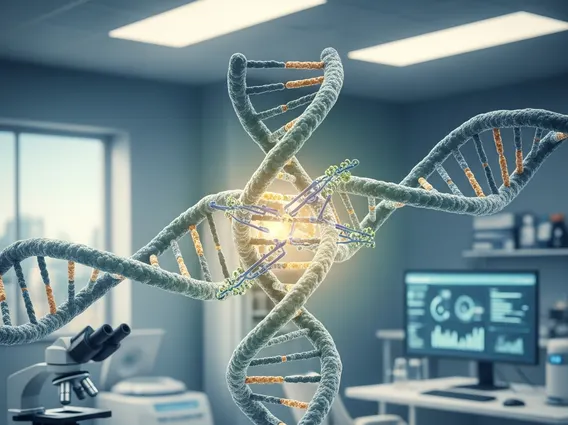
HMGA1, which stands for High Mobility Group AT-hook 1, is a small, highly conserved nuclear protein. It is part of the High Mobility Group (HMG) protein family, known for their ability to bind to DNA and influence chromatin architecture. The HMGA1 protein does not bind to specific DNA sequences but rather to AT-rich regions in the minor groove of DNA through its characteristic AT-hook domains. This binding induces conformational changes in DNA, altering its structure and making it more or less accessible to other transcription factors and regulatory complexes. The HMGA1 gene, located on human chromosome 6p21, encodes these proteins, which exist primarily as two isoforms, HMGA1a and HMGA1b, generated through alternative splicing.
These proteins are abundant in embryonic and undifferentiated cells, where they are crucial for developmental processes. In adult tissues, HMGA1 expression is generally low or undetectable in most differentiated cells, but it can be reactivated under specific physiological or pathological conditions. Its unique ability to remodel chromatin without sequence specificity allows it to act as a molecular “architect,” facilitating or inhibiting the binding of other proteins to DNA and thus profoundly impacting gene expression.
HMGA1 Gene Function and Cellular Processes
The HMGA1 gene function is multifaceted, impacting numerous fundamental cellular processes. As a chromatin architectural protein, HMGA1 influences gene transcription by modulating the accessibility of DNA to transcription factors and RNA polymerase. It can either enhance or repress gene expression depending on the specific promoter and cellular context. This regulatory capacity is central to its biological significance.
The HMGA1 biological significance extends to critical cellular functions, including cell proliferation, differentiation, apoptosis, and DNA repair. Its involvement in these processes highlights its role as a master regulator of cell fate and behavior. For instance, HMGA1 is known to regulate genes involved in cell cycle progression, such as cyclins and CDKs, thereby influencing cell division rates. It also plays a role in maintaining genomic stability by participating in DNA damage response pathways. Dysregulation of HMGA1 can therefore have widespread effects on cellular homeostasis.
Key cellular processes influenced by HMGA1 include:
- Chromatin Remodeling: Modifying DNA structure to regulate gene accessibility.
- Transcriptional Regulation: Activating or repressing the expression of target genes.
- Cell Proliferation: Promoting cell growth and division, often by regulating cell cycle genes.
- Cell Differentiation: Influencing the specialization of cells during development.
- DNA Repair: Participating in mechanisms that correct DNA damage.
HMGA1’s Role in Cancer Development
A significant aspect of HMGA1 research focuses on the HMGA1 protein role in cancer. Numerous studies have established a strong correlation between elevated HMGA1 expression and various human malignancies, including breast, colon, lung, pancreatic, and thyroid cancers. In many cases, high levels of HMGA1 are associated with more aggressive tumor phenotypes, increased metastatic potential, and poorer patient prognosis. This suggests that HMGA1 acts as an oncogene, promoting tumor initiation and progression.
The mechanisms by which HMGA1 contributes to cancer are diverse. It can promote uncontrolled cell proliferation by upregulating oncogenes and downregulating tumor suppressor genes. HMGA1 also enhances cell migration and invasion, key steps in metastasis, by regulating genes involved in epithelial-mesenchymal transition (EMT) and extracellular matrix remodeling. Furthermore, HMGA1 has been implicated in promoting angiogenesis (the formation of new blood vessels that feed tumors) and conferring resistance to chemotherapy and radiation therapy. Its ability to influence multiple hallmarks of cancer makes it a critical player in oncogenesis and a potential target for novel cancer therapies.