Histone
Histones are fundamental proteins found in the nuclei of eukaryotic cells, playing a crucial role in packaging DNA into structural units called nucleosomes. This intricate organization is essential for compacting the vast amount of genetic material within the cell and for regulating gene expression.
Key Takeaways
- Histone proteins are critical for packaging DNA into a compact structure within the cell nucleus.
- They form nucleosomes, which are the basic units of chromatin, enabling DNA to fit inside cells.
- Histones regulate gene expression by controlling the accessibility of DNA to transcription machinery.
- There are five main types of histones, each contributing to DNA organization and gene regulation.
- Modifications to histones can significantly alter gene activity, impacting cellular processes and disease.
What Are Histones and Their Function?
Histone refers to a family of basic proteins that are highly conserved throughout evolution. These proteins are primarily responsible for packaging the long strands of deoxyribonucleic acid (DNA) into a compact, organized structure known as chromatin within the nucleus of eukaryotic cells. Without histones, the DNA in a human cell, which stretches approximately two meters, would not be able to fit into the microscopic nucleus.
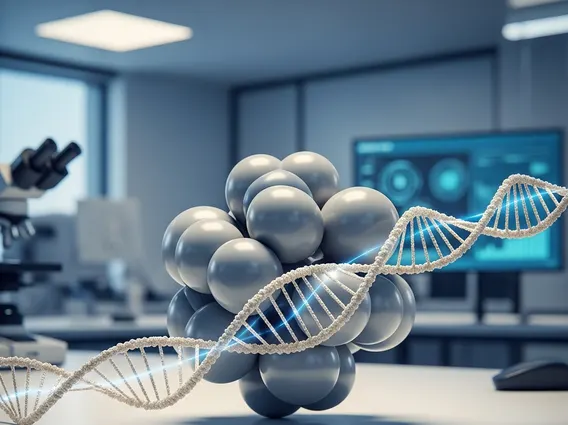
The primary function of histones is to act as spools around which DNA winds. Eight histone proteins come together to form a complex called a histone octamer, and approximately 147 base pairs of DNA wrap around this octamer, forming a structure known as a nucleosome. Nucleosomes are the fundamental repeating units of chromatin, resembling “beads on a string” when viewed under an electron microscope. This packaging not only condenses DNA but also plays a vital role in protecting it from damage and controlling its accessibility.
Histone Proteins: Role in DNA Structure and Gene Regulation
The histone proteins role in DNA structure is foundational to genomic organization. By forming nucleosomes, histones compact DNA by a factor of about 10,000, allowing it to fit within the confined space of the cell nucleus. This hierarchical packaging involves further coiling of nucleosomes into higher-order structures, such as the 30-nanometer fiber, which contributes to the overall architecture of chromosomes.
Beyond their structural role, histones are central to how cells regulate gene expression. The way histones are modified can directly influence whether genes are turned “on” or “off.” This mechanism explains how histones regulate gene expression. When DNA is tightly wound around histones, it becomes less accessible to the cellular machinery responsible for transcription, effectively silencing the genes in that region. Conversely, when histones are modified in certain ways, they can loosen their grip on DNA, making the genes more accessible and promoting gene expression.
These modifications, often referred to as epigenetic marks, include acetylation, methylation, phosphorylation, and ubiquitination. For instance, histone acetylation typically leads to a more open chromatin structure, facilitating gene activation, while certain types of histone methylation can lead to gene silencing. These dynamic changes allow cells to precisely control which genes are active at any given time, responding to developmental cues and environmental signals.
Different Types of Histones and Their Roles
There are five main types of histones, each with specific characteristics and contributions to DNA organization and gene regulation. These different types of histones and their roles are categorized into core histones and linker histones.
- Core Histones (H2A, H2B, H3, H4): These four types of histones form the octamer around which DNA is wrapped to create a nucleosome. Two copies of each (H2A, H2B, H3, H4) combine to make the eight-protein core. They are highly conserved across species, indicating their essential functions.
- Linker Histone (H1): Histone H1 is located outside the nucleosome core, binding to the linker DNA region between adjacent nucleosomes. Its primary role is to stabilize the higher-order chromatin structures, such as the 30-nanometer fiber, further compacting the DNA. H1 helps to lock the DNA onto the nucleosome, influencing chromatin condensation and gene accessibility.
Variations and modifications of these histone types, known as histone variants, also exist and can confer specialized functions. For example, the H2A.Z variant is associated with active gene promoters, while CENP-A is a specialized H3 variant found at centromeres, crucial for chromosome segregation during cell division. The intricate interplay between these histone types and their modifications ensures precise control over genome organization and gene activity, which is vital for normal cellular function and development.