Hemagglutinin Neuraminidase
Hemagglutinin Neuraminidase refers to a complex of two major glycoproteins found on the surface of influenza viruses, playing critical roles in the viral life cycle. These proteins are essential for the virus’s ability to infect host cells and subsequently spread.
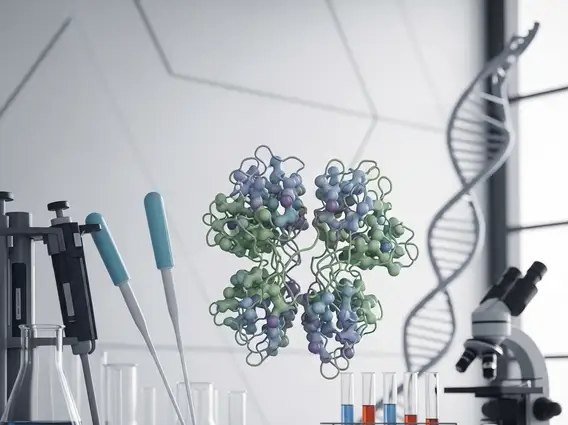
Key Takeaways
- Hemagglutinin Neuraminidase is a crucial surface protein complex of influenza viruses.
- It comprises two distinct glycoproteins: Hemagglutinin (HA) and Neuraminidase (NA).
- Hemagglutinin facilitates the virus’s attachment to host cells, initiating infection.
- Neuraminidase enables the release of newly formed virus particles from infected cells.
- Both proteins are vital targets for antiviral drugs and vaccine development.
What is Hemagglutinin Neuraminidase?
Hemagglutinin Neuraminidase is a bifunctional protein complex prominently displayed on the outer envelope of influenza viruses. This complex is fundamental to the virus’s pathogenicity and its ability to replicate within a host. It is not a single protein but rather a combination of two distinct glycoproteins, Hemagglutinin (HA) and Neuraminidase (NA), each with specialized functions that are interdependent for a successful viral infection cycle. The specific types and variations of HA and NA determine the strain of influenza virus, such as H1N1 or H3N2, which are commonly associated with seasonal flu outbreaks globally. Understanding this complex is crucial for developing effective antiviral strategies and vaccines.
Structure of Hemagglutinin Neuraminidase
The hemagglutinin neuraminidase structure involves two separate glycoproteins, Hemagglutinin (HA) and Neuraminidase (NA), embedded within the viral envelope. Hemagglutinin is a trimeric glycoprotein, meaning it consists of three identical protein subunits. Each subunit has a globular head that contains the receptor-binding site and a fibrous stem that anchors it to the viral membrane. Neuraminidase, in contrast, is typically a tetrameric glycoprotein, composed of four identical subunits. It forms a mushroom-like projection on the viral surface, with an enzymatic active site located at the top of its head. While structurally distinct, both proteins are densely packed on the viral surface, working in concert to facilitate the influenza virus’s life cycle.
Function and Role of Hemagglutinin Neuraminidase
The hemagglutinin neuraminidase function is critical for the influenza virus at different stages of infection. Hemagglutinin’s primary role is to bind to sialic acid receptors found on the surface of host cells, particularly in the respiratory tract. This binding event is the initial step in infection, allowing the virus to enter the cell through endocytosis. Once inside, the virus can begin its replication process.
Conversely, the role of hemagglutinin neuraminidase‘s neuraminidase component becomes crucial during the release of newly formed viral particles. Neuraminidase acts as an enzyme, cleaving the sialic acid residues from the surface of both the infected host cell and the newly budding virions. This enzymatic activity prevents the new viruses from clumping together or re-attaching to the already infected cell, thereby facilitating their efficient spread to other cells and individuals. Without functional neuraminidase, newly replicated viruses would remain tethered to the host cell, severely impairing viral dissemination. This dual functionality makes Hemagglutinin Neuraminidase a prime target for antiviral medications, such as neuraminidase inhibitors, which block the enzyme’s activity and limit viral spread.