Golgi Complex
The Golgi Complex, also known as the Golgi apparatus or Golgi body, is a vital organelle found in most eukaryotic cells. It plays a crucial role in modifying, sorting, and packaging proteins and lipids synthesized in the endoplasmic reticulum for secretion or delivery to other organelles.
Key Takeaways
- The Golgi Complex is a eukaryotic organelle essential for processing and packaging cellular materials.
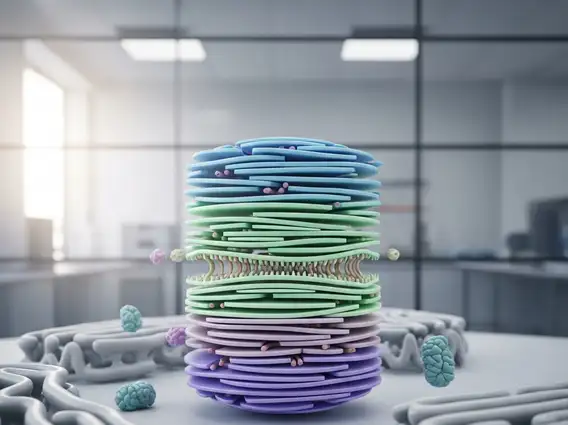
- It consists of flattened sacs called cisternae, organized into cis, medial, and trans compartments.
- Its primary functions include protein and lipid modification, sorting, and transport.
- The Golgi body is critical for maintaining cellular organization and facilitating communication within the cell and with its external environment.
What is the Golgi complex and its function?
The Golgi Complex is a membrane-bound organelle present in eukaryotic cells, named after its discoverer, Camillo Golgi. The Golgi complex definition and importance stems from its pivotal role as a central hub for the modification, sorting, and packaging of macromolecules, particularly proteins and lipids, destined for secretion, membrane insertion, or delivery to other organelles. This intricate organelle is indispensable for cellular homeostasis.
Its primary function involves refining and directing cellular products. Without a properly functioning Golgi Complex, cells would be unable to secrete essential substances like hormones or enzymes, nor could they maintain their internal membrane systems effectively. Its operations are critical for a wide array of biological processes, from cell wall formation in plants to immune responses in animals, highlighting its universal significance in eukaryotic life.
Structure and Components of the Golgi Apparatus
The Golgi apparatus is characterized by its distinctive structure, comprising a series of flattened, membrane-bound sacs known as cisternae. These cisternae are typically organized into stacks and are functionally divided into three main regions or “faces”: the cis-Golgi network, the medial-Golgi, and the trans-Golgi network. This compartmentalization allows for sequential processing steps as molecules traverse the organelle.
- Cis-Golgi Network (CGN): The receiving side, closest to the endoplasmic reticulum, where proteins and lipids enter for initial processing.
- Medial-Golgi: The central region where most metabolic modifications, such as extensive glycosylation, occur.
- Trans-Golgi Network (TGN): The exit side, furthest from the ER, where molecules are sorted and packaged into vesicles for transport to their final destinations.
The dynamic nature of the Golgi apparatus is often explained by the “cisternal maturation model,” where cisternae themselves mature and progress from cis to trans, carrying cargo, while specific Golgi enzymes are recycled to earlier compartments to maintain functional integrity.
Role of the Golgi Body in Cellular Processes
The Golgi body plays a multifaceted role in various essential cellular processes, acting as a critical intermediary in the secretory pathway. Its primary functions revolve around the further processing, sorting, and directed transport of proteins and lipids synthesized in the endoplasmic reticulum, ensuring they reach their correct locations and perform intended functions.
Key roles of the Golgi body include:
- Protein Modification: Extensively modifies proteins by adding or altering carbohydrate chains (glycosylation), crucial for proper protein folding, stability, and recognition.
- Lipid Processing: Modifies and sorts lipids, contributing to the formation and maintenance of cellular membranes and signaling molecules.
- Sorting and Packaging: Directs proteins and lipids to their correct destinations by packaging them into specific transport vesicles that bud off from the trans-Golgi network.
- Lysosome Formation: Indispensable for forming lysosomes in animal cells, which contain digestive enzymes for breaking down waste and debris.
- Cell Wall Synthesis: In plant cells, actively involved in synthesizing and transporting complex polysaccharides for the cell wall.
These diverse and critical functions underscore the Golgi Complex’s importance in maintaining cellular structure, facilitating intercellular communication, and enabling cells to perform specialized tasks vital for organismal health.