Golgi Apparatus
The Golgi Apparatus is a vital organelle found in most eukaryotic cells, playing a crucial role in modifying, sorting, and packaging proteins and lipids synthesized in the endoplasmic reticulum. It acts as the cell’s primary processing and distribution center for macromolecules destined for secretion or delivery to other organelles.
Key Takeaways
- The Golgi Apparatus is an essential organelle in eukaryotic cells, responsible for processing and packaging cellular materials.
- It modifies proteins and lipids received from the endoplasmic reticulum, preparing them for their final destinations.
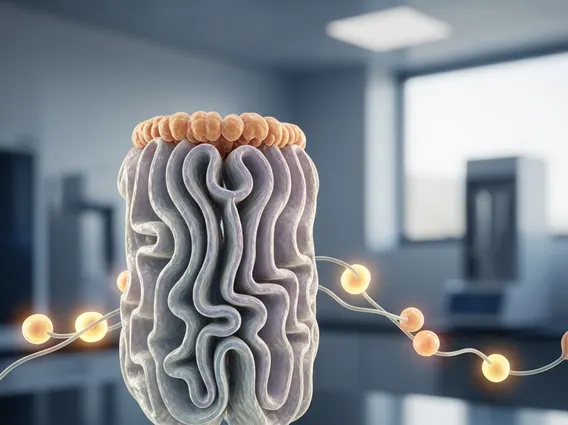
- Structurally, it consists of flattened membrane-bound sacs called cisternae, organized into cis, medial, and trans regions.
- Key functions include glycosylation, lipid transport, lysosome formation, and the secretion of substances outside the cell.
- Its proper functioning is critical for cellular health and the maintenance of various biological processes.
What is the Golgi Apparatus?
The Golgi Apparatus, often referred to as the Golgi complex or Golgi body, is a sophisticated membrane-bound organelle present in eukaryotic cells. It was discovered in 1897 by Italian physician Camillo Golgi. The primary role of the golgi complex definition centers on its function as a cellular post office, where it receives, modifies, sorts, and packages proteins and lipids into vesicles. These vesicles then transport their contents to various intracellular or extracellular destinations, ensuring that each molecule reaches its correct location within or outside the cell.
This dynamic organelle is particularly abundant in cells specialized in secretion, such as those that produce hormones or digestive enzymes. Its intricate network of membranes facilitates the precise handling of macromolecules, which is essential for maintaining cellular homeostasis and supporting complex biological processes. Without a functional Golgi Apparatus, cells would be unable to properly process and deliver essential components, leading to severe cellular dysfunction.
Golgi Apparatus Structure and Key Functions
The Golgi Apparatus structure and function are intricately linked, allowing it to perform its complex roles efficiently. Structurally, it is composed of a series of flattened, membrane-bound sacs known as cisternae, which are typically stacked together. These stacks are organized into three main functional regions: the cis-Golgi network (CGN), the medial-Golgi, and the trans-Golgi network (TGN). The CGN is the receiving side, facing the endoplasmic reticulum, while the TGN is the exit side, where processed materials are sorted into vesicles for transport.
The primary golgi apparatus function involves a sequential process of modification and sorting. Proteins and lipids enter the Golgi at the cis face, move through the medial cisternae, and exit from the trans face. As they traverse these compartments, they undergo various biochemical modifications, such as glycosylation (the addition of carbohydrate chains), phosphorylation, and sulfation. These modifications are crucial for the proper folding, targeting, and activity of the molecules.
Key functions of the Golgi Apparatus include:
- Protein Modification: Glycosylation is a major process, where oligosaccharide chains are added or modified on proteins, influencing their stability, function, and targeting.
- Lipid Transport: It processes and sorts lipids, including sphingomyelin and glycolipids, for insertion into various cellular membranes or for secretion.
- Lysosome Formation: The Golgi plays a critical role in packaging hydrolytic enzymes into lysosomes, which are organelles responsible for cellular waste breakdown.
- Secretion: It packages proteins and lipids into secretory vesicles that fuse with the plasma membrane, releasing their contents outside the cell (exocytosis).
- Cell Wall Synthesis (in plants): In plant cells, the Golgi is involved in synthesizing polysaccharides for the cell wall.
The precise sorting mechanisms within the Golgi ensure that each protein and lipid is directed to its correct destination, whether it’s another organelle, the plasma membrane, or for secretion outside the cell. This meticulous organization is vital for maintaining cellular integrity and enabling cells to interact effectively with their environment.