
Glottis
The glottis is a crucial part of the larynx, commonly known as the voice box, playing a fundamental role in both voice production and breathing. Understanding its intricate structure and dynamic function is essential for comprehending human speech, respiratory mechanics, and protective airway reflexes.
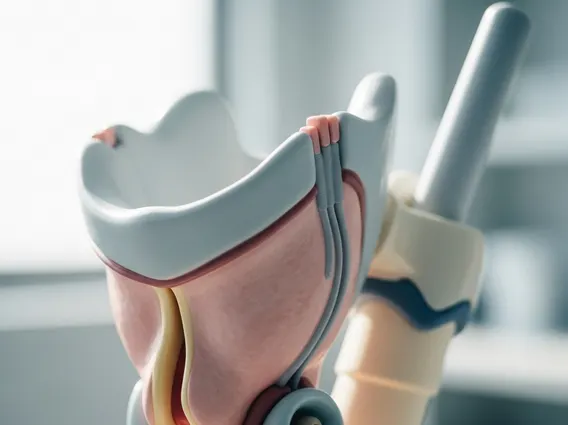
Key Takeaways
- The Glottis is the part of the larynx consisting of the vocal folds and the space between them (rima glottidis).
- It is located within the larynx, in the anterior neck, superior to the trachea.
- Its primary functions include phonation (voice production), regulating airflow during respiration, and protecting the airway during swallowing.
- The glottis opens for breathing and closes for speech and to prevent aspiration of foreign material into the lungs.
What is the Glottis and Where is it Located?
The Glottis refers to the critical part of the larynx that encompasses the vocal folds (often called vocal cords) and the variable opening between them, known as the rima glottidis. This vital anatomical structure is situated centrally within the larynx, which itself is positioned in the anterior aspect of the neck. Specifically, it lies superior to the trachea (windpipe) and inferior to the pharynx, making it a pivotal gateway between the upper and lower respiratory tracts, as well as the primary site for voice generation.
From a glottis definition medical standpoint, it is recognized as the narrowest segment of the adult airway, a characteristic that holds significant clinical importance, particularly during procedures such as endotracheal intubation. The vocal folds themselves are complex structures, each comprising a vocal ligament, the vocalis muscle (a component of the thyroarytenoid muscle), and a covering of mucous membrane. These components are precisely controlled by various intrinsic laryngeal muscles. The rima glottidis, the triangular space between the vocal folds, constantly changes its dimensions based on physiological demands, such as breathing, speaking, or coughing. When considering where is glottis located, it is crucial to understand its dynamic nature and its role as the primary valve for the respiratory system, regulated by the coordinated actions of these muscles and cartilages.
Glottis Function and Anatomy
The intricate glottis function anatomy allows it to perform its diverse and essential roles. Anatomically, the glottis is framed by the paired vocal folds, which extend from the anterior commissure (where they meet at the front) to the arytenoid cartilages posteriorly. These arytenoid cartilages, along with the thyroid and cricoid cartilages, form the robust cartilaginous framework of the larynx. This framework provides stable attachment points for the intrinsic laryngeal muscles, which are responsible for the precise movements of the vocal folds—adduction (closing), abduction (opening), and changes in tension and length.
The primary functions of the glottis are multifaceted and critical for survival and communication:
- Phonation (Voice Production): This is perhaps the most recognized function. During speech, the intrinsic laryngeal muscles adduct the vocal folds, bringing them close together. As exhaled air from the lungs passes through the narrowed rima glottidis, it causes the vocal folds to vibrate rapidly. The frequency of these vibrations dictates the pitch of the sound, while the force of the air determines the loudness.
- Airway Protection: A vital protective mechanism, the glottis closes tightly during swallowing. This closure, along with the elevation of the larynx and the downward movement of the epiglottis, forms a robust barrier that prevents food, liquids, or saliva from entering the trachea and subsequently the lungs, thereby averting aspiration pneumonia.
- Regulation of Airflow: During quiet respiration, the vocal folds abduct, creating a wide, triangular rima glottidis that allows for unobstructed passage of air into and out of the lungs. The degree of abduction can be finely adjusted to regulate airflow, for instance, increasing during strenuous physical activity to meet higher oxygen demands.
- Thoracic Fixation: The glottis can be firmly closed to trap air within the lungs, significantly increasing intrathoracic pressure. This action is crucial for activities requiring a Valsalva maneuver, such as lifting heavy objects, defecation, or coughing, as it provides a stable, rigid base for the muscles of the trunk and limbs to exert force.
Given its central role, disorders affecting the glottis, such as vocal cord paralysis, benign lesions (e.g., polyps, nodules), or laryngeal cancers, can profoundly impact an individual’s ability to speak, breathe, and swallow safely. The National Institute on Deafness and Other Communication Disorders (NIDCD) reports that approximately 7.5 million people in the United States experience a voice disorder, many of which originate from or involve dysfunction of the glottis. Early diagnosis and appropriate medical intervention are paramount for managing these conditions and preserving optimal glottic health and function.



















